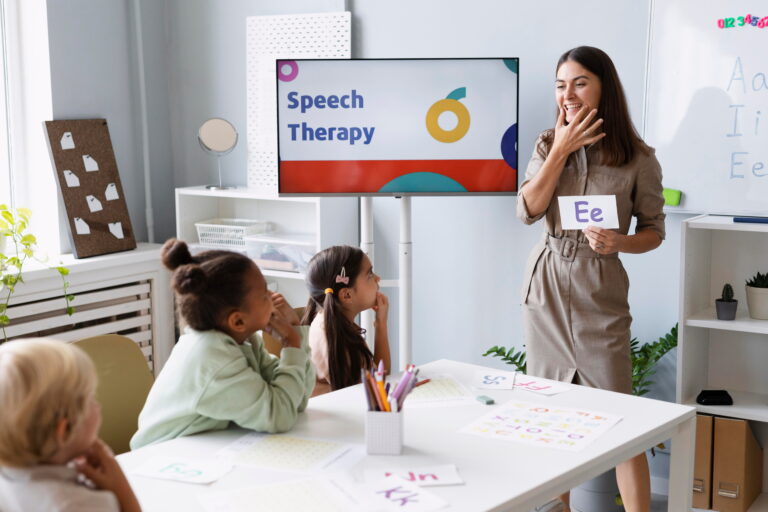


Confidence is one of the most important skills a child can develop early in life. In today’s India, English is not just a school subject – it is a life skill that helps children express ideas, participate in class, and communicate comfortably with others.
Many kids understand English but hesitate to speak it. Fear of making mistakes, classroom pressure, or lack of speaking practice often holds them back. Over time, this hesitation affects their confidence, even though they know the language.
This is why many parents now look for a kids English speaking course in India that focuses on confidence, comfort, and daily speaking practice – not just grammar rules.

1. Confidence Comes Before Correct Grammar
Most children don’t struggle because they don’t know English. They struggle because they are afraid to speak it.This fear often starts early – when kids worry about making mistakes or being corrected in front of others.
What helps kids most:
- Encouragement instead of constant correction
- Freedom to speak without fear
- Focus on expression, not perfection
When children feel safe to speak, confidence grows naturally. Grammar can always be refined later – confidence cannot.
Who this helps:
Kids who stay silent in class even though they understand English.
2. Regular Speaking Practice Builds Natural Fluency
Speaking is a skill, not a subject. Kids don’t become fluent by memorising rules – become fluent by using English regularly.
When speaking becomes a daily habit, hesitation slowly disappears and confidence takes its place, helping children experience the benefits of spoken English for kids such as stronger communication and classroom participation.
Effective speaking habits include:
- Talking daily, even for 5–10 minutes
- Describing daily activities in English
- Sharing thoughts out loud
This kind of practice slowly removes hesitation and builds fluency without pressure.
Who this helps:
Kids who know vocabulary but struggle to speak smoothly.
3. Gentle Correction Encourages Kids to Speak More
Harsh correction breaks confidence instantly. Gentle correction builds trust and motivation. Children speak more when they know mistakes won’t lead to embarrassment.
Supportive correction includes:
- Correcting mistakes kindly
- Encouraging retry instead of stopping
- Praising effort, not just accuracy
This approach makes children willing to speak again-and that’s how fluency develops.
Who this helps:
Kids who shut down after being corrected in school.
4. Speaking in Small, Real-Life Situations Builds Courage
Kids gain confidence not through long speeches, but by speaking in simple, everyday moments, which reflects ideas similar to the top methods to teach spoken English to school kids that focus on practical communication.
Real-life situations feel familiar and safe, making it easier for kids to express themselves in English.
Real-life practice includes:
- Talking about school, friends, or hobbies
- Describing favourite food, games, or cartoons
- Sharing simple opinions in English
Small successes build courage step by step. These moments prepare kids to speak confidently in classrooms and social situations.
Who this helps:
Kids who hesitate in formal speaking but express themselves better in daily conversations.
5. Pronunciation Practice Improves Clarity and Confidence
When children are unsure how words sound, they avoid speaking altogether. Unclear pronunciation creates self-doubt. Once sounds become clear, children feel understood – and confidence rises automatically.
What pronunciation practice focuses on:
- Correct sounds like V/W and TH
- Clear word endings
- Natural rhythm while speaking
As clarity improves, children feel more confident and are understood better. Many parents choose to Learn spoken English online in india for their children because kids practise more confidently from home.
Who this helps:
Kids who speak softly or avoid English due to pronunciation doubts.
6. Learning Through Fun Keeps Kids Engaged
Children learn best when learning feels joyful, not stressful, which is why spoken English courses help kids build confidence through fun activities and speaking practice.
Fun activities lower fear and invite kids to participate naturally. When kids enjoy the process, they stop worrying about mistakes and start speaking freely.
Fun-based speaking activities include:
- Storytelling and picture-based speaking
- Role-play and simple games
- Interactive conversations
Many parents prefer an online English speaking course for kids in india that uses play-based learning, because children speak more when they enjoy the process.
Who this helps:
Kids who lose interest quickly or feel bored in traditional classes.
7. Parents Play a Key Role in Confidence Building
Children gain courage when they feel supported at home. Parental encouragement strengthens learning beyond the classroom. When parents show patience, kids feel safe to experiment with language.
Simple ways parents can help:
- Let kids speak without interruption
- Encourage English at home gently
- Celebrate effort, not mistakes
Parental encouragement doubles a child’s confidence growth.
Who this helps:
Kids who need emotional reassurance while learning English.
8. Why Online Learning Works Better for Kids Today
Children gain courage when they feel supported at home. Parental encouragement strengthens learning beyond the classroom. When parents show patience, kids feel safe to experiment with language.
Many parents today prefer English speaking classes online for kids because children often feel more comfortable practicing from home.
Key benefits:
- Familiar home environment
- No peer judgement or comparison
- Better focus and emotional comfort
Who this helps:
Kids who feel nervous speaking English in school or group settings.

9. A Comfort-First Solution Many Parents Prefer
Many children don’t lack ability-they lack personal speaking time and comfort. This is where platforms like Speaking Fever quietly make a difference.
What helps kids improve faster:
- One-on-one personalised speaking sessions
- Confidence-first teaching approach
- Simple, practical English for daily use
- Friendly trainers who understand shy learners
This comfort-first method helps kids speak more often, hesitate less, and gain confidence naturally-without pressure. Many parents eventually continue structured learning through online English speaking courses for kids in India to maintain progress as children grow.
Who this helps:
Shy kids who need patience, consistency, and personal attention.
10. Confidence Built Early Lasts a Lifetime
Confidence developed in childhood stays far beyond school years. When children learn to speak English without fear early, communication becomes a natural skill – not a struggle.Instead of avoiding English, they grow up using it comfortably in every stage of life.
Long-term benefits include:
- Better classroom participation
- Strong social communication
- Confidence in presentations and interviews
Who this helps:
Kids preparing for long-term academic and personal success.
Final Thoughts
Helping kids speak English confidently is not about pressure or perfection – it’s about comfort, practice, and encouragement.
When children feel safe, speak daily, and enjoy learning, confidence grows naturally. English becomes something they use, not something they fear.
With the right support and a gentle approach-like a well-designed kids English speaking course-children in India offered by speaking fever can speak English clearly, confidently, and happily for life.