


Key Highlights
- Business English is a practical skill that improves with regular practice.
- Your learning timeline depends on your current English level and consistency.
- Focus on real workplace communication instead of memorizing grammar rules.
- Practice speaking, listening, reading, and writing every day.
- Improve skills for meetings, presentations, emails, and client communication.
- Build confidence through small daily habits.
- Choose structured learning if you want faster progress.
- Stay consistent and celebrate small improvements.
Many professionals ask how long it takes to learn business English because they want to communicate better at work, attend meetings confidently, and grow in their careers. The truth is that there is no single timeline that works for everyone. Your progress depends on your current English level, your daily practice, and how often you use English at work.
According to the British Council’s Business English resources, developing workplace English through regular practice in meetings, emails, presentations, and everyday business conversations helps professionals communicate more effectively and confidently. If you’re looking for a business English speaking course, combining structured learning with practical speaking practice can help you make faster progress.
In this guide, you’ll discover realistic learning timelines, the factors that affect your progress, and practical ways to improve faster. You’ll also learn what you can do every day to become more confident while communicating in a professional workplace.
What You’ll Learn
Learning Business English is not just about memorizing new words. It’s about communicating clearly, building confidence, and using English naturally in professional situations.
In this guide, you’ll learn:
- What Business English is and why it matters.
- How long it usually takes to become confident at work.
- The factors that affect your learning speed.
- Realistic timelines based on different English levels.
- Practical ways to improve your communication every day.
What Is Business English?
Business English is the English you use in professional situations. It helps you communicate clearly with colleagues, clients, managers, and business partners. Unlike general English, it focuses on the language used in the workplace.
A good business English course teaches you how to communicate confidently in real business situations instead of only learning grammar rules.
Business English includes:
- Workplace communication with colleagues.
- Professional communication during daily tasks.
- Corporate communication with teams and managers.
- Writing professional emails.
- Taking part in business conversations.
- Using the right business vocabulary.
- Speaking confidently during meetings.
Understanding the key differences between business English vs general English helps professionals choose the right learning focus – because knowing what makes business English unique is the first step toward improving the right skills for your career.

How Long Does It Take to Learn Business English?
This is one of the most common questions professionals ask. The honest answer is that it depends on your starting level and how consistently you practice. There is no shortcut, but regular practice can help you see steady improvement within a few months.
Here’s a general learning timeline:
| Current English Level | Estimated Time |
| Beginner | 9–12 months |
| Elementary | 6–9 months |
| Intermediate | 3–6 months |
| Upper Intermediate | 2–4 months |
| Advanced | 1–3 months to master workplace communication |
These timelines assume that you practice regularly through business english classes, speaking activities, listening exercises, and real workplace communication.
If your goal is how long does it take to learn business English fluently, remember that fluency develops gradually. You’ll likely notice improvements in confidence, vocabulary, and speaking ability long before you feel completely fluent.
Factors That Affect Your Learning Speed
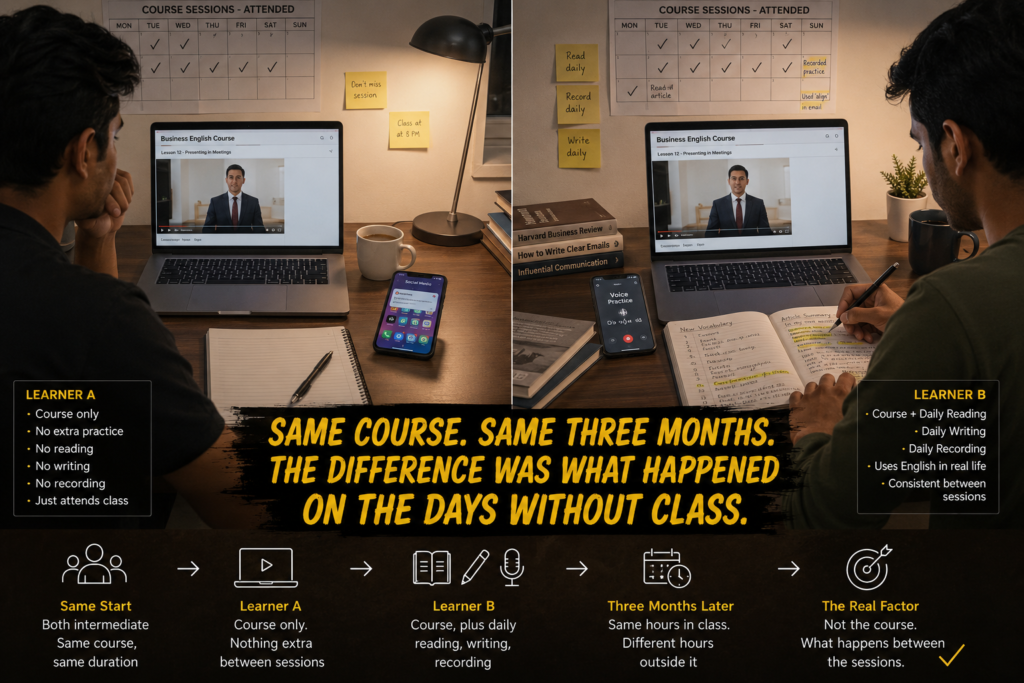
Two people can study for the same number of months and still achieve different results. That’s because learning speed depends on your habits, environment, and how often you use English in real situations.
The more you practice Business English in your daily work, the faster you’ll improve.
Some important factors include:
- Your current English level.
- Daily speaking practice.
- Quality of your business English training.
- Exposure to real workplace conversations.
- Confidence while speaking.
- Regular feedback from trainers.
- Time spent reading, listening, and writing in English.
Understanding why business communication matters in India gives professionals the right perspective on why investing in quality training and consistent practice produces much faster results than occasional self-study.
Beginner vs Intermediate vs Advanced Learning Timeline
Everyone starts from a different point, so it’s important to set realistic expectations. Instead of comparing yourself with others, focus on steady improvement every week.
Here’s what you can generally expect at each stage.
Beginner
If you’re just starting, you’ll first learn basic workplace English, simple greetings, common office phrases, and everyday communication. Building confidence is more important than speaking perfectly.
Intermediate
At this stage, you can participate in meetings, write better emails, and improve meeting communication, office communication, and interview communication. Many professionals also begin using more professional vocabulary during daily work.
Advanced
Advanced learners focus on refining their communication. They improve presentation skills, client communication, negotiation skills, and business writing skills while becoming more confident during presentations, meetings, and professional discussions.
No matter where you start, regular practice is the key to improving communication confidence and achieving long-term career growth.
How to Learn Business English Fast
Many professionals want quick results, especially when they have an upcoming interview, client meeting, or presentation. While there is no overnight solution, you can learn faster by practicing the right skills every day instead of studying only grammar.
The goal is to use English in real workplace situations as often as possible. Small daily habits will help you improve much faster than occasional long study sessions.
Here are some practical ways to speed up your learning:
- Practice speaking for at least 20–30 minutes every day.
- Read business articles and emails in English.
- Learn useful business vocabulary instead of random words.
- Listen to business podcasts or workplace conversations.
- Write short professional emails.
- Speak English during meetings whenever possible.
- Review new words and phrases every day.
Following proven business English tips for professionals gives you a targeted set of daily habits specifically designed for Indian workplace communication – so your practice directly improves the skills you need most at work.
Daily Habits That Make the Biggest Difference
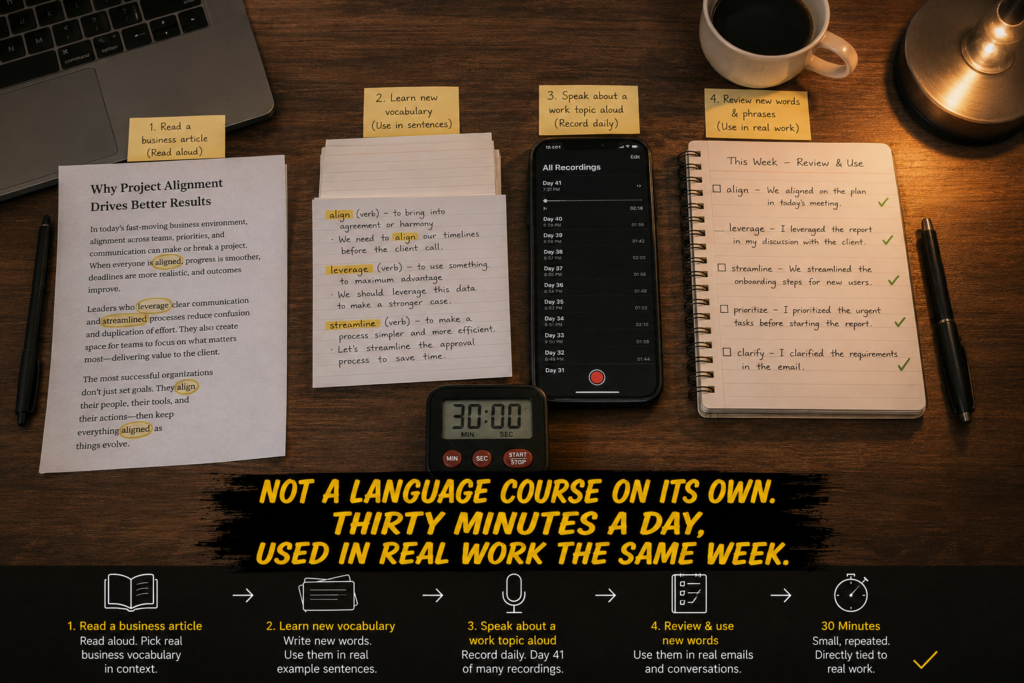
Improving your Business English doesn’t require hours of study every day. The most successful professionals build small habits that become part of their daily routine. These habits improve fluency naturally because you’re using English regularly instead of only studying it.
Focus on activities that match your daily work.
Simple habits include:
- Read one business article every morning.
- Write your daily task list in English.
- Practice email writing before sending important emails.
- Watch short business videos in English.
- Learn five new professional words every day.
- Practice English for meetings with a colleague.
- Record yourself explaining your work in English.
These small steps improve your communication at the workplace and make English feel more natural over time.
Common Mistakes That Slow Down Progress
Many professionals work hard but don’t see much improvement because they follow ineffective learning methods. Avoiding a few common mistakes can help you progress much faster.
Instead of trying to be perfect, focus on communicating clearly and consistently.
Avoid these common mistakes:
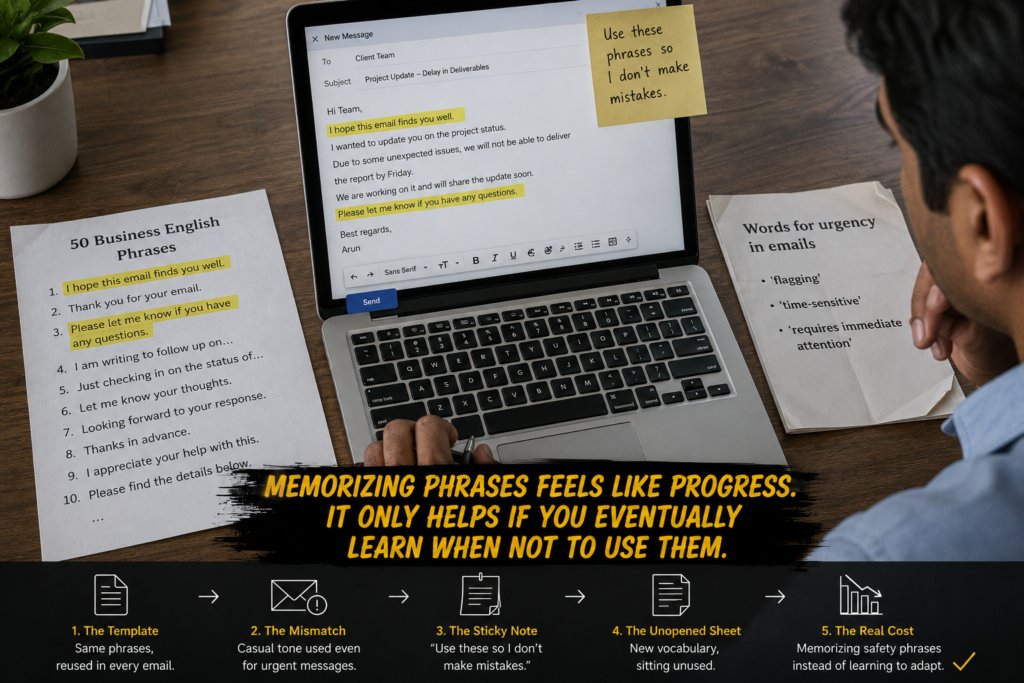
- Memorizing long answers instead of understanding them.
- Focusing only on grammar.
- Avoid speaking because you’re afraid of mistakes.
- Learning difficult words you never use.
- Practicing only before interviews or presentations.
- Ignoring listening practice.
- Giving up after a few weeks.
Remember, confidence comes from regular speaking, not from knowing every grammar rule
Skills You Should Focus on First
Business English covers many different communication skills. Trying to improve everything at once can feel overwhelming. Start with the skills you use most often at work and gradually expand from there.
For most professionals, these skills have the biggest impact:
- Clear meeting communication.
- Professional client communication.
- Better office communication with colleagues.
- Strong presentation skills.
- Effective business writing skills.
- Confident interview communication.
- Better English for presentations.
- Practical communication skills for professionals.
Learning exactly how to speak English professionally in India gives you a practical framework for meetings, client interactions, and workplace discussions – so you develop the specific communication skills that create the biggest impact in your career.
How a Professional English Speaking Course Can Help
Learning on your own is a great start, but many professionals improve faster when they receive expert guidance and regular feedback. A structured learning plan keeps you motivated and helps you practice the skills you actually need at work.
Exploring the best business English communication courses helps you find a program that offers real-world speaking practice, personalized feedback, and practical exercises designed specifically for workplace communication – so you build confidence for meetings, emails, presentations, and client conversations.
A good course should offer:
- Practical workplace communication training.
- Interactive live classes.
- Speaking practice with experienced trainers.
- Real workplace conversations and role plays.
- Personalized feedback on pronunciation and fluency.
- Activities based on meetings, presentations, and email writing.
- Flexible schedules for busy professionals.
A professional English speaking course provides real-world speaking practice, personalized feedback, and practical exercises designed for workplace communication. Whether you’re attending meetings, writing emails, giving presentations, or speaking with clients, structured learning helps you build confidence step by step.
30-Minute Daily Business English Study Plan
Improving your Business English doesn’t mean studying for hours every day. A focused 30-minute routine is enough to build better speaking habits, improve confidence, and communicate more naturally at work. The key is to practice consistently and use English in situations you face every day.
Here’s a simple routine you can follow.
| Activity | Time |
| Read a business article or email | 10 minutes |
| Learn and practice new business vocabulary | 5 minutes |
| Speak about a work-related topic aloud | 10 minutes |
| Review new words and phrases | 5 minutes |
Following this routine regularly will help you learn business English faster and improve your confidence in professional conversations.
Signs You’re Making Progress
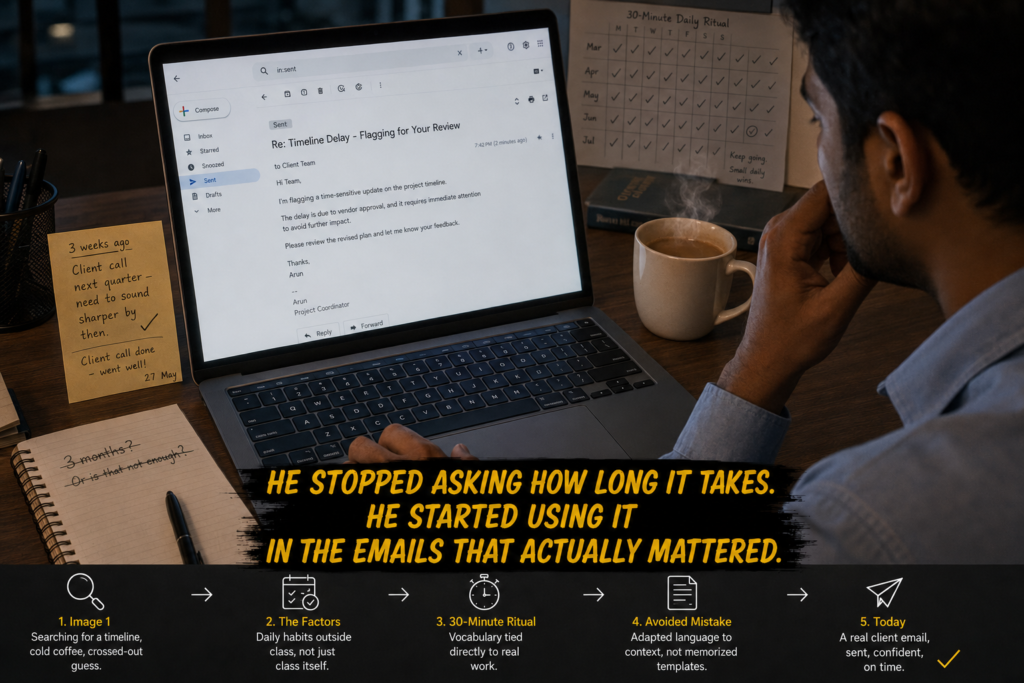
Many professionals expect to become fluent within a few weeks, but language learning happens gradually. Instead of looking for perfect English, pay attention to the small improvements you notice in your daily work.
If you experience these changes, you’re moving in the right direction.
You may notice that you:
- Speak more confidently during meetings.
- Write clearer professional emails.
- Understand workplace conversations more easily.
- Use more professional vocabulary naturally.
- Feel comfortable joining business conversations.
- Present your ideas with greater confidence.
- Participate actively in English for meetings.
- Communicate better with colleagues and clients.
These improvements show that your communication confidence is growing and that you’re becoming more comfortable using English at work.
Keep Using Business English Every Day
The fastest way to improve is to make Business English part of your daily routine. Every email, meeting, presentation, and conversation gives you an opportunity to practice. The more often you use English at work, the more natural it becomes.
Don’t wait until an interview or an important presentation to start practicing. Small daily efforts lead to long-term improvement and stronger communication skills.
Simple ways to practice include:
- Speak English during team discussions.
- Read business news every day.
- Write meeting notes in English.
- Practice presentations aloud.
- Learn useful workplace phrases each week.
These daily habits will help you improve workplace communication, strengthen your English fluency, and become a more confident professional.
Conclusion
If you’re wondering how long it takes to learn business English, the honest answer is that it depends on your starting level, learning method, and daily practice. Most professionals begin noticing improvements within a few months when they consistently use English in real workplace situations. The goal isn’t to become perfect overnight but to communicate more clearly and confidently every day.
Remember that learning Business English is a journey, not a race. Focus on improving one skill at a time, practice regularly, and don’t be afraid to make mistakes. Every meeting, presentation, email, and conversation helps you build stronger communication skills and greater confidence at work.
If you’re looking for expert guidance, Speaking Fever offers personalized one-on-one Business English programs designed for working professionals. With practical speaking sessions, workplace communication practice, and experienced trainers, you can improve your confidence and communicate more effectively in professional settings.
Reach us via
Book Your Slot with Our Counsellor:
Frequently Asked Questions (FAQs
1. How Long Does It Take to Learn Business English?
The timeline depends on your current English level, learning approach, and how consistently you practice. Most professionals notice visible improvement within 3 to 6 months of regular speaking practice, while becoming fully confident may take longer.
2. Can I Learn It Without Being Fluent in General English?
Yes. You don’t need perfect English to get started. A structured course focuses on practical workplace communication, helping you build confidence through real conversations instead of memorizing grammar rules.
3. What Is the Fastest Way to Improve?
The quickest way is to practice a little every day. Speak regularly, learn useful workplace vocabulary, participate in meetings, and use English in your daily work. Consistency is far more effective than studying for long hours once in a while.
4. Is an Online Course Effective for Working Professionals?
Yes. Online learning offers flexible schedules, live speaking practice, and personalized feedback. It allows professionals to improve their communication skills without disrupting their work routine.
5. What Skills Will I Learn?
Most programs cover practical workplace skills such as email writing, meeting communication, presentations, client interactions, negotiation, and professional vocabulary. These are the skills you’ll use every day at work.
6. How Can I Improve My Communication at Work?
Practice speaking regularly, read business articles, write professional emails, join meetings in English whenever possible, and listen to workplace conversations. Small daily habits can lead to significant improvement over time.
7. Are Online Classes Worth It?
Yes, especially if you have a busy schedule. They offer flexibility, practical speaking exercises, and real workplace scenarios, making it easier to learn while balancing a full-time job.
8. Can a Business English Speaking Course Help My Career?
Absolutely. A business English speaking course can improve your communication confidence, presentation skills, and workplace English, making it easier to perform well in meetings, interviews, client discussions, and leadership roles. Better communication often opens the door to new career opportunities.