


Key Highlights
- Create an English-friendly environment at home.
- Speak English every day without fear.
- Learn useful vocabulary through daily activities.
- Practice English conversations regularly.
- Improve listening with simple English content.
- Think directly in English instead of translating.
- Follow a consistent daily practice routine.
- Stay patient and celebrate every small improvement.
Many women want to speak English confidently but don’t know where to begin. The good news is that you can improve English speaking skills for housewives without going to a classroom or spending hours studying every day. With a little daily practice and the right methods, you can become more confident in speaking English from the comfort of your home.
According to the British Council’s article, “How to Learn to Speak English Confidently,” speaking regularly in real-life situations is one of the best ways to build confidence and improve fluency over time. If you’re looking for one-on-one English speaking classes for housewives, combining expert guidance with daily speaking practice can help you learn faster and communicate with confidence.
In this complete guide, you’ll discover simple ways to practice English at home, improve your confidence, and make English a part of your daily routine. Whether you’re learning for personal growth, helping your children, or preparing to return to work, these practical tips will help you speak English more comfortably every day.
What You’ll Learn
Learning English doesn’t have to be difficult. You don’t need perfect grammar or a large vocabulary before you start speaking. Small daily improvements can lead to big results over time.
In this guide, you’ll learn:
- How to improve English speaking skills for
- Simple ways to practice spoken English
- Easy methods for how to learn English at home
- Practical tips to build English communication skills for housewives.
- Daily habits that make speaking English easier and more natural.
By the end of this guide, you’ll have a clear plan to start speaking English with confidence.
Why Learning English Is Important for Housewives
Learning English is not only about speaking another language. It helps you communicate with confidence, support your children’s education, connect with more people, and explore new personal and career opportunities.
Whether you want to attend school meetings, travel, start a small business, or simply feel more confident in everyday conversations, English can make many daily situations easier.
Learning English can help you:
- Speak confidently with new people.
- Help your children with schoolwork.
- Use the internet more effectively.
- Watch English videos and understand them better.
- Improve your overall English communication skills for housewives.
Understanding why Indian housewives are joining online English classes shows how many women across India are taking this step for exactly these reasons – and how it is changing their confidence and daily lives in meaningful ways.

Common Challenges Housewives Face While Learning English
Many women believe they are too busy or too old to learn English. Others worry about making mistakes or feel shy when speaking in front of others. These challenges are common, but they can be overcome with regular practice.
The most important thing is to start with small, simple conversations and practice every day. Confidence grows through speaking, not by waiting until your English becomes perfect.
Some common challenges include:
- Not having enough time.
- Feeling shy while speaking.
- Fear of making mistakes.
- Limited speaking practice.
- Forgetting new vocabulary.
- No English-speaking partner at home.
The good news is that these challenges can be overcome with the right spoken English tips for housewives and a positive mindset.
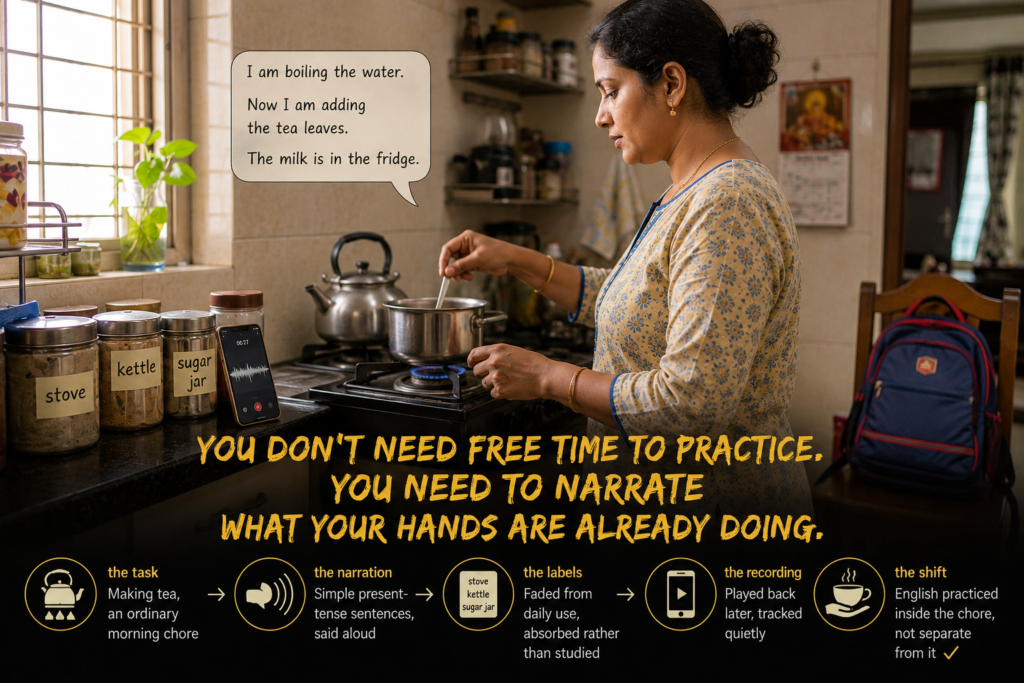
Step 1: Create an English-Friendly Home Environment
You don’t need to live in an English-speaking country to improve your English. Your home can become the best place to practice if you make English part of your daily routine.
Simple activities throughout the day help you learn naturally without feeling like you’re studying.
You can start by:
- Labeling household items in English.
- Watching English videos with subtitles.
- Reading simple English books.
- Listening to English songs or podcasts.
- Using English while doing daily chores.
These habits make it easier to learn spoken English at home without adding extra pressure to your daily schedule.
Step 2: Start Speaking English Every Day
The fastest way to improve your speaking is by speaking every single day. You don’t need a perfect partner or long conversations. Even talking to yourself for a few minutes can improve your fluency.
The goal is to make English a natural part of your daily life. The more you speak, the more confident you become.
Here are a few simple ideas:
- Describe what you’re doing while cooking.
- Talk about your daily routine in English.
- Read short paragraphs aloud.
- Practice introducing yourself.
- Record your voice and listen to it.
These simple activities help you build confidence, improve your fluency, and make speaking English a natural part of your everyday life.
Following proven tips for housewives to learn spoken English fast gives you a clear set of daily speaking habits that make English feel natural at home – without needing a classroom or a study partner.
Step 3: Build Your Vocabulary with Daily Activities
Many learners think they need to memorize hundreds of English words before they can speak confidently. In reality, learning a few useful words every day is much more effective. When you use new words in daily life, they become easier to remember.
You don’t need a notebook full of difficult vocabulary. Start with words you use every day at home.
Here are some simple ideas:
- Learn five new words every day.
- Use new words while cooking or cleaning.
- Read food packets and household labels in English.
- Keep a small vocabulary diary.
- Revise old words every weekend.
A stronger vocabulary makes spoken English for housewives more natural and helps you communicate with confidence.
Knowing how to stop forgetting English words is what makes this daily vocabulary habit stick — because retaining the words you learn is just as important as learning them in the first place.
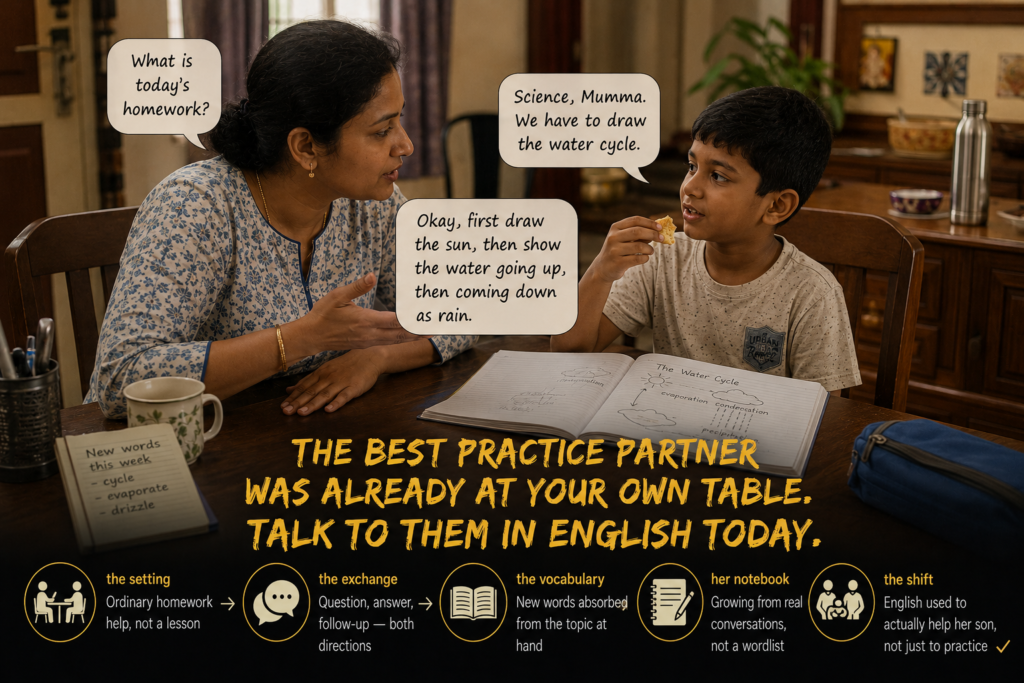
Step 4: Practice English Conversations at Home
Speaking improves only when you actually speak. Even if no one around you speaks English, you can still practice every day. Short conversations with yourself are enough to build confidence.
The goal is not to speak perfectly. The goal is to speak without fear and improve little by little.
You can practice by:
- Talking to yourself while doing household work.
- Speaking with your children in simple English.
- Describing objects around your home.
- Asking and answering simple questions aloud.
- Practicing common daily conversations.
Regular English conversation practice at home is one of the easiest ways to improve fluency because it fits naturally into your daily routine.
Step 5: Improve Listening Through Simple English Content
Listening is just as important as speaking. When you hear English every day, your pronunciation, vocabulary, and sentence formation improve naturally. It also helps you understand how English is spoken in real conversations.
Choose content that matches your English level. Don’t worry if you don’t understand every word. Focus on understanding the overall meaning.
You can listen to:
- Simple English podcasts.
- English cartoons or family shows.
- Short YouTube videos.
- English news for beginners.
- Audiobooks with simple language.
Listening regularly also helps improve your English communication skills for housewives because you become familiar with everyday English expressions.

Step 6: Think in English Instead of Translating
Many learners first think in their native language and then translate every sentence into English. This habit slows down speaking and makes conversations stressful.
Instead, start thinking in simple English. Even short thoughts can help you become a more confident speaker.
For example:
- “I’m making tea.”
- “I need to clean the kitchen.”
- “My children are studying.”
- “I’m going to the market.”
Thinking directly in English is one of the most effective spoken English tips for housewives because it improves fluency and reduces hesitation.
Understanding how Indians think in English to speak fluently shows you the exact mental shift needed to break the translation habit — so your thoughts flow directly in English instead of going through your native language first.
Step 7: Stay Consistent with a Daily Practice Routine
Learning English is like learning any new skill. Practicing a little every day gives better results than studying for several hours once a week.
Don’t worry if your progress feels slow. Every small conversation helps you become a better speaker.
A simple daily routine can include:
- Reading English for 10 minutes.
- Learning five new words.
- Listening to English for 10 minutes.
- Speaking English for 15 minutes.
- Reviewing what you learned.
Following this routine is one of the best ways to learn spoken English at home and build confidence over time.
How One-on-One English Speaking Classes for Housewife Can Help
Learning on your own is a great start, but sometimes you need someone to guide you and correct your mistakes. Personalized support helps you improve faster because you receive feedback that matches your learning level.
Exploring the right spoken English courses for housewives in India helps you find a program built specifically around your schedule, your learning pace, and the real-life conversations that matter most to you at home and in daily life.
If you want to speak English more confidently, Customized English learning for housewives provide personalized lessons, regular speaking practice, and individual attention.
These classes help you improve pronunciation, vocabulary, fluency, and confidence while allowing you to learn at your own pace from home.
Some benefits include:
- Personalized learning plans.
- Daily speaking practice.
- Immediate feedback from trainers.
- Flexible class timings.
- Improved confidence in real conversations.
- Faster progress through regular practice.
Whether you prefer learning on your own or with expert guidance, combining personalized support with daily speaking practice can help you build confidence and achieve your English-speaking goals more quickly.
20-Minute Daily English Practice for Homemakers
You don’t need hours of study to improve your English. Just 20 minutes of focused practice every day can help you become more confident. The secret is to stay consistent and make English a part of your daily life.
This simple routine is easy to follow, even with a busy schedule. It helps improve speaking, listening, vocabulary, and confidence at the same time.
| Activity | Time |
| Read a short English paragraph aloud | 5 minutes |
| Learn and use five new words | 5 minutes |
| Practice speaking about your day | 5 minutes |
| Listen to simple English audio or videos | 5 minutes |
Following this daily English practice for homemakers routine every day will help you speak English more naturally and confidently.

Signs Your English Speaking Skills Are Improving
Many learners expect quick results, but learning English is a gradual process. Instead of worrying about perfection, notice the small improvements you make every week. These small wins will keep you motivated to continue learning.
If you see these changes, you are moving in the right direction.
You may notice that you:
- Speak without stopping too often.
- Understand more English conversations.
- Remember new words easily.
- Feel less shy while speaking.
- Make fewer grammar mistakes.
- Use English during daily activities.
- Enjoy speaking English more than before.
- Feel confident talking to new people.
These are clear signs that you’re starting to improve English speaking skills for housewives through regular practice.
Keep Making English Part of Your Daily Life
Learning English becomes easier when you use it every day instead of treating it like a school subject. Small habits practiced regularly bring better results than studying for long hours once in a while.
Don’t worry about making mistakes because every mistake is part of learning. The more you speak, the more confident you become.
Simple habits you can follow include:
- Speak English while doing household work.
- Read simple English books or articles.
- Watch English videos with subtitles.
- Learn a few new words every day.
- Practice speaking with your children or friends.
- Record yourself and track your progress.
These habits help you continue learning English at home for housewives in a simple and enjoyable way.
Conclusion
Learning to improve English speaking skills for housewives is not about becoming perfect overnight. It is about taking one small step every day, practicing regularly, and believing in yourself. Every conversation you have brings you closer to becoming a confident English speaker.
Remember that confidence comes through practice, not perfection. Keep following simple habits, continue your spoken English for housewives journey, and make English a natural part of your daily routine. With consistency and patience, you’ll soon notice positive changes in your speaking skills.
If you want extra support, Speaking Fever offers personalized one-on-one English speaking programs designed to help homemakers learn comfortably from home. With flexible schedules, practical conversation practice, and expert guidance, you can improve your confidence and communication skills step by step.
Reach us via
Book Your Slot with Our Counsellor:
FAQs
1. How Can I Improve English Speaking Skills for Housewives at Home?
The best way to improve English speaking skills for housewives is to practice speaking every day, even for just 15–20 minutes. Simple activities like reading aloud, talking about your daily routine, and listening to English conversations can gradually improve your confidence and fluency.
2. What Is the Best English Speaking Course for Housewives?
The best English speaking course for housewives is one that focuses on practical conversations, flexible learning schedules, and regular speaking practice. Personalized classes with individual feedback can help you improve faster than learning only through videos or books.
3. Can Housewives Learn Spoken English at Home?
Yes. It is completely possible to learn spoken English at home with regular practice and the right learning methods. Watching English videos, reading simple books, speaking every day, and following a daily routine can help you improve without attending a physical classroom.
4. How Can I Learn English at Home as a Housewife?
If you’re wondering how to learn English at home for housewives, start by speaking simple English during daily activities, learning a few new words every day, listening to English content, and practicing short conversations. Consistency is more important than studying for long hours.
5. Are Online English Classes for Housewives Effective?
Yes. Online English classes let you learn from home at your convenience while improving your speaking confidence. Speaking Fever offers personalized one-on-one classes with practical conversation practice to help you speak English confidently.
6. How Can I Improve My English Communication Skills as a Housewife?
To build strong English communication skills for housewives, practice speaking in complete sentences, listen carefully to English conversations, expand your vocabulary, and use English in everyday situations. The more you communicate, the more confident you’ll become.
7. What Are the Best Spoken English Tips for Housewives?
Some useful spoken English tips for housewives include speaking English every day, thinking in English instead of translating, reading aloud, recording your voice, and practicing simple conversations with family members. These small habits can lead to steady improvement over time.
8. How Much Daily Practice Is Needed to Improve Spoken English?
Just 20–30 minutes of daily English practice for homemakers is enough to build confidence if you practice consistently. Reading, listening, learning new words, and speaking every day can help you improve your spoken English for housewives much faster than occasional long study sessions.