English Tuition vs Online Spoken English Classes: Which Does Your Child Need?

Written by: Sandeep Kumar, Reviewed by: Aditi Pandey, Spoken English Trainer at Speaking Fever (IELTS certified, 6+ years of experience) ·
Quick Verdict
Choose English tuition if your child needs better school marks. Choose online spoken English classes if your child gets good marks but hesitates to speak.
| English tuition follows the school syllabus: grammar, reading comprehension, writing and exam practice. Spoken English classes build speaking: fluency, pronunciation, vocabulary in use and the confidence to talk. Does English tuition improve speaking? Only a little. Most tuition time goes to reading and writing, while speaking grows only with regular speaking practice and feedback. Good marks but freezes in conversation? Pick a spoken English class. Weak in grammar and writing too? Fix the basics with tuition first, or combine both. Shy or hesitant child? A 1-to-1 online English speaking course for kids gives the most speaking time with the least pressure. |
Introduction
Many parents notice the same gap: their child scores well in English at school but goes quiet when asked to speak. Others see the opposite, a chatty child who loses marks in grammar and writing. Both are common, and they need different kinds of help.
This guide explains English tuition vs spoken English classes for kids in plain terms, so you can match the class to your child’s real problem instead of guessing. It also covers what to look for in an online class, since many spoken English classes for kids now run online. If speaking is already the main worry, you can also look at our online spoken English classes for kids while you read.
Table of Contents
What Is the Difference Between English Tuition and Spoken English Classes?
English tuition is extra help with school English. A tutor follows your child’s board syllabus (CBSE, ICSE or state board) and works on grammar, reading comprehension, writing tasks, literature chapters and exam practice. Success is measured in marks.
Spoken English classes teach a child to use English out loud. The child practises conversations, answers questions, tells stories and gets corrected on pronunciation and sentence formation while speaking. Success is measured in how confidently the child talks.
In short, tuition helps a child know English for exams, while spoken English classes help a child use English in real life.
English Tuition vs Spoken English Classes for Kids: Side-by-Side
| English tuition | Spoken English classes | |
| Main goal | Better marks in school English | Fluent, confident speaking |
| What the child does most | Reads, writes, solves worksheets | Speaks, listens and responds |
| Covers | Grammar rules, comprehension, essays, letters, literature | Conversation, pronunciation, vocabulary in use, storytelling |
| Follows school syllabus | Yes | No, follows the child’s speaking level |
| Where classes happen | Mostly at home or at a tuition centre; some tutors also teach online | Often live online, 1-to-1 or in small groups |
| Speaking time per class | Low | High, especially in 1-to-1 classes |
| How progress shows | Test scores and report cards | Longer answers, less hesitation, clearer speech |
| Best for | Weak grammar, writing or exam marks | Good marks but shy or hesitant speaking |
Does English Tuition Improve Speaking?
Only a little. English tuition is built around exams, and school exams test written English far more than spoken English.
For example, the CBSE Class 10 English board paper carries 80 marks for reading, writing, grammar and literature. Listening and speaking are assessed for just 5 marks, inside internal assessment. A tutor who is paid to raise marks will naturally spend most of the class on the written 80.
ICSE schools give speaking a little more weight: 10 of the 20 internal marks in Class 10 English Language are for speaking, through a short talk and a discussion with examiners (ICSE syllabus 2026–27). Even so, the 80-mark written paper decides most of the result, so tuition stays focused on it.
Language research points the same way. Merrill Swain’s output hypothesis says learners improve by producing language: when a child speaks, they notice the gaps in what they can say and fix them. A child who mostly reads and writes in tuition gets very little of this speaking practice.
This does not mean tuition is useless for speaking. A tutor who asks your child to explain answers aloud, read passages and discuss chapters in English does add some speaking practice. Ask your tutor how much of the hour is spent this way. If most of it is still worksheets and writing, plan separate speaking practice.
Grammar Classes vs Spoken English for Kids
Grammar classes teach the rules. Spoken English classes train the child to use those rules quickly, in real time.
- A child may know that “went” is the past tense of “go” and still pause or say “I go yesterday” in conversation.
- Grammar knowledge helps accuracy in writing; speaking practice turns that knowledge into a habit.
- Good spoken English classes still teach grammar, but through speaking: the trainer corrects the sentence the moment the child says it.
So grammar classes and spoken English are not rivals. Grammar builds the base, and speaking practice makes it usable.
| From the Parent: “My daughter Diya is 9 years old. She knew many English words but could not make full sentences while speaking. She would stop after every few words and look at me for help. After joining Speaking Fever’s kids English speaking courses online, she started to make the sentences clearly and confidently.” — Shalini Verma, Parent of Diya, Age 9 | Jaipur |
Which English Class Is Best for My Child?
Start from the problem you see at home and in report cards, not from what other parents choose.
| What you notice | Best choice |
| Low marks in grammar, comprehension or writing | English tuition |
| Good marks, but answers in one word or switches to Hindi or another home language | Spoken English classes |
| Understands English but is shy or afraid of mistakes | 1-to-1 spoken English classes |
| Weak in both writing and speaking | Tuition for basics plus spoken English 2–3 times a week |
| Speaks well but freezes on stage or in class presentations | Public speaking classes |
| Board exams are 2–3 months away | Tuition now, spoken English after exams |
If two rows match your child, start with the problem that worries your child the most. A child who feels embarrassed to speak in class often needs confidence first, and better marks usually follow once they stop fearing mistakes.
Signs Your Child Needs Spoken English Classes
- Understands English shows and teachers but replies in Hindi or another home language.
- Gives one-word answers even when they know more.
- Avoids reading aloud, class presentations or school events.
- Writes good sentences but takes long pauses when speaking the same ideas.
How to Check Your Child’s Spoken English at Home
You do not need a formal test to see where your child stands. Try this simple five-minute check:
- Ask your child to talk for one minute, in English only, about their day, a favourite game or a recent movie.
- Do not help or correct while they speak. Just listen, or record it on your phone.
- Play it back and notice four things.
- Pauses: do they stop often to search for words?
- Home-language words: how many Hindi or other words slip in?
- Sentence length: do they speak in full sentences or only short phrases?
- Comfort: do they enjoy it, or try to stop early?
If your child pauses a lot, mixes languages or stops before the minute ends, speaking practice will help more than extra grammar work. Repeat the same check after two or three months to see real progress.
A parent’s experience: [Add one real story, with the parent’s permission: the child’s age, the problem before (for example, good marks but one-word answers), and what changed after a few weeks of speaking classes. A first name and city are enough.]
By Age
- Ages 4–7: focus on listening, rhymes, stories and simple speaking. Formal tuition is usually not needed yet.
- Ages 8–12: the best time to build a speaking habit alongside school grammar.
- Ages 13+: add tuition if board marks matter, and keep speaking practice for interviews, presentations and confidence.
Common Mistakes Parents Make When Choosing an English Class
Most wrong choices come from a few common habits. Avoid these:
- Judging by marks alone. A child with 90% in English can still struggle to speak. Marks show written skill, not speaking confidence.
- Putting a shy child in a large batch. In a 45-minute class with 20 children, each child gets only about 2 minutes to speak even if time is shared equally, and a quiet child often gets less. A small group or 1-to-1 class gives far more speaking turns.
- Expecting fluency in a few weeks. Confidence often improves early, but smooth fluency takes months of regular practice.
- Stopping classes fully during exams. A long break breaks the speaking habit. Reduce the number of classes for a few weeks instead of stopping.
- Choosing without a trial class. A demo shows you how much your child actually speaks and how the trainer corrects mistakes, which matters more than the price or the brand name.
Benefits of Taking Online Spoken English Classes for Kids
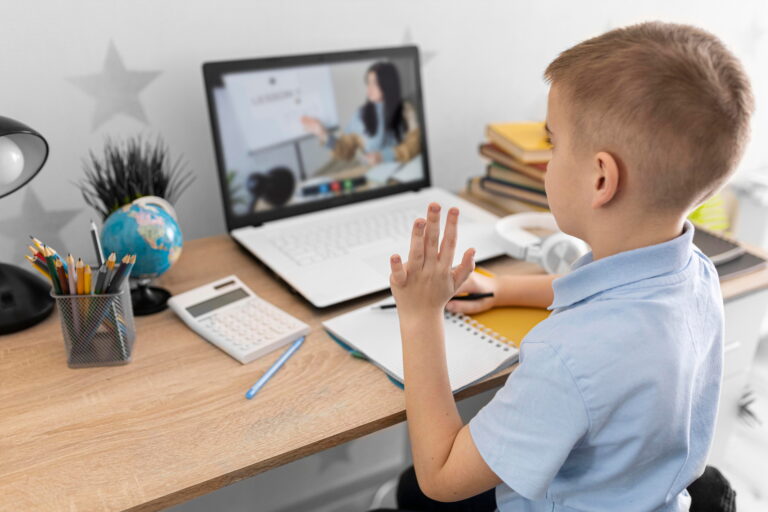
Online spoken English classes remove the three things that usually stop regular practice: travel, fixed batch timings and shyness in front of a group.
- More speaking time: in a live 1-to-1 or small online class, your child speaks for most of the session instead of waiting for a turn.
- Comfort of home: many shy children speak more freely from a familiar place than in a new classroom.
- No travel time: a short class fits easily after school, and the time saved can go to homework or play.
- Flexible timings: you can pick slots that do not clash with school, tuition or exams.
- A trainer who suits your child: you are not limited to teachers in your area, so you can find one who fits your child’s age and level.
- Easy for parents to follow: you can sit nearby, hear the class and see the progress for yourself.
Online classes still need regular attendance. Two to three sessions a week, plus a little English at home, give the best results.
What to Look for in an Online English Speaking Course for Kids?
An online English speaking course for kids saves travel time and lets your child practise from home. Check these five things before you pay:
- Speaking time: your child should speak for most of the class, not watch the teacher.
- 1-to-1 or small group: shy children open up faster with one trainer than in a group of 10. See how 1-to-1 classes help raise confidence.
- Correction while speaking: the trainer should fix pronunciation and sentences in the moment, gently.
- Level-based plan: lessons should match your child’s age and current level, not a fixed syllabus.
- Trial class and progress updates: take a demo first, and ask how you will see progress each month.
How Speaking Fever Teaches Kids?
Disclosure: Speaking Fever is our own platform.
Speaking Fever runs live 1-to-1 online spoken English classes for kids aged 5 to 15, in 35-minute sessions. Lessons move from basic sentences and vocabulary to everyday conversations, storytelling and grammar taught through speaking. Plans start at ₹3,999 a month, with a ₹11 refundable demo class.
If your child already speaks well but gets nervous on stage, our public speaking course for kids, with short speeches, storytelling and presentations, may fit better.
Conclusion
English tuition and online spoken English classes solve different problems. Tuition improves school marks in grammar, reading and writing. Spoken English classes build the fluency and confidence to talk, which tuition rarely has time for.
Start with what you see in your child. If marks are low, choose tuition. If marks are fine but your child hesitates, answers in one word or avoids speaking, choose a spoken English class. If both are weak, combine the two. For a shy child, a live 1-to-1 online class gives the most speaking practice with the least pressure.
Whatever you choose, take a demo class first, and repeat the five-minute home check every two or three months to see if your child is really improving.
Not sure which class your child needs? Book a ₹11 demo class and see how your child responds to a live 1-to-1 class.
Reach us via
Book Your Slot with Our Counsellor:
FAQs
Is English tuition or spoken English better for kids?
Neither is better for every child. Choose English tuition to improve school marks in grammar and writing, and spoken English classes to build fluency and confidence in speaking.
Does English tuition improve speaking skills?
Only slightly. Tuition focuses on written exam skills, and children improve speaking mainly by speaking regularly and getting feedback, which most tuition classes do not offer.
Should my child learn grammar before joining spoken English classes?
No. Children can learn basic grammar through speaking, as they learn their first language. A good spoken English class corrects grammar while your child talks.
Can my child do English tuition and spoken English classes together?
Yes. Many children need both. A common plan is school tuition on weekdays and 2–3 spoken English sessions a week, with tuition paused or reduced after exams.
What is the right age to start spoken English classes?
Any age can work. Many parents start between 5 and 7, when children are happy to copy new sounds and words. Older children and teens also improve quickly with regular practice.
Is an online English speaking course effective for kids?
Yes, if it is live and interactive. A 1-to-1 online class gives a child more speaking time than a classroom batch and removes travel time.
How many spoken English classes a week does a child need?
Two to three short sessions a week work better than one long class, because speaking is a habit built by repetition.
How soon will I see improvement in my child’s spoken English?
In our experience at Speaking Fever, most parents notice longer answers and less hesitation within a few weeks of regular classes. Clear, confident fluency usually takes a few months, depending on how often the child practises.