
Key Takeaways
Helping your child overcome stage fear is a journey, not a one-day solution. With patience, encouragement, and regular practice, even shy children can become confident speakers.
Remember these important points:
- Confidence grows through small, consistent steps.
- Practice is more powerful than perfection.
- Praise effort instead of only results.
- Create opportunities to speak every day.
- Let children learn from mistakes without fear.
- Support them with patience and positive encouragement.
Many children feel excited when they get a chance to sing, speak, or perform on stage. But when the moment finally arrives, they suddenly become nervous, forget their lines, or refuse to go on stage. If you’re wondering how to overcome stage fear in children, you’re not alone. Stage fear is common, and with the right support, every child can become a more confident speaker.
Table of Contents
According to HealthyChildren children build confidence when parents encourage them to face new challenges step by step instead of avoiding them. Positive encouragement, regular practice, and celebrating small achievements help children become more comfortable in situations that once felt scary. This approach is especially effective for children who are learning to speak or perform in front of others.
Whether your child is preparing for a school speech, storytelling competition, or stage performance, the right guidance can make a huge difference. Programs like Public Speaking Training for Children can also provide structured speaking practice that helps children overcome fear and communicate with confidence.
What You’ll Learn
Helping a child overcome stage fear isn’t about forcing them to speak in front of a crowd. It’s about building confidence little by little until speaking in public feels natural and enjoyable.
In this guide, you’ll learn:
- Why children develop stage fear.
- Common signs your child may be struggling with stage confidence.
- 10 practical ways to build confidence naturally.
- Activities parents can do at home.
- Mistakes to avoid while encouraging children.
- How to support long-term confidence development.
Why Do Children Have Stage Fear?
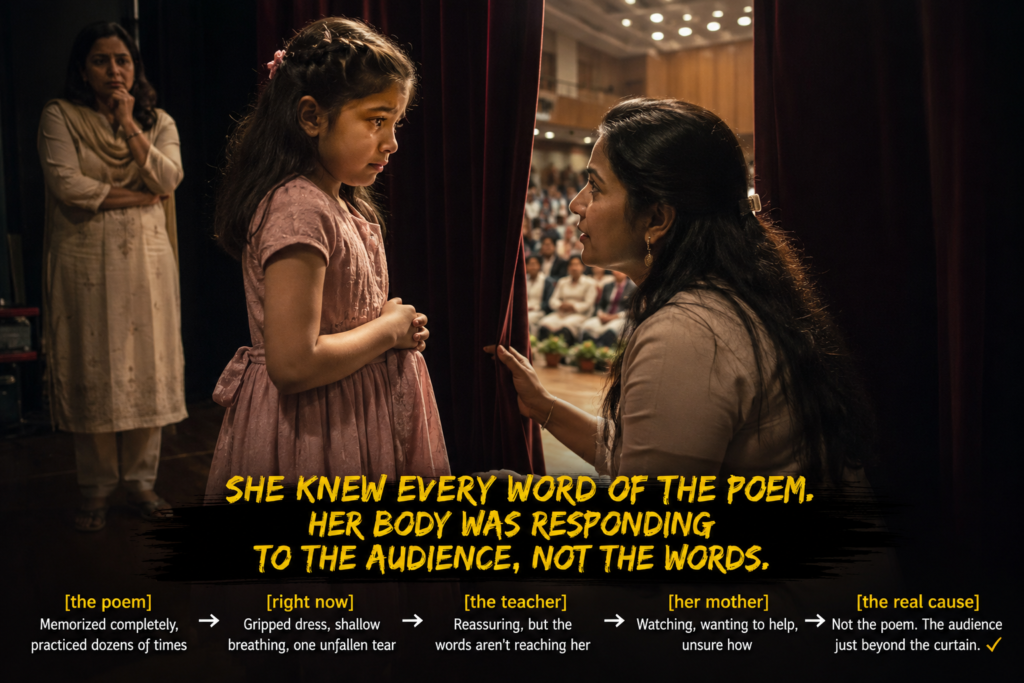
Many parents worry that their child is naturally shy or lacks confidence. In reality, stage fear in children is completely normal. Just like adults, children may feel nervous when they know many people are watching them.
Stage fear usually comes from uncertainty rather than inability. A child may know exactly what to say but still freeze because they’re afraid of making mistakes or being judged.
Some children overcome this fear quickly, while others need a little more encouragement and practice. The good news is that stage confidence is a skill that can be developed over time.
Some common reasons include:
- Fear of making mistakes.
- Worry about forgetting lines.
- Lack of speaking practice.
- Shyness around new people.
- Fear of being laughed at.
- Low self-confidence.
- Pressure to perform perfectly.
Understanding the real cause is the first step toward helping your child become a confident speaker.
How Can You Tell If Your Child Has Stage Fear?
Not every child says, “I’m scared.” Instead, they often show their nervousness through their behavior. Recognizing these signs early allows parents and teachers to provide the right support before the fear becomes stronger.
Some children appear excited during practice but become anxious just before going on stage. Others may avoid activities that involve speaking altogether.
Watch for signs such as:
- Avoiding school presentations.
- Speaking very softly.
- Forgetting prepared lines.
- Crying before performances.
- Refusing to participate.
- Looking down while speaking.
- Standing very still without expression.
These behaviors don’t mean your child lacks talent. They simply indicate that they need more confidence-building opportunities.
Why Building Confidence Early Matters
Stage confidence is about much more than performing in school programs. Children who learn to express themselves confidently often find it easier to communicate in classrooms, participate in discussions, and build friendships.
As they grow older, these communication skills become valuable in interviews, presentations, leadership roles, and everyday conversations. That’s why helping children overcome stage fear at a young age can benefit them throughout life.
Building child confidence early can help children:
- Express their thoughts clearly.
- Participate actively in class.
- Develop stronger communication skills.
- Build healthy friendships.
- Handle new situations with confidence.
- Feel comfortable sharing ideas.
Small improvements today can create lifelong confidence.
Tip 1: Start with Small Speaking Activities
One of the biggest mistakes parents make is asking children to speak in front of a large audience too soon. Confidence grows gradually, not instantly. Just as children learn to walk before they run, they also need small speaking experiences before standing on a stage.
Start with situations where your child already feels safe. These small successes help reduce anxiety and create positive experiences with speaking.
For example, encourage your child to:
- Introduce themselves to relatives.
- Read a short story aloud.
- Talk about their favorite cartoon.
- Describe their school day.
- Share a funny experience during family time.
These simple activities improve speaking confidence without making children feel pressured.
Tip 2: Practice at Home Before the Real Performance
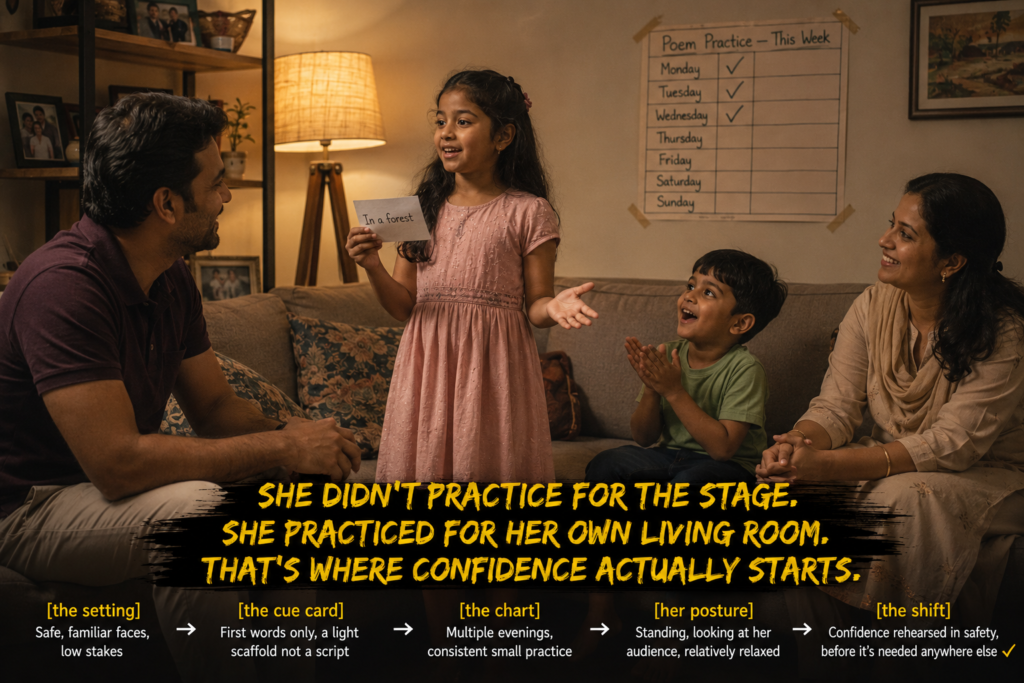
Home is the safest place for children to make mistakes and learn. Regular practice at home helps them become familiar with their speech, making it easier to perform confidently later.
Instead of asking your child to memorize every word, encourage them to understand what they’re saying. This helps them speak naturally instead of sounding rehearsed.
A simple practice routine could include:
- Standing in one place while speaking.
- Looking at family members while talking.
- Smiling during the presentation.
- Speaking slowly and clearly.
- Practicing for 5–10 minutes each day.
The goal isn’t perfection. It’s helping your child feel comfortable speaking in front of others.
Tip 3: Praise Effort, Not Just Performance
Many children believe they must perform perfectly to receive praise. This pressure can actually increase children’s stage fear because they become afraid of making mistakes.
Instead of focusing only on winning competitions or giving a flawless speech, celebrate the effort your child puts into practicing and improving. When children know it’s okay to make mistakes, they become more willing to try again.
Instead of saying:
“You should have spoken louder.”
Try saying:
“I’m proud that you stood on the stage and gave your best.”
Positive encouragement helps children associate public speaking with success rather than fear.
Tip 4: Let Children Practice in Front of Small Groups
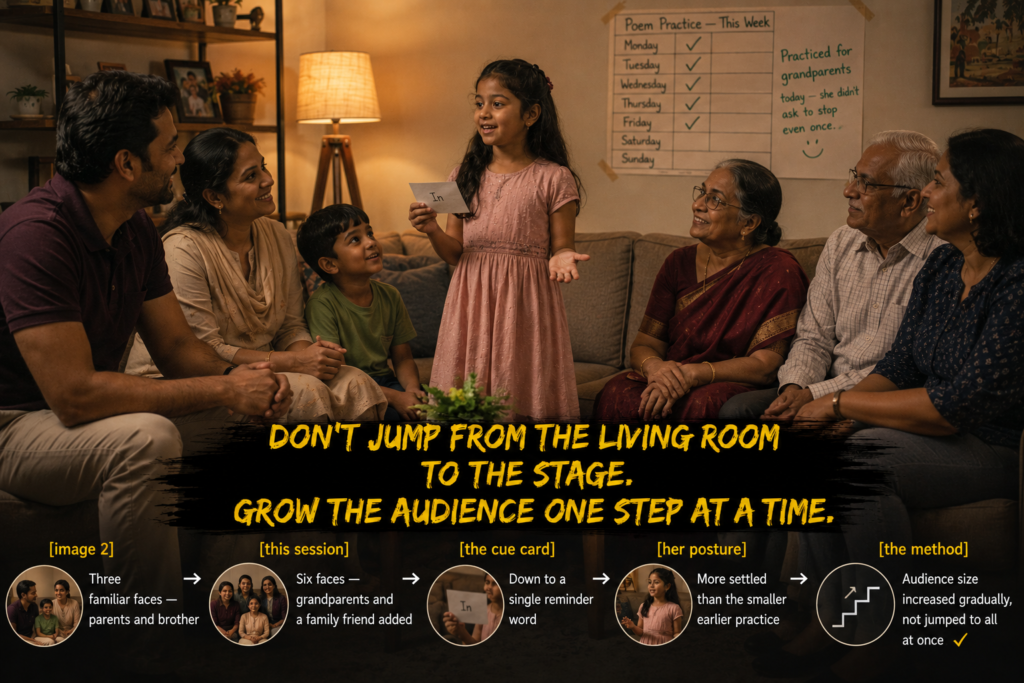
After your child becomes comfortable speaking at home, gradually introduce a slightly bigger audience. This step helps children understand that speaking in front of people is normal and nothing to fear.
Don’t jump directly from practicing with parents to speaking on a large stage. Instead, increase the audience little by little. Every successful experience builds more confidence for the next one.
For example, your child can practice in front of:
- Brothers and sisters.
- Grandparents.
- Close relatives.
- Family friends.
- A small group of classmates.
As the audience grows, your child’s confidence grows too.

Tip 5: Teach Children That Mistakes Are Normal
Many children believe they must remember every word perfectly. If they forget one sentence, they think they’ve failed. This fear often becomes the biggest reason for fear of public speaking in children.
Help your child understand that even experienced speakers forget words sometimes. What matters is staying calm and continuing to speak.
You can explain it like this:
“Nobody expects you to be perfect. People want to hear what you have to say.”
This simple mindset change helps children enjoy speaking instead of fearing it.
When your child makes a mistake:
- Stay calm.
- Encourage them to continue.
- Avoid criticizing small errors.
- Praise their effort.
- Focus on improvement instead of perfection.
Children learn confidence when they realize mistakes are part of learning.
Tip 6: Improve Communication Skills Through Daily Conversations
Confidence doesn’t only grow during stage practice. It grows through everyday conversations at home, in school, and with friends.
Understanding how to improve public speaking skills for kids shows exactly how small daily conversations build the speaking confidence that makes public performance feel much less intimidating over time.
Children who speak regularly about their ideas, experiences, and feelings become much more comfortable expressing themselves in front of others. This is one of the simplest ways to improve communication skills for children without making practice feel like work.
Here are a few conversation ideas:
- Ask about their favorite part of the day.
- Let them explain how a game works.
- Discuss a story they recently read.
- Encourage them to describe pictures or objects.
- Ask open-ended questions instead of yes/no questions.
Small conversations every day slowly develop child stage confidence and make public speaking feel less intimidating.
Tip 7: Encourage Storytelling Instead of Memorizing
Many children become nervous because they try to memorize every sentence. If they forget one line, they stop speaking altogether.
Instead of asking children to remember every word, encourage them to understand the topic and explain it in their own way. Storytelling feels more natural and helps children become confident communicators.
For example, instead of memorizing a speech about “My Best Friend,” ask your child to simply tell the story as if they’re talking to you.
This approach helps children:
- Speak more naturally.
- Think while speaking.
- Improve vocabulary.
- Develop creativity.
- Build long-term speaking confidence.
These skills are useful not only on stage but also in classrooms and everyday life.
Tip 8: Join Activities That Build Speaking Confidence
Children learn best when speaking becomes a fun and regular activity rather than something they do only during competitions.
Enrolling your child in the top public speaking courses for kids in India gives them structured practice, regular feedback, and opportunities to speak in front of others in a supportive environment designed specifically for children
Activities that encourage interaction help children develop confidence naturally. They also improve listening, creativity, and presentation skills.
Some excellent confidence building activities for children include:
- Storytelling competitions.
- Show-and-tell sessions.
- Reading aloud.
- Role-playing games.
- Drama and theatre activities.
- Debate clubs.
- Group discussions.
If your child enjoys guided learning, enrolling them in Public Speaking Classes can provide structured practice, regular feedback, and opportunities to speak in front of others in a supportive environment.
Simple Activities Parents Can Do at Home
Parents don’t need expensive programs to help children become confident speakers. Small daily habits often create the biggest improvements.
The key is consistency. Five to ten minutes of speaking practice every day is usually more effective than practicing only before a competition.
Here are a few easy activities you can start today.
| Activity | How It Helps |
| Daily storytelling | Improves speaking confidence and creativity |
| Reading aloud | Builds pronunciation and fluency |
| Family presentation night | Reduces stage anxiety |
| Mirror speaking | Improves eye contact and expressions |
| Show-and-tell | Encourages clear communication |
| Question-and-answer games | Develops quick thinking |
These activities don’t feel like formal lessons, which makes children more willing to participate and enjoy the learning process.
Common Mistakes Parents Should Avoid
Parents naturally want their children to do well, but sometimes good intentions can accidentally increase pressure.
The goal is to build confidence-not fear.
Try to avoid these common mistakes:
Comparing Your Child with Others
Every child develops confidence at a different pace. Comparing siblings or classmates can reduce motivation.
Correcting Every Small Mistake
Too many corrections during practice can make children afraid to speak.
Instead:
- Let them finish speaking first.
- Correct only one or two important points.
- Keep feedback encouraging.
Expecting Immediate Results
Confidence takes time to develop. Celebrate small improvements instead of expecting instant success.
Speaking for Your Child
Give your child opportunities to answer questions independently whenever possible. Small moments of independence help build lasting confidence.
Tip 9: Celebrate Small Wins to Build Lasting Confidence
Many parents wait until their child wins a competition before celebrating. But confidence doesn’t grow only from big achievements-it grows from small successes along the way.
If your child spoke one extra sentence today, answered a question in class, or simply stood on stage without crying, that’s progress worth celebrating. These small moments teach children that improvement matters more than perfection.
Instead of focusing only on results, notice the effort your child puts in every day. A few encouraging words can have a much bigger impact than you might imagine.
Simple ways to encourage your child include:
- Praise their courage instead of their performance.
- Celebrate regular practice, not just competitions.
- Remind them how much they’ve improved.
- Set small goals they can achieve each week.
When children feel appreciated for trying, they become more willing to keep practicing.
Tip 10: Give Children Regular Opportunities to Speak
Confidence isn’t built in a single speech or one school competition. It develops through repeated experiences. The more often children speak, the more comfortable they become.
Think about learning to ride a bicycle. Children don’t become confident after one attempt—they improve by practicing again and again. Public speaking works the same way.
Look for everyday opportunities where your child can express their thoughts.
For example, encourage them to:
- Introduce themselves to new people.
- Share stories during family gatherings.
- Participate in school activities.
- Volunteer to answer questions in class.
- Speak during celebrations or small events.
These experiences gradually reduce stage performance anxiety and help children develop lifelong communication skills.
When Should Parents Seek Extra Support?
Some nervousness before speaking is completely normal. However, if your child consistently avoids every speaking activity, becomes extremely anxious, or refuses to participate despite encouragement, additional guidance may be helpful.
Professional support doesn’t mean something is wrong with your child. Sometimes children simply learn better in structured environments where experienced trainers know how to build confidence step by step.
A structured program provides:
- Regular speaking opportunities.
- Positive and supportive feedback.
- Activities designed for different confidence levels.
- A safe environment where children can practice without fear.
The goal isn’t to make children perfect speakers. It’s to help them enjoy expressing themselves.
How Long Does It Take to Overcome Stage Fear?
This is one of the most common questions parents ask. The honest answer is that every child is different.
Some children become comfortable after a few weeks of regular practice, while others may take several months. The speed of improvement depends on factors such as personality, previous experiences, and how often they practice speaking.
Instead of asking, “How quickly will my child overcome stage fear?” try asking:
“Is my child becoming more confident than last month?”
Small improvements are the best sign that your child is moving in the right direction.
Signs Your Child Is Becoming More Confident
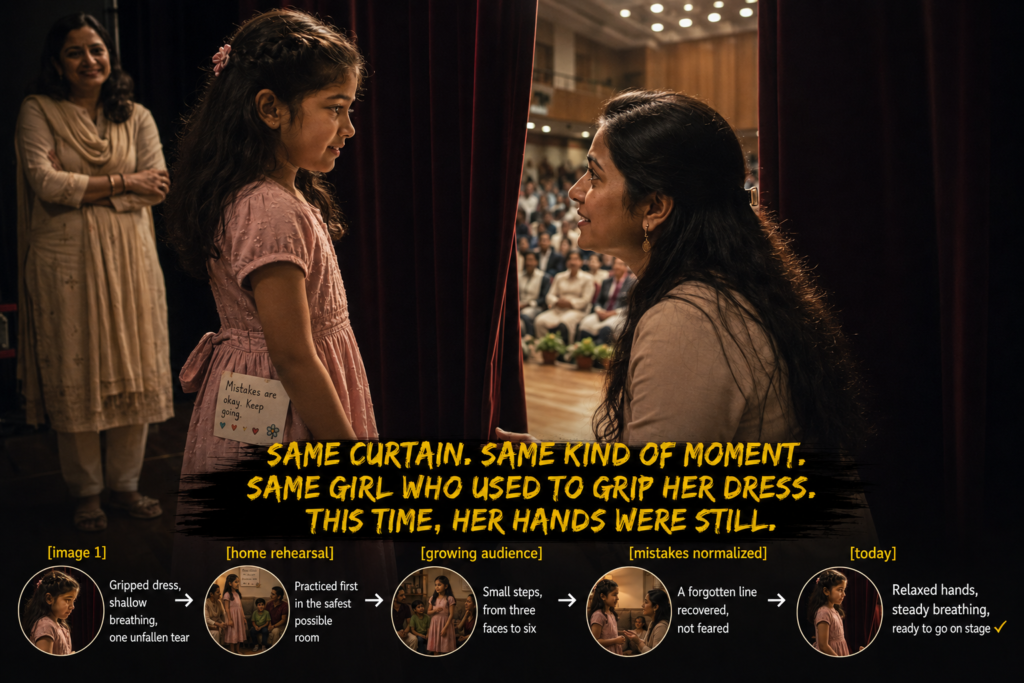
Confidence doesn’t appear overnight. It grows gradually, and parents often notice small changes before big ones.
You may observe that your child:
- Volunteers to answer questions in class.
- Speaks more clearly during conversations.
- Makes better eye contact while talking.
- Needs less encouragement before speaking.
- Participates more actively in school events.
- I enjoy sharing stories with family and friends.
These simple changes show that your child is becoming more comfortable expressing ideas in front of others.
Conclusion
Learning how to overcome stage fear in children is about helping them believe in themselves, not pushing them to become perfect speakers. Every child develops confidence at their own pace, and with the right support, they can learn to enjoy speaking in front of others instead of fearing it.
The most important thing you can do as a parent is create a positive environment where your child feels safe to practice, make mistakes, and keep improving. Small conversations at home, storytelling, school activities, and regular encouragement can make a lasting difference in their confidence.
If your child would benefit from more structured speaking practice, Speaking Fever offers interactive programs that help children improve communication skills, speaking confidence, and stage presence through engaging activities and supportive trainers. With consistent practice and encouragement, your child can develop the confidence to express themselves clearly-not just on stage, but in every part of life.
Reach us via
Book Your Slot with Our Counsellor:
Frequently Asked Questions (FAQs)
1. What Causes Stage Fear in Children?
Stage fear can happen for many reasons, including fear of making mistakes, speaking in front of unfamiliar people, low confidence, or lack of practice. The good news is that most children become more comfortable with regular encouragement and speaking opportunities.
2. How Can Parents Help a Child Overcome Stage Fear?
Parents can build confidence by encouraging small speaking activities at home, praising effort instead of perfection, and creating a positive environment where children feel safe to make mistakes. Consistent practice is one of the best ways to reduce fear over time.
3. At What Age Should Children Start Public Speaking?
There is no perfect age to begin. Children can start with simple activities like storytelling, reading aloud, or introducing themselves as soon as they feel comfortable. These early experiences help develop communication skills and confidence naturally.
4. Can Stage Fear Be Overcome?
Yes. With patience, regular practice, and positive support, most children can overcome stage fear. Confidence develops gradually, so it’s important to celebrate small improvements instead of expecting instant results.
5. Why Is My Child Afraid to Speak on Stage?
Many children feel nervous because they worry about forgetting their lines, making mistakes, or being judged by others. This is a normal part of growing up and usually improves as children gain more speaking experience.
6. What Are the Best Activities to Build Confidence in Children?
Storytelling, reading aloud, role-playing, show-and-tell, group discussions, and simple presentations are excellent activities that improve speaking confidence and help children become more comfortable expressing their ideas.
7. How Long Does It Take to Reduce Stage Fear in Children?
Every child learns at a different pace. Some children become more confident within a few weeks, while others may take several months. Regular practice, encouragement, and positive experiences play a big role in building lasting confidence.
8. Do Public Speaking Classes Help Children Build Confidence?
Yes. Well-designed public speaking classes give children a safe place to practice speaking, improve communication skills, and receive supportive feedback. Programs like Speaking Fever also provide structured activities that help children gradually become more confident speakers without feeling pressured.