
Key Highlights
- Public speaking is a skill every child can learn.
- Build confidence through daily conversations.
- Make speaking practice fun with games and storytelling.
- Encourage reading aloud every day.
- Focus on progress instead of perfection.
- Use short speaking activities regularly
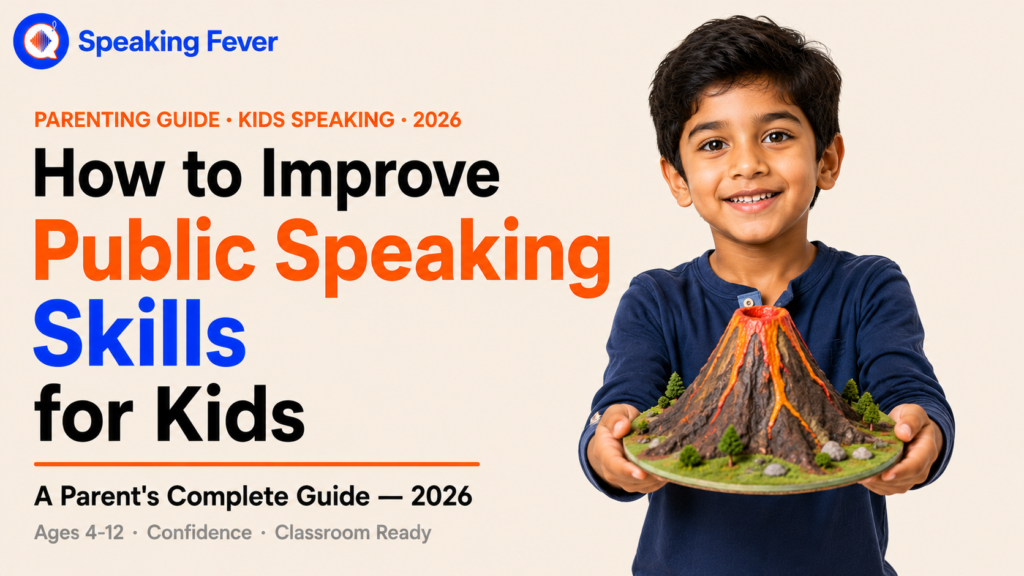
Many parents wonder how to improve public speaking skills for kids because they want their children to speak clearly and confidently. Some children enjoy talking, while others feel shy when speaking in front of classmates, teachers, or even family members. The good news is that public speaking is a skill every child can learn with patience and regular practice.
According to Cambridge University Press & Assessment’s Parents and Children resources, children develop communication best through positive encouragement, everyday conversations, and enjoyable learning experiences. If you’re looking for 1-on-1 Public Speaking Classes for Kids, combining fun activities with personalized guidance can help children become confident speakers step by step.
In this guide, you’ll learn simple ways to help your child become a confident speaker, discover enjoyable speaking activities, and understand how parents can support learning every day. Whether your child is shy, nervous, or simply wants to communicate better, these practical tips will help them build confidence that lasts a lifetime.
What You’ll Learn
Helping your child become a confident speaker doesn’t have to be difficult. Small daily habits and fun speaking activities can make a big difference over time. The goal is to help your child enjoy speaking instead of feeling afraid of it.
In this guide, you’ll learn:
- Why public speaking is important for children.
- The benefits of public speaking for kids.
- Simple ways to improve communication skills for kids.
- Fun speaking activities parents can use at home.
- Practical tips to help children build confidence.
By the end of this article, you’ll know exactly how to support your child’s speaking journey.
Why Public Speaking Is Important for Kids
Public speaking is not only about standing on a stage. Children use speaking skills every day when they answer questions in class, introduce themselves, tell stories, or share their ideas with friends. Learning to communicate clearly helps them feel more confident in many situations.
Strong speaking skills also help children become better learners. When they feel comfortable expressing their thoughts, they participate more in school and enjoy learning new things. These skills continue to benefit them as they grow into teenagers and adults.
Public speaking helps children:
- Express ideas clearly.
- Build self-confidence.
- Participate actively in class.
- Make friends more easily.
- Become better listeners.
- Develop leadership skills.
Developing strong speaking skills for children at a young age creates a solid foundation for future success.
Benefits of Public Speaking for Kids
The benefits of public speaking for kids go far beyond giving speeches. It helps children think clearly, communicate with others, and solve problems with confidence. Every time a child speaks, they become more comfortable expressing their thoughts.
Public speaking also teaches children to stay calm under pressure. Instead of feeling nervous when others are listening, they learn to enjoy sharing their ideas. This confidence helps them both inside and outside the classroom.
Some of the biggest benefits include:
- Better self-confidence.
- Improved communication.
- Stronger listening skills.
- Better classroom participation.
- Increased creativity.
- Improved teamwork.
- Greater confidence during presentations.
As children continue practicing, they naturally become more comfortable speaking with confidence in school, at home, and during social activities.
Signs Your Child Needs Public Speaking Practice
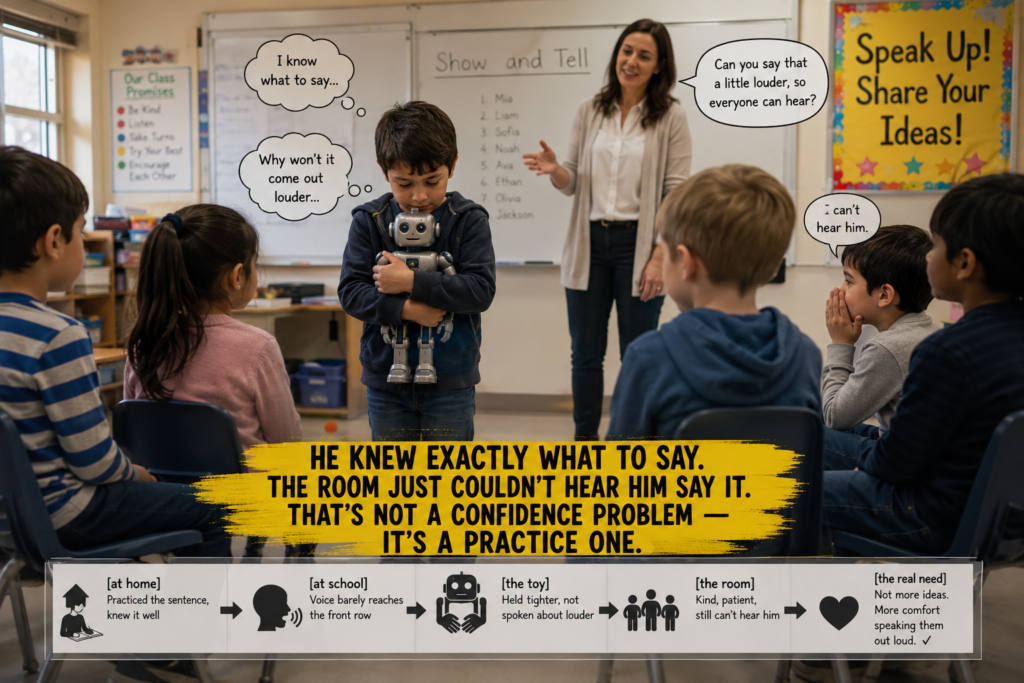
Every child has a different personality. Some children enjoy talking, while others need a little encouragement before they feel comfortable speaking. Being quiet isn’t always a problem, but avoiding communication because of fear can affect a child’s confidence.
As a parent, you may notice small signs that your child needs more speaking practice. Identifying these signs early allows you to help before fear becomes a habit.
Your child may benefit from public speaking practice if they:
- Avoid answering questions in class.
- Feel nervous during school presentations.
- Speak very softly.
- Avoid eye contact while talking.
- Struggle to explain their ideas.
- Feel shy around new people.
- Refuse to participate in school activities.
These signs don’t mean your child lacks ability. They simply show that your child needs more opportunities to practice speaking in a safe, positive, and encouraging environment.
10 Fun Public Speaking Activities for Kids
Children learn faster when they enjoy the learning process. That’s why games and fun exercises are some of the best ways to improve speaking skills. These public speaking activities for kids help children build confidence while having fun.
You don’t need a classroom or special equipment. Most of these activities can be done at home with simple everyday items and a little encouragement.
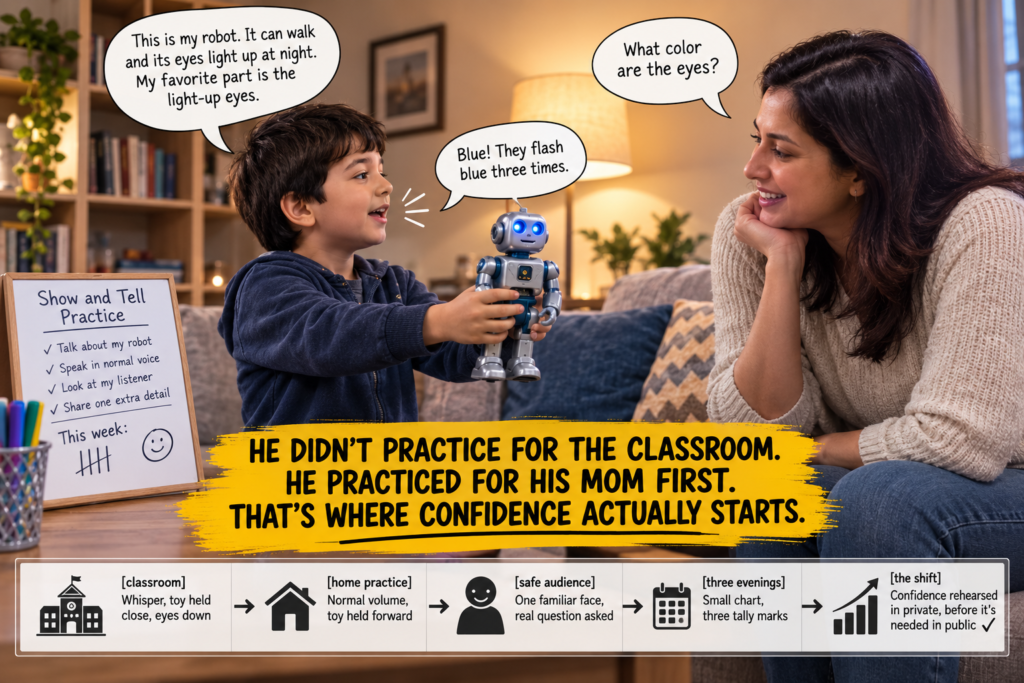
1. Show and Tell
Ask your child to choose a favorite toy, book, or object and talk about it for one or two minutes.
This activity helps children:
- Organize their thoughts.
- Speak in complete sentences.
- Build confidence.
- Improve vocabulary.
2. Storytelling Time
Storytelling allows children to use their imagination while improving their speaking ability. It also teaches them how to organize ideas in the right order.
Give your child fun topics like:
- My dream vacation.
- A magical animal.
- My superhero adventure.
- A funny day at school.
Storytelling naturally improves speaking skills for children while making learning enjoyable.
3. Picture Description Game
Show your child a picture from a book or magazine and ask them to describe everything they notice.
Encourage them to talk about:
- People.
- Colors.
- Animals.
- Actions.
- Feelings.
This activity develops observation, vocabulary, and speaking confidence.
4. One-Minute Speech
Choose a simple topic and let your child speak for one minute. Don’t worry about mistakes. The goal is simply to keep talking.
Easy topics include:
- My favorite food.
- My best friend.
- My favorite game.
- My school.
- My family.
Short speeches prepare children for classroom presentations.
5. Pretend News Reporter
Children enjoy pretending to be TV presenters. Ask your child to report today’s news from home or school.
They can talk about:
- Today’s weather.
- Family activities.
- School events.
- Weekend plans.
This activity makes speaking exciting and creative.
6. Role-Playing Games
Role-playing teaches children how to communicate in real-life situations. It also helps shy children become more comfortable talking to others.
Try pretending to be:
- Teacher and student.
- Shopkeeper and customer.
- Doctor and patient.
- Interviewer and guest.
Role-play builds confidence while improving everyday communication.
7. Read and Explain
Ask your child to read a short story and explain it in their own words.
This activity helps children:
- Understand what they read.
- Organize ideas.
- Speak naturally.
- Improve memory.
It also strengthens communication skills for kids.
8. Family Presentation Night
Choose one evening every week for every family member to give a short presentation. Children feel more comfortable speaking when everyone participates.
Presentation topics can include:
- My favorite hobby.
- A place I want to visit.
- My favorite animal.
- My dream job.
Regular practice builds lasting confidence.
9. Guess the Object
Place an object inside a bag and ask your child to describe it without saying its name. Other family members try to guess what it is.
This activity helps children:
- Think quickly.
- Use descriptive words.
- Speak clearly.
- Build creativity.
It is one of the most enjoyable public speaking activities for kids.
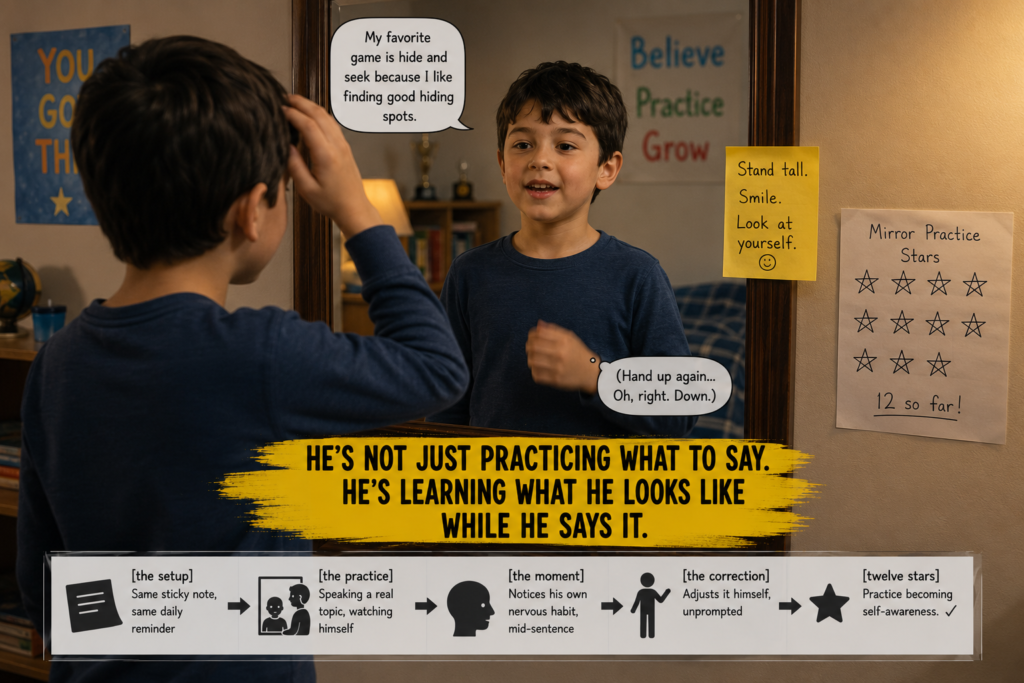
10. Mirror Speaking Practice
Speaking in front of a mirror helps children become aware of their facial expressions and body language. It also makes them feel more comfortable seeing themselves speak.
Encourage your child to:
- Stand straight.
- Smile naturally.
- Speak clearly.
- Make eye contact.
- Use simple hand gestures.
Just a few minutes of mirror practice every day can build confidence.
Public Speaking Activities for Elementary Students
Elementary school children learn best through short, interactive activities. Long lessons often make children lose interest, but games and creative exercises keep them engaged. These public speaking activities for elementary students make learning both fun and effective.
Parents and teachers can use these activities at home or in the classroom.
Some simple activities include:
- Alphabet storytelling.
- Puppet shows.
- Picture storytelling.
- Describe your drawing.
- Classroom quiz host.
- Birthday speech practice.
- Memory games.
- Group storytelling.
These activities improve speaking confidence while keeping children excited to learn.
How Parents Can Improve Speaking Skills at Home
Parents play the biggest role in helping children become confident speakers. Everyday conversations at home teach children how to express their thoughts clearly. You don’t need to be a public speaking expert to help your child improve.
The most important thing is to create a positive environment where your child feels comfortable speaking. Encourage them to share ideas without worrying about making mistakes.
Here are a few simple habits you can follow:
- Talk with your child every day.
- Read books together.
- Ask open-ended questions.
- Listen without interrupting.
- Praise effort instead of perfection.
- Encourage storytelling.
- Celebrate small improvements.
These daily habits strengthen communication skills for kids and make speaking a natural part of everyday life.
Why Personalized Public Speaking Training for Kids Can Make a Difference
Practicing at home gives children a strong foundation, but some children improve faster with expert guidance. Personalized coaching provides structured lessons, individual attention, and regular feedback based on your child’s learning style.
If your child struggles with stage fear, classroom presentations, or speaking confidently in groups, Personalized Public Speaking Training for Kids can provide the extra support they need. With one-on-one coaching, children practice real-life speaking situations, improve their presentation skills for kids, and gradually become confident communicators at school and beyond.
Some key benefits include:
- Individual attention.
- Personalized learning plans.
- Fun and interactive lessons.
- Regular speaking practice.
- Constructive feedback.
- Better confidence during presentations.
- Improved communication and leadership skills.
With consistent practice and the right guidance, every child can become a confident speaker.
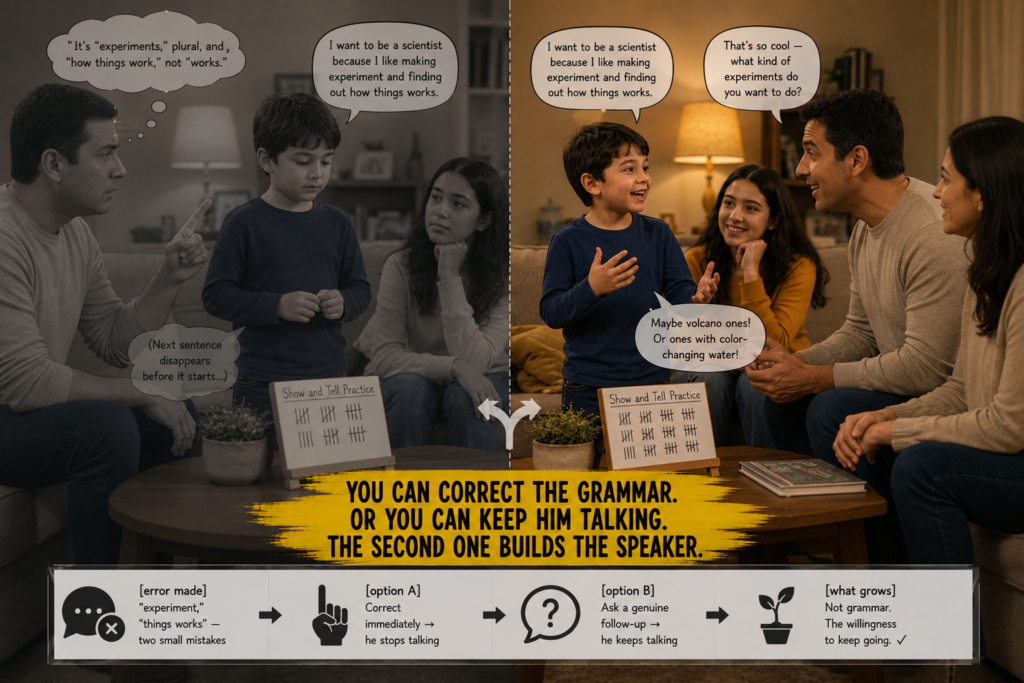
Common Mistakes Parents Should Avoid
Helping your child become a confident speaker takes time. Along the way, parents sometimes make small mistakes without realizing it. These mistakes can reduce a child’s confidence and make speaking feel stressful instead of enjoyable.
The goal is to encourage your child, not pressure them. When children feel supported, they become more willing to speak, practice, and improve.
Avoid these common mistakes:
- Correcting every grammar mistake while your child is speaking.
- Comparing your child with other children.
- Expecting perfect English from the beginning.
- Interrupting before they finish speaking.
- Forcing them to speak in front of others before they feel ready.
- Focusing only on mistakes instead of progress.
- Making speaking practice feel like homework.
Instead, celebrate small improvements and make every speaking opportunity a positive experience.
Daily 20-Minute Speaking Practice Routine for Kids
Children learn best through short, consistent practice. A simple 20-minute routine is enough to improve speaking confidence without making children feel tired or overwhelmed. The key is to practice every day.
Keep the activities fun and interactive so your child looks forward to speaking practice.
| Activity | Time |
| Read a short story aloud | 5 minutes |
| Describe a picture or favorite object | 5 minutes |
| Tell a short story or daily experience | 5 minutes |
| Practice a one-minute speech | 5 minutes |
Following this routine every day helps children improve their speaking skills naturally.
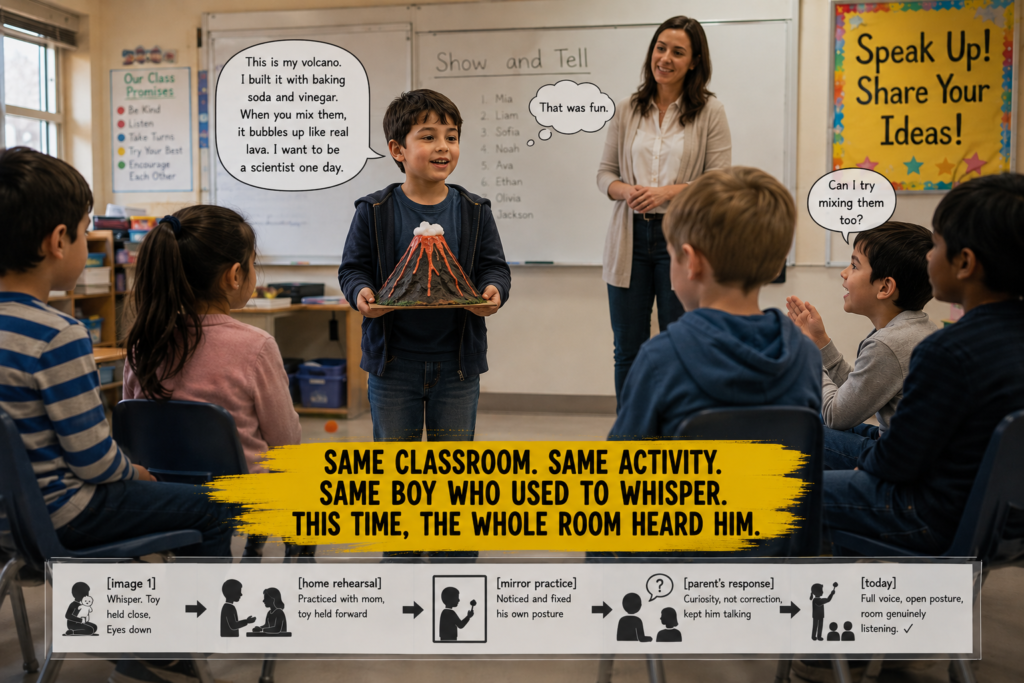
Signs Your Child Is Improving
Public speaking skills don’t improve overnight. Instead, you’ll notice small changes that show your child is becoming more confident. These little improvements are worth celebrating because they encourage children to keep practicing.
Watch for these positive signs during daily conversations and school activities.
Your child is making progress if they:
- Answer questions more confidently.
- Speak louder and more clearly.
- Maintain eye contact while talking.
- Share ideas without being asked.
- Enjoy storytelling.
- Feel less nervous before presentations.
- Participate more in classroom activities.
- Volunteer during school events.
These signs show that your child is becoming a stronger and more confident communicator.
Keep Encouraging Your Child Every Day
Confidence grows through regular practice and positive encouragement. Every conversation, story, classroom activity, and presentation helps your child become a better speaker. The more opportunities they have to speak, the more comfortable they become.
Don’t worry if your child feels shy sometimes. Every confident speaker started with small steps, and every speaking opportunity helps them grow. Keep encouraging your child, celebrate their progress, and remind them that mistakes are part of learning.
Simple habits that make a difference include:
- Talk together every day.
- Read books aloud.
- Encourage questions.
- Listen patiently.
- Praise effort.
- Celebrate progress.
- Make learning fun.
These habits help children enjoy speaking and continue building confidence for years to come.
Conclusion
Learning how to improve public speaking skills for kids is one of the best ways to prepare your child for future success. Strong speaking skills help children express their ideas, participate confidently in school, build friendships, and communicate effectively in everyday life. With patience, encouragement, and regular practice, every child can become a confident speaker.
Remember that confidence grows one conversation at a time. Encourage your child to speak English every day through storytelling, reading aloud, family discussions, and fun speaking activities. Small daily efforts lead to big improvements, helping children develop lifelong communication skills.
If you’re looking for expert guidance, Speaking Fever offers personalized one-on-one public speaking programs designed especially for children. These interactive classes help kids improve their communication, presentation, and confidence through practical activities and individual coaching.
Reach us via
Book Your Slot with Our Counsellor:
faqs
1. At What Age Should Kids Start Learning Public Speaking?
Children can start learning public speaking as early as 4 to 6 years old through simple conversations, storytelling, and fun speaking activities. The focus should be on building confidence rather than giving perfect speeches. As they grow, their speaking skills improve naturally with regular practice.
2. How Can Parents Improve Public Speaking Skills for Kids at Home?
The best way to improve public speaking skills for kids is by creating daily opportunities to speak. Encourage your child to tell stories, read aloud, answer open-ended questions, and share their thoughts during family conversations. Small daily practice helps build confidence over time.
3. How Do You Teach Public Speaking to Kids?
If you’re wondering how to teach public speaking to kids, start with simple and enjoyable activities like storytelling, show and tell, role-playing, and short speeches. Encourage your child instead of correcting every mistake, so they enjoy learning and become more confident speakers.
4. What Are the Best Public Speaking Activities for Kids?
Some of the best public speaking activities for kids include storytelling, one-minute speeches, picture description games, mirror practice, role-playing, family presentation nights, and show and tell. These activities make learning fun while improving speaking confidence and communication skills.
5. Why Are Communication Skills Important for Kids?
Strong communication skills for kids help children express their thoughts clearly, participate confidently in school, build better friendships, and work well with others. These skills also prepare them for presentations, interviews, leadership roles, and future career success.
6. How Can I Help My Child Speak with Confidence?
Children begin speaking with confidence when they feel encouraged and supported. Praise their effort, listen patiently, allow them to finish speaking, and provide regular opportunities to practice at home. Confidence grows through positive experiences and consistent practice.
7. What Are the Benefits of Public Speaking for Kids?
The benefits of public speaking for kids include better self-confidence, stronger communication, improved presentation skills, clearer thinking, greater classroom participation, and better leadership abilities. These skills help children succeed both in school and in everyday life.
8. Can Public Speaking Classes Help Improve My Child’s Presentation Skills?
Yes. Public speaking classes provide structured practice, expert guidance, and regular feedback that help children become confident communicators. If you’re looking for personalized support, Speaking Fever offers one-on-one public speaking classes that help children improve their presentation skills for kids, communication, and confidence in a fun and supportive learning environment.