Intermediate Spoken English: Complete Guide to Becoming Fluent in 2026

Key Highlights
- Understand the intermediate English level.
- Follow a simple learning roadmap.
- Improve fluency with daily speaking.
- Build confidence through real conversations.
- Learn practical English fluency tips.
Table of Contents
Intermediate spoken English is the stage where learners move beyond basic conversations and start building real fluency. If you can understand English but still hesitate while speaking, you’re likely at the intermediate level and ready to take the next step.
Many learners feel their progress slows at this stage because they spend more time studying grammar than speaking English. With regular practice, the right vocabulary, and real conversations, you can improve your fluency and confidence much faster.
In this guide, you’ll learn what intermediate spoken English is, how to identify your current level, the challenges that hold learners back, and practical tips to become a confident speaker. If you’re exploring the best intermediate English classes online, the EF SET Intermediate English Guide is a useful resource for understanding the skills expected at the intermediate and upper-intermediate levels before choosing a course
What You’ll Learn in This Guide
This guide is designed for learners who have already crossed the beginner stage and want to speak English more naturally. Instead of focusing only on grammar, you’ll learn practical strategies that help you communicate with confidence.
In this guide, you’ll learn:
- What intermediate English really means
- Why learners stop making progress
- Simple ways to improve fluency
- Daily habits that build confidence
- A practical roadmap to become fluent
By the end of this guide, you’ll understand how to improve your fluency, avoid common mistakes, and follow an intermediate English learning roadmap that works in real life.

What Is Intermediate Spoken English?
Intermediate spoken English is the level where you can understand most everyday conversations and express your thoughts, but you may still pause, search for words, or translate sentences in your mind before speaking.
At the intermediate English level, your biggest challenge is not grammar—it is fluency. You already know enough English to communicate. Now your goal is to speak naturally, confidently, and without overthinking every sentence.
Most learners at this stage can:
- Hold everyday conversations with friends.
- Understand English movies with subtitles.
- Read newspapers or simple articles.
- Write emails and short messages.
- Explain their ideas using basic vocabulary.
However, they often struggle with:
- Speaking without hesitation.
- Finding the right words quickly.
- Understanding fast English speakers.
- Using natural expressions.
- Speaking confidently in public.
If this sounds familiar, don’t worry. It simply means you are ready for the next stage of learning.
How Do You Know You’re at the Intermediate English Level?
Many learners are unsure whether they are beginners or intermediate learners. A simple way to identify your level is by looking at what you can do comfortably without using a dictionary or translator.
You are probably at the intermediate English speaking level if you understand English but don’t always feel confident using it in real conversations.
You Are Likely an Intermediate Learner If You Can:
- Understand everyday English conversations.
- Introduce yourself confidently.
- Describe your experiences and opinions.
- Read blogs and simple books.
- Follow English YouTube videos.
You May Still Need to Improve If You:
- Translate before speaking.
- Pause frequently during conversations.
- Avoid speaking with strangers.
- Use the same vocabulary repeatedly.
- Feel nervous during discussions.
The good news is that these are common challenges. They can be improved through consistent intermediate English practice, not by memorizing more grammar rules.

Why Most Intermediate Learners Stop Improving
One of the biggest reasons learners stay at the same level is that they spend more time studying English than actually speaking it. Watching grammar videos and reading books are helpful, but fluency only develops when you use the language.
Many learners believe they need perfect grammar before they can speak confidently. This mindset slows progress because they become afraid of making mistakes.
Some of the most common reasons learners struggle include:
- Fear of making mistakes while speaking.
- Limited opportunities for real conversations.
- Learning vocabulary without using it.
- Depending too much on translation.
- Not following a daily practice routine.
Understanding why learners struggle with fluency shows exactly why passive study alone never produces the speaking confidence that regular conversation practice does.
How to Improve Intermediate English
Reaching the intermediate stage is a great achievement, but becoming fluent requires a different learning approach. Instead of collecting more grammar rules, you should focus on speaking, listening, and thinking in English every day.
If your goal is to become fluent in English, consistency matters more than studying for long hours. Even 20 to 30 minutes of focused practice every day can create noticeable improvement.
Here are some habits that make a real difference:
- Speak English every day. Even talking to yourself for a few minutes builds confidence.
- Listen to natural English. Podcasts, interviews, and YouTube videos improve your listening skills.
- Use new words immediately. Don’t just memorize vocabulary—use it in conversations.
- Record your voice. Listening to yourself helps you notice pronunciation and fluency issues.
- Practice with another person. Real conversations are the fastest way to improve.
Building a strong routine of daily English speaking practice is the single most reliable habit that moves intermediate learners toward natural fluency faster than any other approach.
The Best Way to Improve Spoken English at Intermediate Level
Many learners ask for the best way to improve spoken English at intermediate level, but there isn’t a single shortcut. The most successful learners combine speaking, listening, reading, and feedback into one daily routine.
A simple routine like this can help you improve much faster:
| Activity | Time |
| Read aloud | 10 minutes |
| Listen to English | 10 minutes |
| Speak on one topic | 15 minutes |
| Learn new phrases | 10 minutes |
| Review mistakes | 5 minutes |
Following this routine consistently is much more effective than studying only on weekends.
Intermediate English Practice That Actually Works
Many learners spend months watching English videos but still hesitate when speaking. This happens because watching is passive, while speaking is active.
Good intermediate English practice should always include real communication. Every time you speak, your brain becomes faster at forming sentences naturally.
Some effective practice activities include:
- Mirror speaking for confidence.
- Retelling a short story.
- Describing your daily routine.
- Answering random questions.
- Discussing news or hobbies.
The more you practice speaking, the less you will depend on translating every sentence.
Build Vocabulary the Smart Way
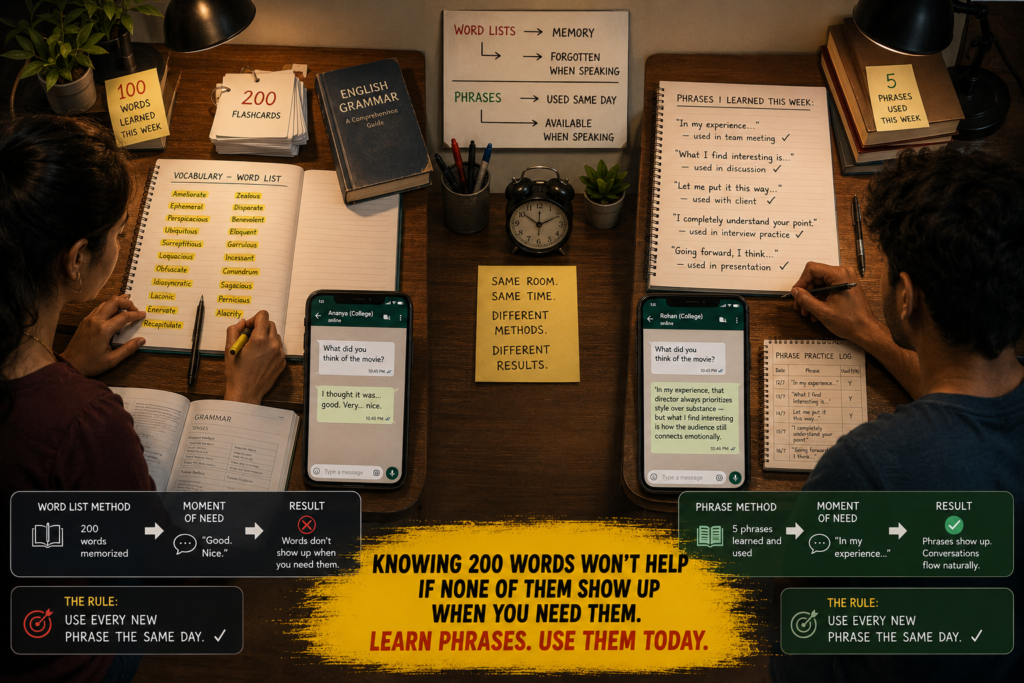
Vocabulary is important, but learning random word lists is rarely effective. Instead, learn words that match your daily conversations and interests.
For example, if you’re a student, learn classroom vocabulary. If you’re preparing for interviews, focus on workplace expressions and professional English communication.
A better vocabulary learning method is:
- Learn words in phrases.
- Use every new word the same day.
- Read short articles daily.
- Keep a personal vocabulary notebook.
- Review words every weekend.
This approach helps you remember vocabulary naturally and improves your intermediate English speaking much faster.
Intermediate English Learning Roadmap
Many learners improve faster when they follow a structured plan instead of studying random topics. A simple roadmap helps you know exactly what to practice every week.
This intermediate English learning roadmap focuses on speaking before perfection.
| Stage | Primary Focus | Goal |
| Week 1 | Vocabulary | Speak naturally |
| Week 2 | Fluency | Reduce pauses |
| Week 3 | Pronunciation | Sound clearer |
| Week 4 | Conversations | Build confidence |
| Ongoing | Daily speaking | Become fluent |
Roadmap Priorities
- Build daily habits
- Learn useful phrases
- Practice every day
- Review mistakes
- Track progress
Following a structured path to improve spoken English from intermediate to advanced gives you a clear progression framework so you always know what to work on next and how to measure your growth.
Think in English Instead of Translating
One habit separates fluent speakers from intermediate learners—they think directly in English.
When you translate from your native language, your speaking becomes slow and unnatural. Thinking in English helps your conversations flow more smoothly.
You can build this habit by:
- Naming objects around you in English.
- Describing what you are doing.
- Planning your day in English.
- Talking to yourself while walking.
- Writing short daily journals.
Understanding how Indians think in English to speak fluently shows you the exact mental shift needed to break the translation habit and start forming thoughts and responses directly in English.
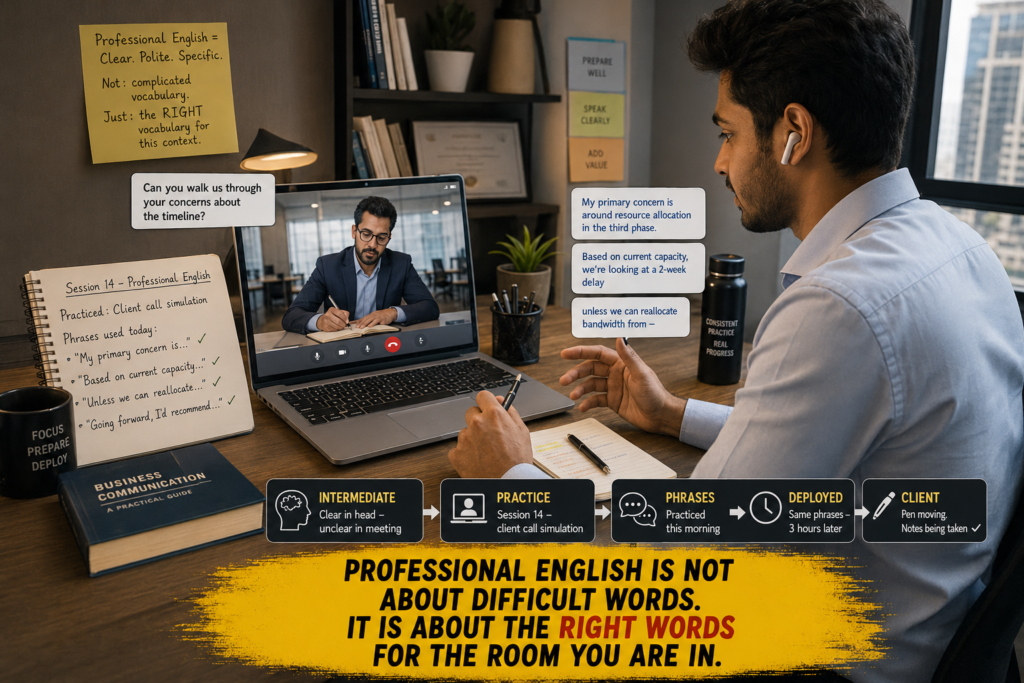
Improve Professional English Communication
As your fluency improves, you should also build professional English communication skills. This helps you perform better in interviews, workplace discussions, presentations, and client meetings.
Professional English doesn’t mean using difficult words. It means speaking clearly, politely, and confidently.
If you want faster improvement, a 1-on-1 spoken English course can help by providing personalized feedback, live conversation practice, and guidance based on your current speaking level.
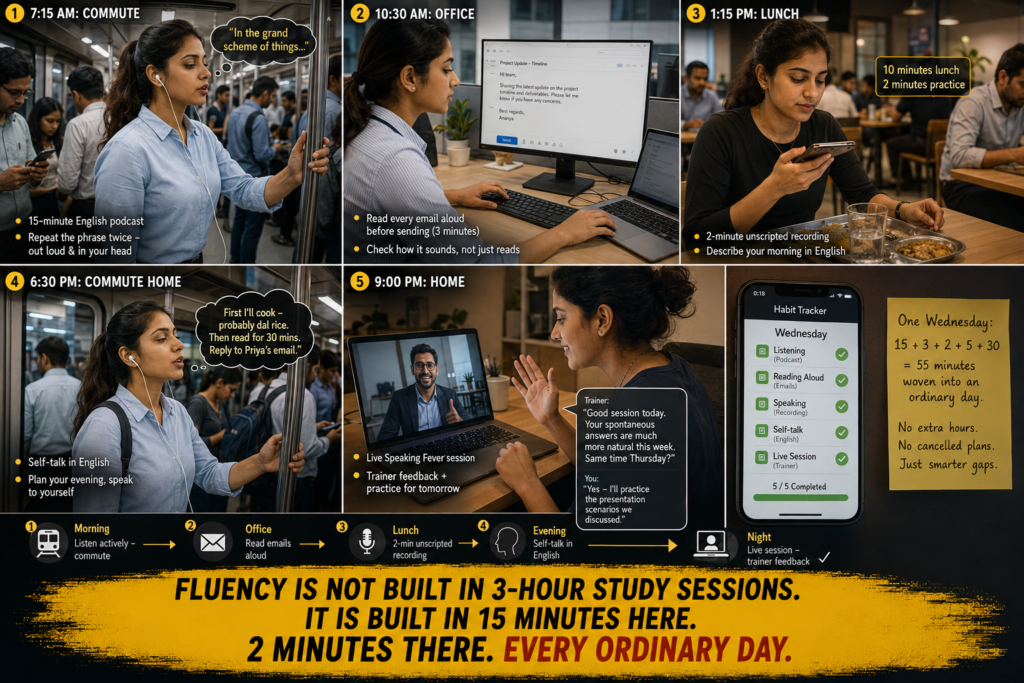
English Fluency Tips for Intermediate Learners
Reaching fluency is not about speaking fast or using difficult words. It is about expressing your ideas clearly and confidently. Many learners at the intermediate English level improve quickly when they focus on communication instead of perfection.
Simple Habits That Improve Fluency
- Speak English every day, even for 15 minutes.
- Listen to English while travelling or exercising.
- Learn useful phrases instead of single words.
- Read short articles aloud to improve pronunciation.
- Don’t be afraid to make mistakes while speaking.
The following English fluency tips can help you speak more naturally and build confidence every day.
Common Mistakes Intermediate Learners Should Avoid
Many learners stay at the same level because they repeat the same learning habits. Recognizing these mistakes is the first step toward improvement.
Avoid these common problems if you want to become fluent in English faster.
| Common Mistake | Better Approach |
| Only studying grammar | Speak every day |
| Memorizing word lists | Learn useful phrases |
| Translating everything | Think in English |
| Fear of mistakes | Practice confidently |
| Inconsistent learning | Follow a routine |
Remember, progress comes from regular speaking practice, not from trying to be perfect.
Create Your Weekly Intermediate English Practice Plan
A simple routine helps you stay consistent. Even if you have a busy schedule, practicing a little every day is enough to build confidence.
Weekly Speaking Plan
| Day | Practice Activity |
| Monday | Read aloud for 15 minutes |
| Tuesday | Record a short speech |
| Wednesday | Watch an English interview |
| Thursday | Learn 10 useful phrases |
| Friday | Have a conversation |
| Saturday | Review your recordings |
| Sunday | Practice everything together |
This intermediate English learning roadmap is easy to follow and helps improve both confidence and fluency over time.
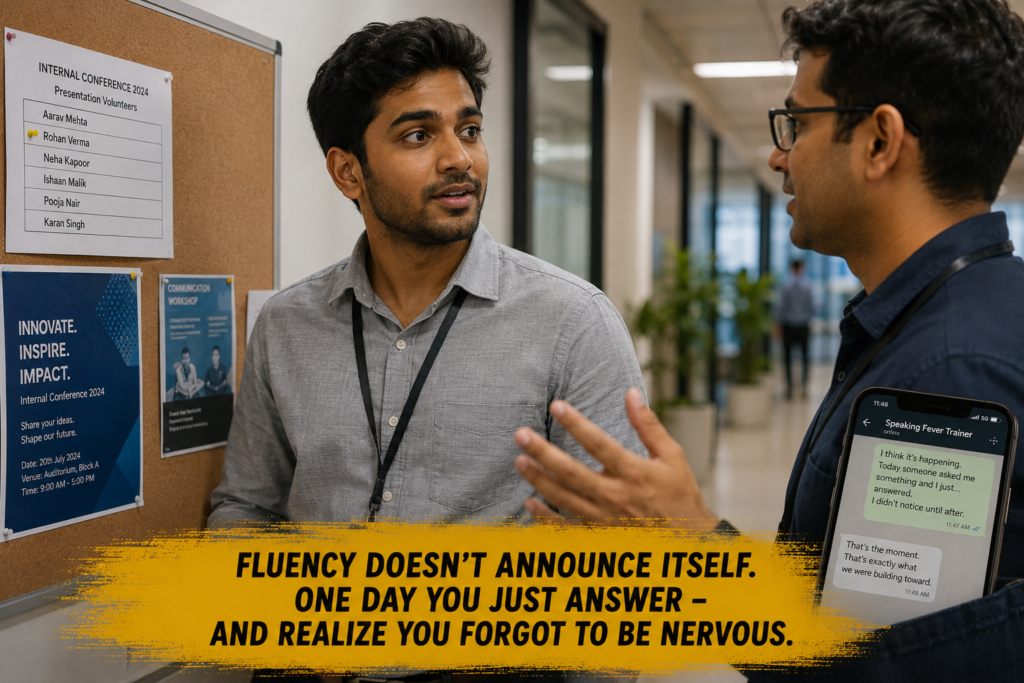
How Do You Know You’re Becoming Fluent?
Fluency doesn’t happen overnight. You’ll notice small improvements first, and those improvements gradually become lasting habits.
Here are some signs that your English is improving:
- You speak without translating every sentence.
- You pause less during conversations.
- You understand English videos more easily.
- You can explain your opinions clearly.
- You feel comfortable starting conversations.
These are strong indicators that your spoken English for intermediate learners is moving toward an advanced level.
Conclusion
Improving your intermediate spoken English is not about becoming perfect. It is about becoming more confident every day. With regular intermediate English practice, useful vocabulary, and real conversations, you can gradually speak English more naturally.
The journey to fluency takes patience, but every small conversation helps you move forward. Focus on communicating your ideas instead of worrying about every mistake. Over time, your confidence, pronunciation, and fluency will improve together.
If you want structured guidance and personalized speaking practice, Speaking Fever offers live 1-on-1 spoken English course sessions that help learners build confidence through real conversations and expert feedback.
Reach us via
Book Your Slot with Our Counsellor:
Frequently Asked Questions (FAQs)
What Is Intermediate Spoken English and How Do I Know I Am at This Level?
Intermediate spoken English means you can understand everyday conversations and communicate your ideas, but you may still hesitate or search for words while speaking. If you can hold basic conversations but want to speak more naturally and confidently, you are likely at the intermediate level.
Why Do Intermediate Learners Stop Improving?
Many learners stop improving because they spend more time studying English than speaking it. Regular conversations, daily practice, and using new vocabulary are much more effective than only watching videos or reading grammar books.
How Long Does It Take to Become Fluent from the Intermediate Level?
Most learners notice improvement within 4 to 6 weeks of consistent practice. With daily speaking, listening, and vocabulary building, many people become much more fluent within 3 to 6 months.
What Is the Best Daily Practice Routine for Intermediate English?
A simple routine works best. Spend time reading aloud, listening to English, learning useful phrases, and speaking every day. Even 20 to 30 minutes of daily practice can make a noticeable difference.
How Can I Stop Translating Before Speaking English?
Start thinking in English during everyday activities. Describe what you see, plan your day in English, and speak to yourself instead of translating from your native language. With regular practice, this habit becomes natural.
What Is the Best Way to Learn Vocabulary at the Intermediate Level?
Learn words in phrases instead of memorizing single words. Try using every new word in a sentence or conversation on the same day, and review your vocabulary regularly to remember it longer.
What Is the Difference Between Intermediate and Advanced English?
Intermediate learners can communicate in familiar situations but may pause or hesitate while speaking. Advanced speakers communicate smoothly, use natural expressions, and respond confidently without translating their thoughts.