How to Remove Hesitation in English Speaking for Kids: 7 Proven Ways

Key Highlights
- Children become confident when they practice English regularly.
- Praise effort instead of expecting perfect English.
- Make English part of everyday conversations.
- Fun activities and games encourage children to speak more.
- Small daily practice builds lifelong confidence.
Table of Contents
Many children understand English but hesitate to speak because they worry about making mistakes. If you’re looking for ways to remove hesitation in English speaking for kids, you’re not alone because many parents face the same challenge. The good news is that every child can become a confident English speaker with the right support and regular practice.
Children learn best when they feel safe, encouraged, and free to express themselves. According to Cambridge English’s Parents and Children resources, children build confidence more naturally when learning is enjoyable and they get regular opportunities to communicate without the fear of being judged. If you’re looking for a One-to-One Online English Course for Kids, personalized guidance and speaking practice can help your child become more confident every day.
In this guide, you’ll discover seven proven ways to help your child overcome hesitation, enjoy speaking English, and build confidence step by step. Whether your child is just beginning or already knows some English, these simple tips will make learning fun and stress-free.
What You’ll Learn in This Guide
Helping a child speak English confidently is not about teaching difficult grammar. It is about creating the right environment where they feel happy, comfortable, and excited to communicate. Small daily habits can make a big difference.
In this guide, you’ll learn:
- Why do children hesitate to speak English?
- How to build English speaking confidence for children.
- Simple ways to encourage daily speaking.
- Activities that make learning enjoyable.
- How parents can support children every day.
By the end of this guide, you’ll have practical ideas that you can start using right away.
Why Do Kids Hesitate to Speak English?
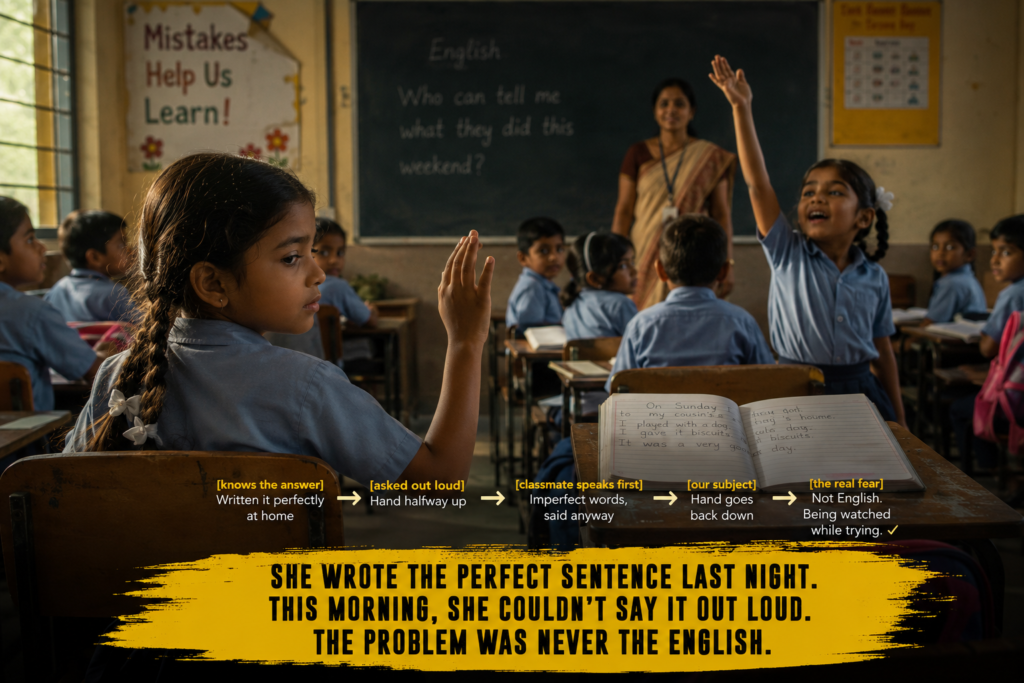
Many parents ask, “Why is my child afraid to speak English?” The answer is usually simple. Most children are not afraid of English itself-they are afraid of making mistakes or being corrected in front of others.
Some children also compare themselves with classmates who speak better English. This makes them lose confidence and become kids hesitant to speak English, even when they understand what they hear.
Some common reasons include:
- Fear of making mistakes.
- Worry about being laughed at.
- Limited speaking practice.
- Lack of confidence.
- Pressure to speak perfectly.
Understanding the reason behind your child’s hesitation is the first step toward helping them.
1. Create a Safe and Positive Environment
Children learn faster when they feel comfortable. If they know they won’t be criticized for making mistakes, they become more willing to speak.
Understanding how kids in India can learn spoken English confidently shows exactly why a positive and supportive environment is the foundation – confidence grows through conversation, not perfection.
Here are a few simple ways to create a supportive environment:
- Praise your child’s effort.
- Listen patiently without interrupting.
- Avoid comparing your child with others.
- Celebrate small improvements.
- Encourage speaking without worrying about mistakes.
This is one of the best ways to remove fear of speaking English in children because it helps children enjoy learning instead of fearing it.
2. Make English Part of Everyday Life
Children learn languages faster when they hear and use them every day. You don’t need to create long study sessions.
Practical guidance on how to teach your child to speak English at home shows how simple conversations during daily activities are often more effective than formal lessons – making English feel natural instead of something that only happens during study time.
Try these easy activities:
- Talk about daily routines in English.
- Name objects around the house.
- Ask simple questions during meals.
- Watch short English cartoons together.
- Read simple English storybooks before bedtime.
These small habits answer how to encourage kids to speak English because they create regular opportunities to practice without pressure.
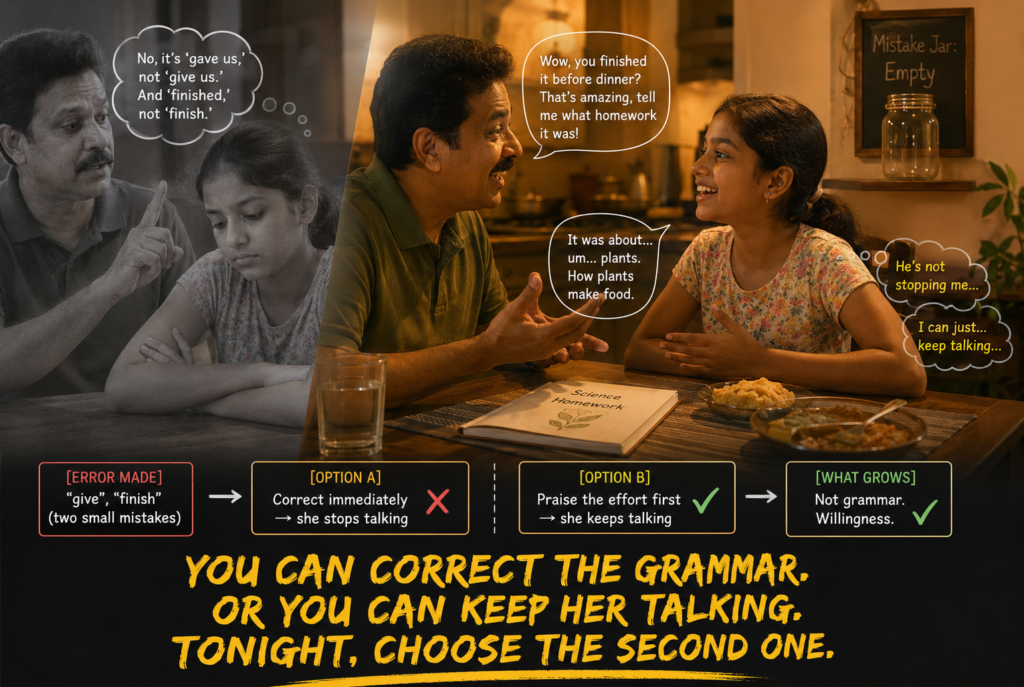
3. Praise Effort Instead of Perfection
Many children stop speaking because they think every sentence must be perfect. When parents focus only on mistakes, children become more nervous and avoid speaking altogether.
Instead of expecting perfect grammar, appreciate your child’s effort. Every sentence they speak is a step toward becoming more confident.
You can encourage your child by:
- Saying “Great job for trying!”
- Smiling when they speak English.
- Correcting only one mistake at a time.
- Giving positive feedback first.
- Encouraging them to speak again.
When children feel appreciated, they become less afraid of speaking and slowly overcome fear of speaking English for kids in a natural and enjoyable way.
4. Encourage Speaking Through Games and Stories
Children learn faster when they are having fun. Understanding how spoken English courses help kids shows why games, stories, and role-plays make English feel like play instead of study – so children speak naturally without worrying about mistakes.
Choose activities that encourage your child to speak instead of simply listening. The more they use English in a fun way, the more comfortable they become.
Try these activities:
- Play simple word games.
- Read storybooks together.
- Ask your child to tell a short story.
- Play role-play games like “teacher” or “shopkeeper.”
- Sing English songs together.
These activities help children develop communication skills naturally while making learning enjoyable.
5. Give Kids Small Speaking Challenges
Many children become nervous when they are asked to speak for a long time. Instead of giving big speaking tasks, start with small and simple challenges. Completing these small goals gives children confidence and encourages them to speak more.
Keep the activities short and fun so your child feels successful after every practice session.
Here are a few easy challenges:
- Introduce themselves in English.
- Talk about their favorite toy.
- Describe today’s weather.
- Speak about their favorite cartoon.
- Tell three things they did today.
As your child completes these challenges, you’ll notice how improving English speaking confidence in kids becomes much easier because they start believing in themselves.
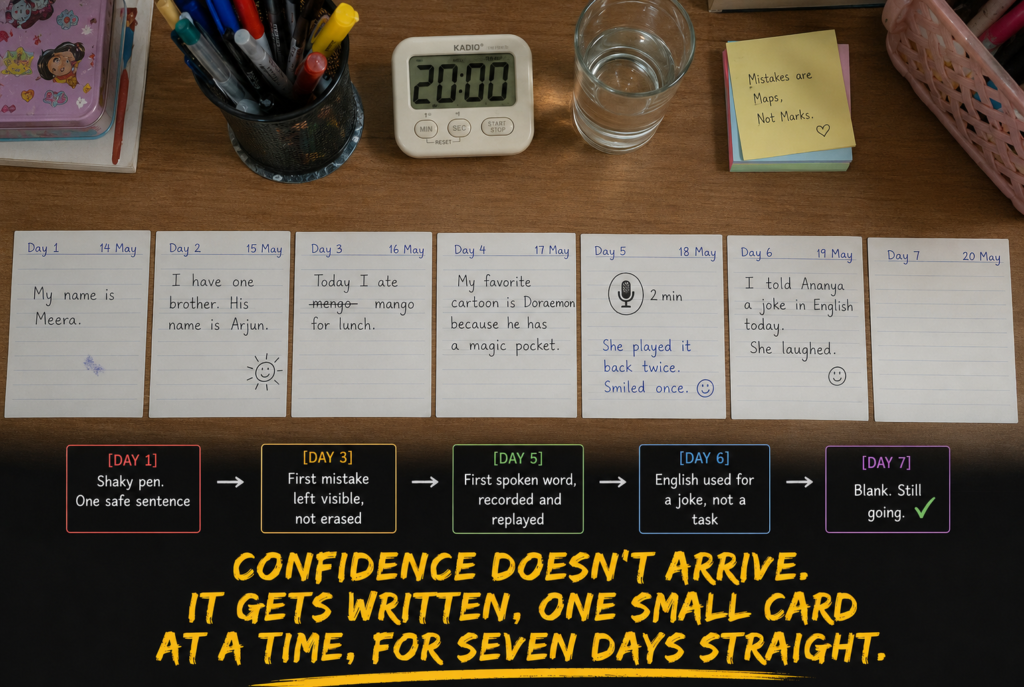
6. Help Them Build Confidence with Daily Practice
Confidence doesn’t appear overnight. It grows little by little through regular practice. Even 15 to 20 minutes of speaking every day can make a big difference over time. Joining structured online English speaking classes for kids gives children a guided daily practice environment with fun activities, teacher support, and speaking exercises that build confidence consistently.
Simple daily practice ideas include:
- Read one English page aloud.
- Learn five new words.
- Have a short family conversation in English.
- Watch an English learning video.
- Practice speaking in front of a mirror.
Daily practice is one of the most effective ways to build English speaking confidence for children and help them speak without hesitation.
7. Let Them Learn with Personal Guidance
Some children improve quickly with self-practice, while others need a little extra support. A teacher who understands children’s learning style can encourage them, correct mistakes gently, and make speaking enjoyable.
Personal guidance also gives children regular opportunities to practice conversations, which helps them become more comfortable speaking English.
If your child needs extra support, an Interactive Online English Course for Children can provide:
- One-to-one speaking practice.
- Fun learning activities.
- Friendly teacher support.
- Personalized feedback.
- Confidence-building conversations.
Regular speaking practice with expert guidance helps children speak more naturally and prepares them to communicate confidently in school and everyday life.
Common Mistakes Parents Should Avoid
Parents want the best for their children, but sometimes small mistakes can reduce a child’s confidence. Creating a positive learning experience is much more important than expecting perfect English from the beginning.
Here are a few common mistakes and better alternatives:
| Common Mistake | Better Approach |
| Correcting every sentence | Let your child finish speaking first |
| Comparing with other children | Celebrate your child’s own progress |
| Forcing long study sessions | Keep lessons short and enjoyable |
| Expecting perfect English | Focus on regular improvement |
| Speaking only during study time | Use English naturally throughout the day |
Remember, a child who enjoys speaking English today is much more likely to become a confident communicator tomorrow. With patience, encouragement, and regular practice, even a child afraid to speak English can become confident and expressive over time.
Daily 20-Minute English Speaking Routine for Kids
Children learn best when they practice a little every day. A short and enjoyable routine is much more effective than making them study for long hours. The goal is to help your child enjoy speaking English without feeling pressured.
Here’s a simple routine you can follow at home:
| Activity | Time |
| Read a short English story aloud | 5 minutes |
| Learn and use 5 new English words | 5 minutes |
| Talk about today’s activities in English | 5 minutes |
| Play a fun English speaking game | 5 minutes |
Following this routine every day will gradually help your child remove hesitation in English speaking for kids and become more comfortable expressing their thoughts.
How Parents Can Support Their Child Every Day
Parents play the biggest role in building a child’s confidence. You don’t need to be an English expert to help your child. Simply encouraging them to speak and creating a positive learning environment can make a huge difference.
The most important thing is to make English a natural part of everyday life instead of treating it like another school subject.
Here are a few simple ways you can help:
- Speak simple English sentences at home.
- Encourage your child to ask questions in English.
- Appreciate every small improvement.
- Read English storybooks together.
- Watch educational English videos as a family.
- Never laugh at your child’s mistakes.
- Give them opportunities to speak every day.
When children feel supported, they become more willing to speak and learn.
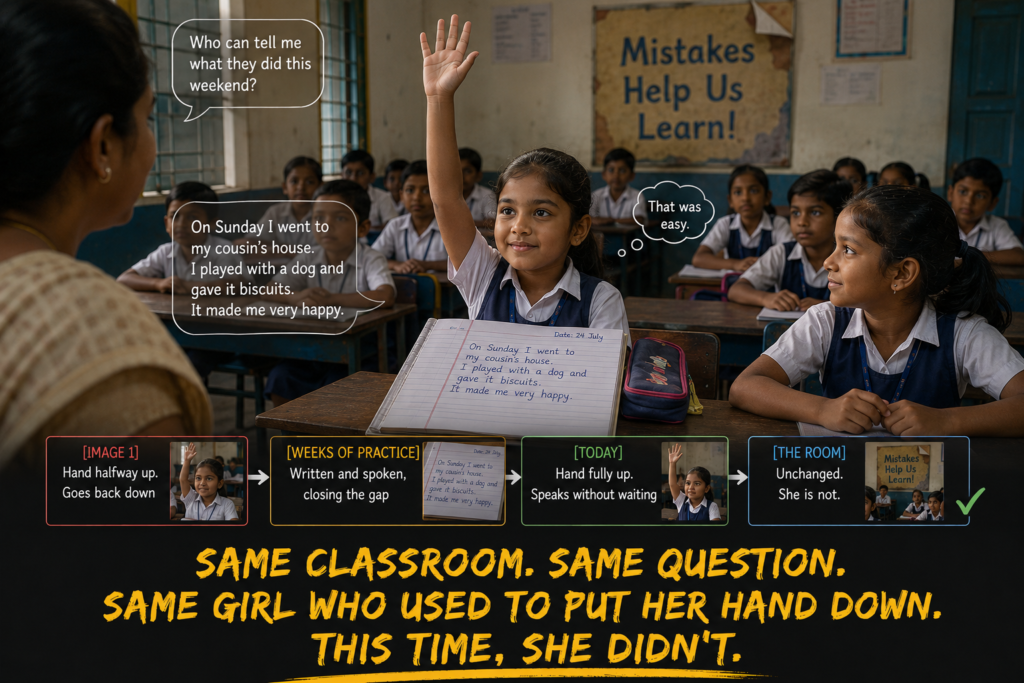
Remember, Confidence Takes Time
Every child learns at a different pace. Some children start speaking confidently within a few weeks, while others need more time. What matters most is that they continue practicing without feeling afraid of making mistakes.
Be patient and celebrate every small success. A child who speaks one new sentence today will speak many more tomorrow if they receive encouragement instead of pressure.
Keep reminding your child:
- It’s okay to make mistakes.
- Speaking is more important than being perfect.
- Every day is a chance to learn.
- Practice makes speaking easier.
- Confidence grows one conversation at a time.
With regular encouragement, you’ll soon notice how to improve English speaking confidence in kids becoming much easier, and your child will naturally develop stronger communication skills.
Conclusion
Helping your child remove hesitation in English speaking for kids is a journey that requires patience, encouragement, and regular practice. Every small conversation helps build confidence, improve communication, and reduce the fear of speaking English. The more your child speaks, the more natural English will become.
Remember that every confident speaker was once a beginner. Don’t worry if your child makes mistakes because mistakes are a normal part of learning. Focus on creating a positive environment where your child feels happy to speak, learn, and grow every single day.
If you’re looking for expert guidance, Speaking Fever offers personalized one-to-one English speaking classes for kids that make learning fun, interactive, and confidence-building. With experienced trainers and practical speaking activities, your child can develop strong English communication skills and enjoy speaking with confidence.
Reach us via
Book Your Slot with Our Counsellor:
Frequently Asked Questions (FAQs)
1. Why Is My Child Hesitant to Speak English?
Many children hesitate to speak English because they are afraid of making mistakes or being laughed at. With regular practice, positive encouragement, and a supportive environment, they can gradually become more confident.
2. How Can I Remove Hesitation in English Speaking for Kids?
Start by encouraging your child to speak simple English every day without worrying about mistakes. Praise their effort, make learning fun, and give them plenty of opportunities to practice through conversations, games, and stories.
3. How Can I Improve My Child’s English Speaking Confidence?
Help your child practice speaking every day, even for a few minutes. Reading storybooks, talking about daily activities, and joining interactive English classes can gradually improve their confidence.
4. What Should I Do If My Child Is Afraid to Speak English?
Don’t force your child to speak or correct every mistake immediately. Instead, encourage small conversations, appreciate every effort, and create a safe environment where they feel comfortable expressing themselves.
5. How Can I Encourage My Child to Speak English at Home?
Use simple English during daily routines, ask easy questions, read books together, and play English-speaking games. Making English a part of everyday life helps children speak more naturally.
6. At What Age Should Children Start Speaking English?
Children can begin learning spoken English from an early age through simple words, songs, stories, and conversations. The earlier they are exposed to English in a fun and natural way, the more confident they usually become.
7. Can Online English Speaking Classes Help Children Overcome Hesitation?
Yes. Interactive one-to-one online English classes give children regular speaking practice, personalized feedback, and a comfortable learning environment, helping them overcome hesitation and build confidence step by step.
8. What Is the Best Way to Help Kids Speak English Confidently?
The best approach is to combine daily practice, positive encouragement, fun learning activities, and expert guidance. Speaking Fever’s one-to-one English speaking classes for kids help children build confidence, improve communication skills, and enjoy speaking English through interactive and personalized lessons.