IELTS Self-Study vs Coaching: Which Is Better for Getting Band 7+?

Key Highlights
- Choose the study method that matches your learning style.
- Self-study offers flexibility and lower costs.
- Online coaching provides expert guidance and regular feedback.
- Combine both methods for balanced preparation.
- Practice all four IELTS skills every day.
- Take mock tests regularly and review your mistakes.
- Consistency is more important than studying for long hours.
Table of Contents
Many students preparing for IELTS ask the same question: IELTS self-study vs online coaching– which option gives the best chance of getting Band 7 or higher? The answer depends on your learning style, your schedule, and the level of support you need. Choosing the right preparation method can help you study more effectively and avoid wasting time.
According to IDP IELTS India’s “New to IELTS” guide , understanding the test format and following a structured study plan are important first steps toward achieving your target band score. If you’re looking for a 1-on-1 IELTS Speaking Course, personalized guidance can help you improve your speaking skills, receive expert feedback, and prepare with greater confidence.
In this guide, you’ll compare self-study and online coaching, explore the advantages and challenges of each method, and discover which option fits your learning style. Whether you’re a beginner or planning your IELTS Band 7 preparation, this article will help you make the right decision.
What You’ll Learn
Preparing for IELTS isn’t only about studying harder. It’s about choosing a study method that helps you stay consistent and improve every section of the test.
In this guide, you’ll learn:
- The difference between IELTS self-study vs online coaching.
- The pros and cons of each preparation method.
- Which option is best for different types of learners?
- Simple tips on how to get Band 7 in IELTS.
- How to choose the right preparation plan for your goals.
By the end of this article, you’ll have a clear idea of which study method suits you best.
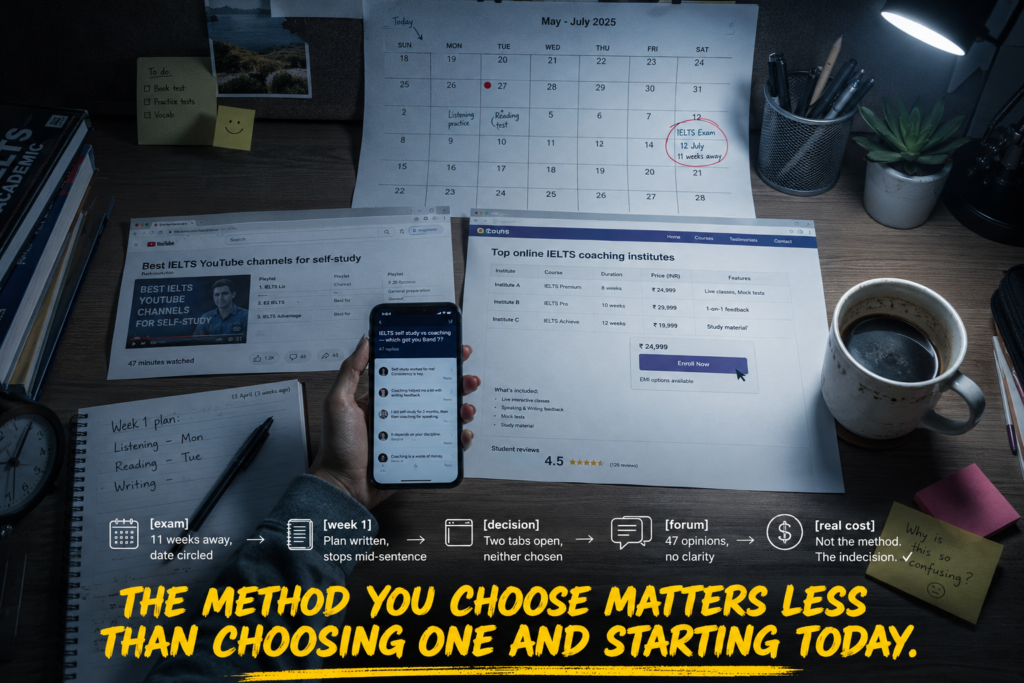
Why Choosing the Right IELTS Preparation Method Matters
Many students spend months preparing for IELTS but don’t get their target score because they choose a study method that doesn’t match their needs. Some learners enjoy studying independently, while others need expert guidance and regular feedback.
There is no single method that works for everyone. The best approach depends on your English level, study habits, available time, and confidence, especially in speaking and writing.
Before you decide, ask yourself:
- Can you study regularly without reminders?
- Do you need feedback on your speaking and writing?
- Are you comfortable learning on your own?
- How much time can you study every day?
- What’s your target IELTS band score?
Answering these questions will make it easier to choose between self study vs coaching for IELTS.
What Is IELTS Self-Study?
IELTS preparation without coaching means preparing for the exam on your own using books, official practice tests, YouTube videos, websites, and mobile apps. You decide what to study, when to study, and how quickly you want to progress.
Many students choose this method because it offers flexibility and allows them to learn at their own pace. If you’re disciplined and already have a good understanding of English, self-study can be an effective option.
Self-study usually includes:
- Official IELTS practice books.
- Free online video lessons.
- Mock tests.
- Vocabulary practice.
- Speaking practice with friends or language partners.
Before creating your study schedule, it’s helpful to understand how long it takes to prepare for IELTS so you can set realistic expectations based on your current English level.
Many students searching for How to prepare for IELTS at home begin with self-study because it’s convenient and doesn’t require attending scheduled classes.
Benefits of IELTS Self-Study
Self-study offers several advantages, especially for learners who are motivated and comfortable learning independently. It gives you complete control over your study schedule and lets you focus more on the sections where you need improvement.
One of the biggest benefits is flexibility. You can study before work, after college, or even on weekends without following a fixed timetable.
Some key advantages include:
- Study anytime and anywhere.
- Learn at your own pace.
- Save money compared to coaching.
- Spend extra time on weak areas.
- Choose study materials that match your learning style.
For many learners, IELTS preparation methods that involve self-study work well because they encourage independent learning and build confidence over time.
Challenges of IELTS Self-Study
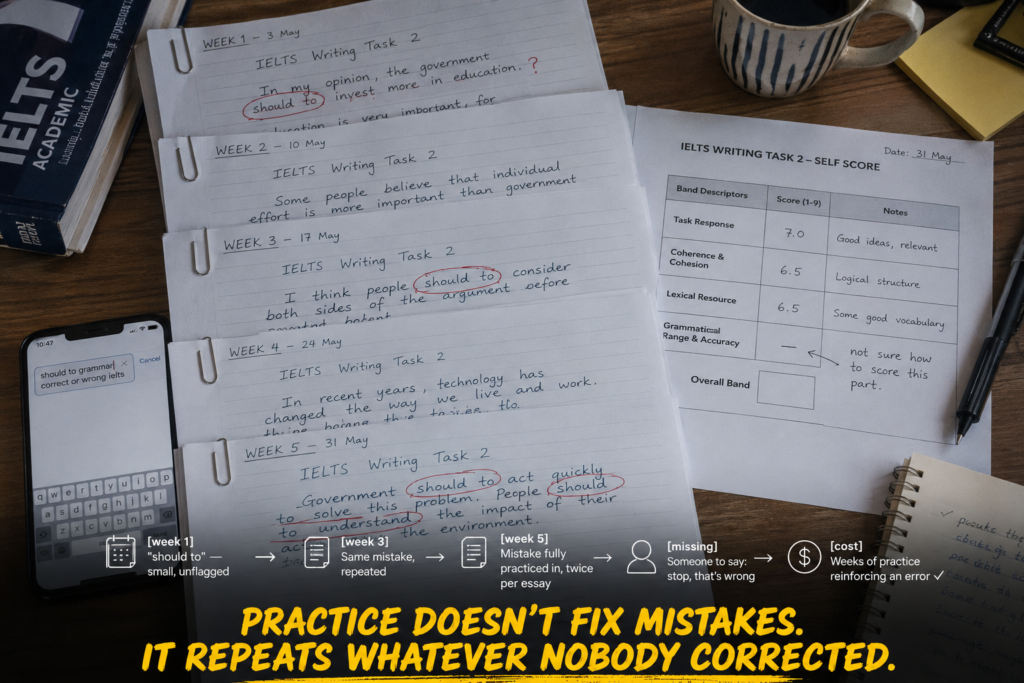
While self-study has many benefits, it also comes with a few challenges. Without proper planning, it’s easy to lose motivation or spend time on the wrong study materials.
One of the biggest difficulties is not knowing whether your speaking and writing answers are correct. Since there’s no teacher to guide you, mistakes can become habits if they aren’t corrected early.
Some common challenges are:
- No expert feedback on writing.
- Limited speaking practice.
- Difficulty staying motivated.
- No personalized study plan.
- Hard to identify weak areas.
This is why many beginners look for an IELTS self-study guide for beginners before starting their preparation. If you’re still unfamiliar with the exam format, read our guide on What Is IELTS? A Beginner’s Guide can help you understand the test structure, scoring system, and what to expect before creating your study plan.
What Is Online IELTS Coaching?
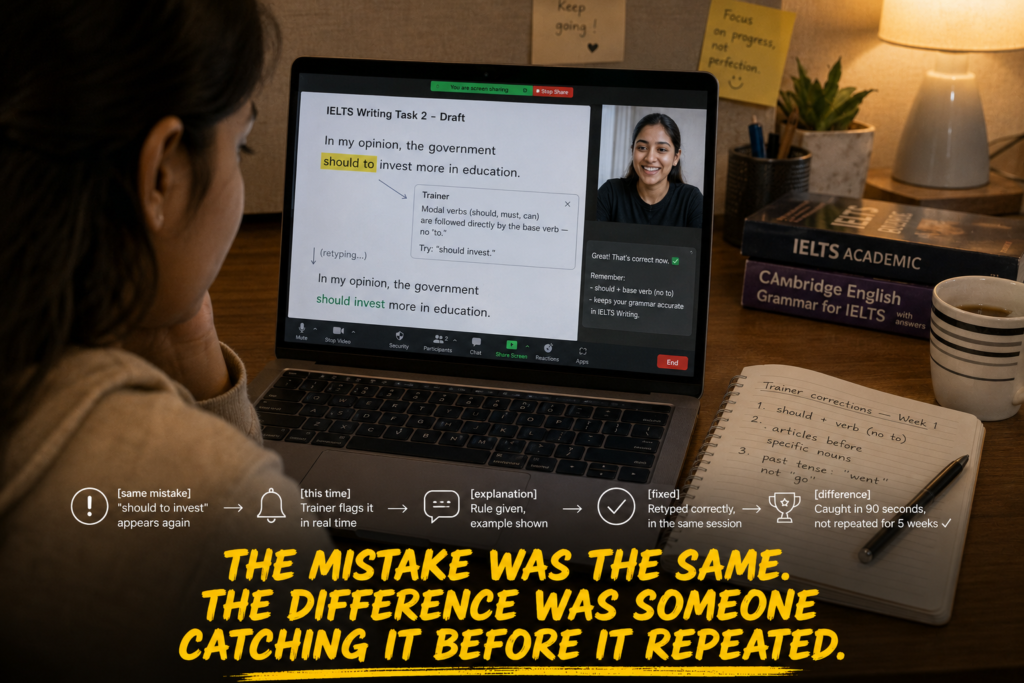
Online IELTS coaching is a structured way to prepare for the IELTS exam with the help of experienced trainers. Instead of studying completely on your own, you attend live classes, complete practice exercises, receive feedback, and follow a planned study schedule.
This method is especially helpful for students who need guidance, motivation, and regular evaluation. It also gives you the opportunity to ask questions, clear your doubts immediately, and improve your weak areas with expert support.
Online coaching usually includes:
- Live interactive classes.
- Speaking and writing feedback.
- Mock IELTS tests.
- Personalized study plans.
- Doubt-clearing sessions.
These features make it easier to stay focused and prepare for every section of the exam.
Benefits of Online IELTS Coaching
Many students choose online coaching because it provides a clear learning path. Instead of guessing what to study next, you follow a structured plan designed by IELTS experts.
One of the biggest advantages is receiving feedback on your speaking and writing. These two sections are difficult to improve without someone pointing out your mistakes.
Some of the Online IELTS coaching advantages include:
- Expert guidance throughout your preparation.
- Regular speaking practice.
- Personalized feedback on writing tasks.
- Better time management strategies.
- Motivation through scheduled classes.
- Access to mock tests and study materials.
Regular speaking practice becomes much more effective when you apply these IELTS Speaking Tips for Beginners alongside feedback from an experienced trainer.
If your goal is IELTS Band 7 preparation, professional coaching can help you identify mistakes early and improve them before your exam.
IELTS Self-Study vs Online Coaching: A Quick Comparison
Choosing between IELTS online coaching vs self preparation depends on your learning style, confidence level, and preparation needs. Both methods can help you achieve a good score, but each has its own strengths.
Here’s a simple comparison to help you decide:
| Feature | IELTS Self-Study | Online IELTS Coaching |
| Study Schedule | Flexible | Structured |
| Cost | Lower | Higher |
| Expert Feedback | No | Yes |
| Speaking Practice | Limited | Regular |
| Writing Evaluation | Self-check | Trainer Feedback |
| Motivation | Self-driven | Guided |
| Personalized Plan | No | Yes |
| Best For | Independent learners | Learners who need support |
Both methods can work well. The best choice depends on how you learn and how much guidance you need.
Who Should Choose IELTS Self-Study?
Self-study is a good choice if you’re disciplined and can stay motivated without someone reminding you to study. It also works well if you already have a strong understanding of English and only need regular practice before the exam.
Students who enjoy learning independently often make steady progress through self-study because they can move at their own pace.
Self-study may be the right option if you:
- Can create and follow your own study schedule.
- I already understand the IELTS exam format.
- Have strong reading and listening skills.
- Can evaluate your own progress.
- I want a flexible preparation plan.
Many learners successfully complete IELTS preparation without coaching by staying consistent and practicing every day.
Who Should Choose Online IELTS Coaching?
Online coaching is ideal for learners who need regular guidance and professional feedback. If you’re unsure about your speaking or writing skills, expert support can help you improve much faster.
Beginners often feel more confident when they have a teacher to explain concepts, correct mistakes, and provide personalized advice.
Online coaching is a better choice if you:
- I need a structured study plan.
- I want regular speaking practice.
- Need feedback on writing tasks.
- Find it difficult to stay motivated.
- Prefer learning with a trainer.
Many students also choose Private IELTS Speaking Classes because they receive individual attention, personalized speaking practice, and detailed feedback that helps improve fluency and confidence.
Can You Combine Both Methods?
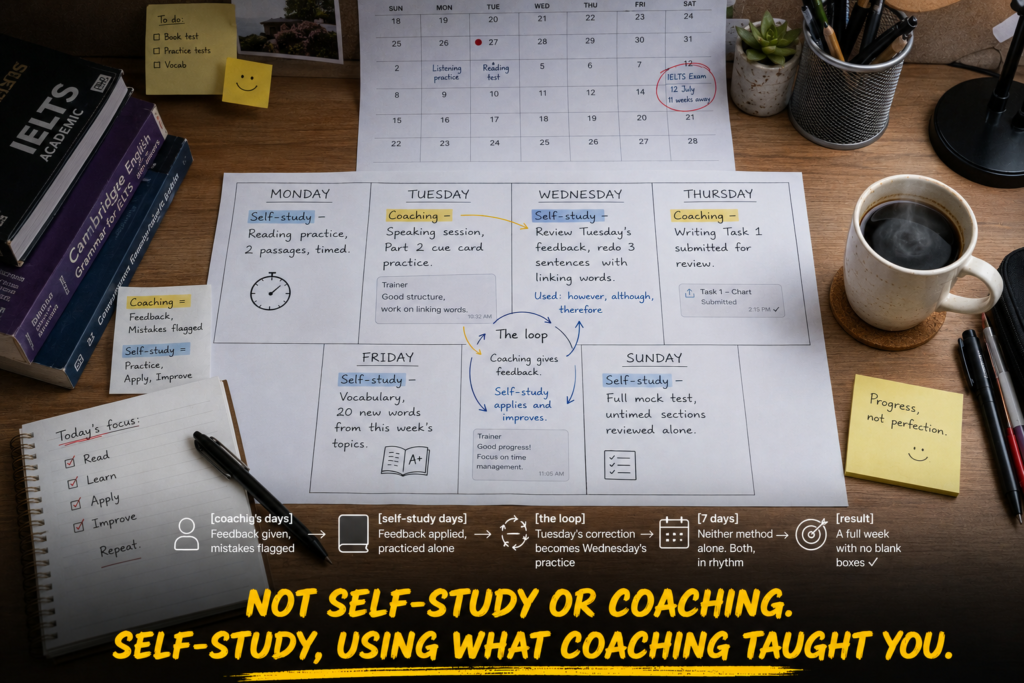
You don’t always have to choose only one preparation method. Many successful IELTS candidates combine self-study with online coaching to get the best of both approaches.
For example, you can attend coaching classes to understand difficult topics and receive expert feedback, then use self-study to revise lessons and complete additional practice tests. This balanced approach allows you to learn independently while still benefiting from professional guidance.
A combined approach can help you:
- Build a strong study routine.
- Practice more between classes.
- Improve weak areas faster.
- Stay motivated throughout your preparation.
- Make better use of your study time.
For many students comparing IELTS coaching or self study, this combination offers the perfect balance of flexibility, expert support, and consistent practice.
Tips to Get Band 7+ Regardless of Your Study Method
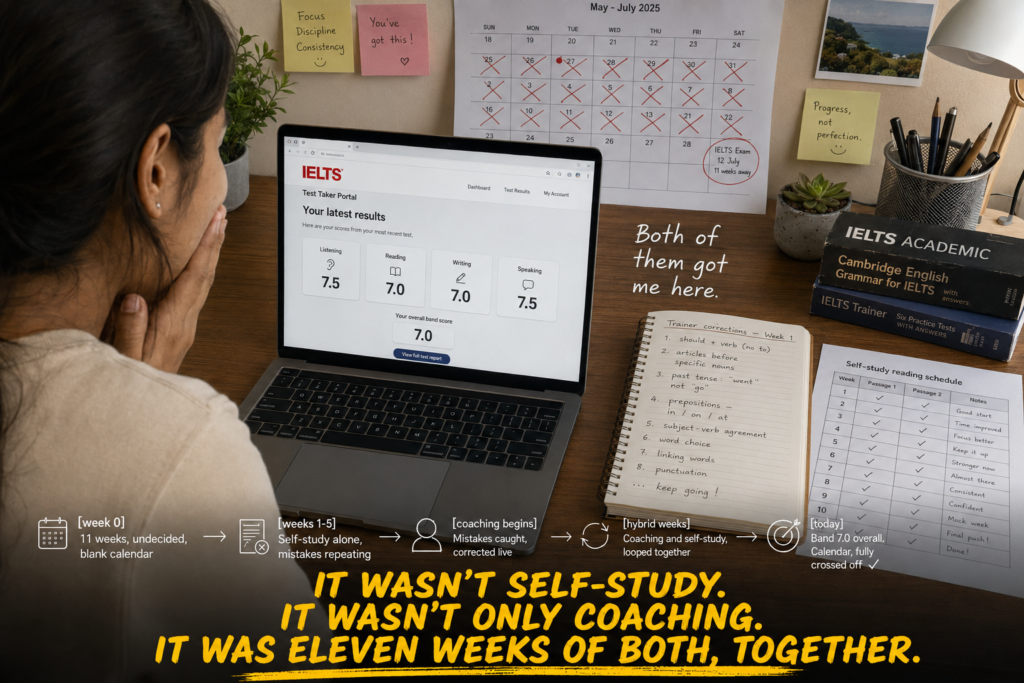
Whether you choose self-study or online coaching, your daily habits will have the biggest impact on your IELTS score. Consistent practice, smart planning, and regular feedback are more important than the study method itself.
If your goal is to get Band 7 in IELTS, focus on improving all four skills-Listening, Reading, Writing, and Speaking. Don’t spend all your time on only one section.
Here are some practical tips:
- Follow a daily study schedule.
- Practice with official IELTS materials.
- Take full-length mock tests regularly.
- Learn new vocabulary every day.
- Improve your grammar and pronunciation.
- Record your speaking answers and review them.
- Analyze your mistakes after every practice test.
- Practice time management for every section.
Small improvements every day can lead to a much higher band score on your exam.
Common Mistakes to Avoid During IELTS Preparation
Many students study hard but still miss their target score because they repeat the same mistakes throughout their preparation. Knowing these mistakes early can save you time and help you study more effectively.
Instead of studying for long hours without a plan, focus on quality practice and continuous improvement.
Avoid these common mistakes:
- Ignoring the official IELTS test format.
- Practicing only your favorite sections.
- Not taking timed mock tests.
- Memorizing speaking answers.
- Skipping writing practice.
- Not reviewing mistakes after each test.
- Waiting until the last week to prepare.
No matter which IELTS preparation methods you choose, avoiding these mistakes will help you prepare with greater confidence.
Which Method Gives You the Best Chance of Getting Band 7+?
There isn’t a single answer that works for everyone. The best preparation method depends on your English level, learning style, and personal goals.
If you’re already confident in English and can stay disciplined, self-study may be enough. On the other hand, if you need expert feedback, motivation, and structured lessons, online coaching can help you improve faster.
Here’s a simple guide:
| Choose Self-Study If… | Choose Online Coaching If… |
| You enjoy learning independently. | You prefer learning with a trainer. |
| You can follow your own schedule. | You need a structured study plan. |
| You’re confident in your English basics. | You want regular speaking and writing feedback. |
| You’re comfortable checking your own progress. | You need motivation and expert guidance. |
| You have a limited budget. | You’re aiming for faster improvement. |
Before choosing your preparation strategy, make sure you understand the difference between IELTS Academic vs General Training, as each test is designed for different goals.
Many successful candidates combine both approaches. They study independently every day while using coaching sessions to improve speaking, writing, and test strategies.
Conclusion
Choosing between IELTS self-study vs online coaching depends on your goals, confidence level, and the kind of support you need. Both methods can help you achieve your target score when you study consistently and follow a clear preparation plan. The most important step is to start preparing and stay committed throughout your journey.
Remember that getting a Band 7+ isn’t about studying harder-it’s about studying smarter. Practice every day, review your mistakes, improve all four IELTS skills, and keep challenging yourself with mock tests. With patience and regular practice, you can achieve the score you need for your study, work, or migration goals.
If you’re looking for personalized support, Speaking Fever offers one-to-one IELTS preparation with experienced trainers, personalized speaking practice, and individual feedback to help you build confidence and move closer to your target Band 7+ score.
Reach us via
Book Your Slot with Our Counsellor:
Frequently Asked Questions (FAQs)
1. Is IELTS Self-Study Enough to Get Band 7+?
Yes, IELTS self-study can be enough if you have a good understanding of English, follow a structured study plan, and practice consistently. Using official IELTS materials, taking mock tests, and reviewing your mistakes regularly can help you achieve a Band 7 or higher.
2. Which Is Better: IELTS Self-Study vs Online Coaching?
The answer depends on your learning style and current English level. IELTS self-study vs online coaching is not about which method is better for everyone, but which one suits your needs. Self-study offers flexibility, while online coaching provides expert guidance and personalized feedback.
3. Can I Prepare for IELTS at Home Without Coaching?
Yes. Many students successfully prepare for IELTS at home using official practice books, online resources, mock tests, and a consistent study schedule. The key is to practice all four IELTS skills and stay disciplined throughout your preparation.
4. What Are the Advantages of Online IELTS Coaching?
Some of the biggest online IELTS coaching advantages include live classes, personalized speaking and writing feedback, structured study plans, mock tests, and expert guidance. These features help many students improve faster and avoid common preparation mistakes.
5. How Long Does It Take to Get Band 7 in IELTS?
The preparation time depends on your current English level and daily practice. Most learners need a few weeks to several months of consistent IELTS Band 7 preparation. Following a study plan and practicing regularly can help you reach your target score more efficiently.
6. Should Beginners Choose IELTS Coaching or Self-Study?
For beginners, the choice between IELTS coaching or self study depends on their confidence and learning habits. Students who need regular support and feedback usually benefit from coaching, while motivated learners with strong self-discipline can also succeed through self-study.
7. Can I Combine Self-Study and Online IELTS Coaching?
Yes. Combining IELTS online coaching vs self preparation is one of the most effective ways to prepare. You can attend coaching sessions for expert guidance and use self-study to revise lessons, practice mock tests, and strengthen weak areas between classes.
8. What Is the Best IELTS Preparation Method for Getting Band 7+?
The best IELTS preparation methods are the ones you can follow consistently. Whether you choose self-study, online coaching, or a combination of both, regular practice, mock tests, time management, and continuous improvement are the keys to achieving Band 7 or higher.
9. Who Should Choose Online IELTS Coaching Instead of Self-Study?
Online IELTS coaching is a better choice if you need expert feedback, a structured study plan, and regular speaking practice. If you’re aiming for Band 7+, Speaking Fever’s one-on-one IELTS coaching provides personalized guidance, live speaking sessions, and individual feedback to help you prepare with confidence.