How Long Does It Take to Prepare for IELTS? A Beginner’s Study Plan for Every Band Score (2026)

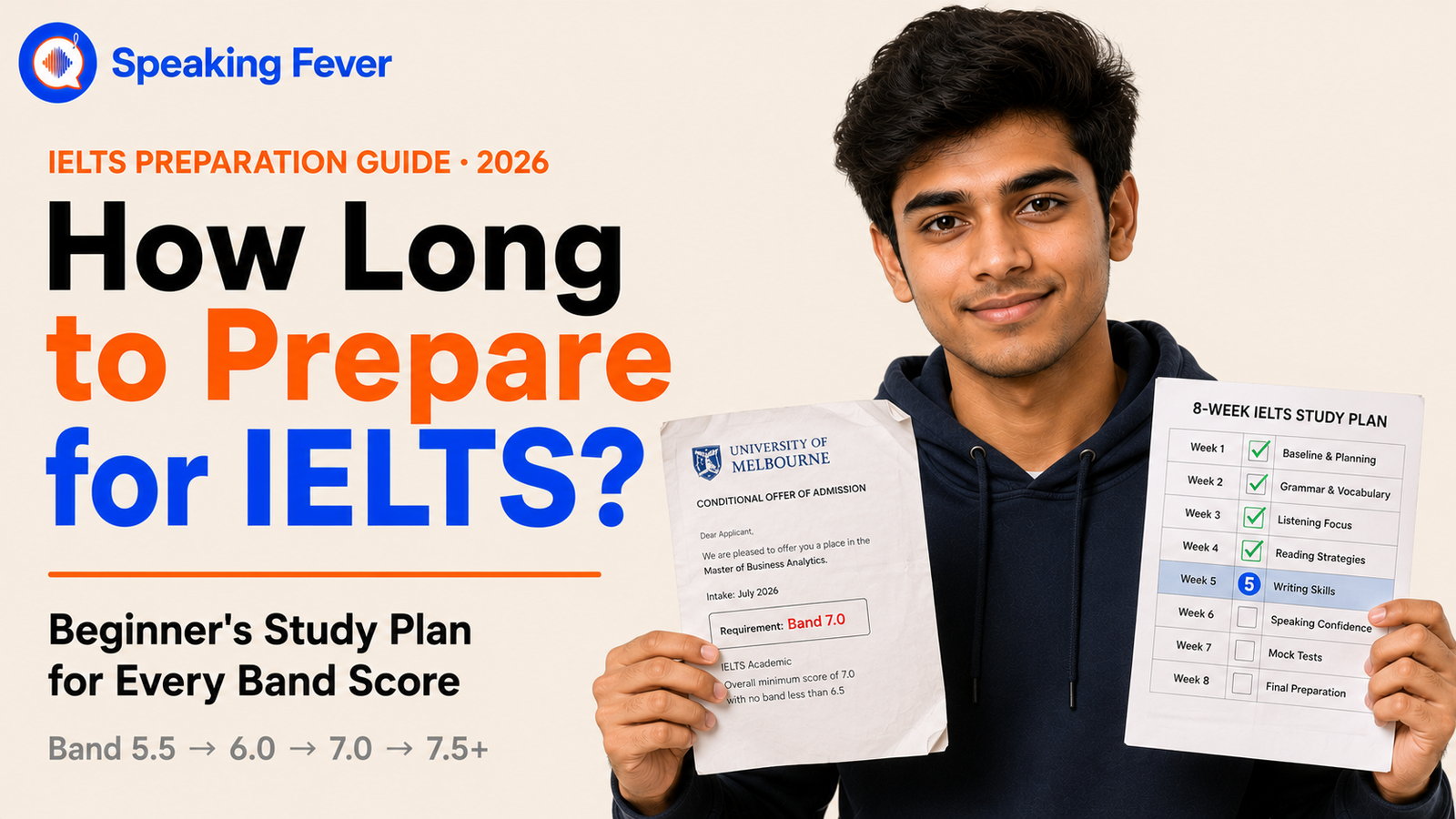
Many students dream of studying, working, or settling abroad, and IELTS is often the first step toward that goal. If you’re wondering How Long Does It Take to Prepare for IELTS, you’re not alone because it’s one of the most common questions beginners ask. The answer depends on your current English level, your target band score, and how much time you can practice every day.
There is no single preparation timeline that works for everyone. According to the official IELTS IDP India guide, beginners should first understand the IELTS format, practice each of the four skills consistently, and follow a structured study plan to build confidence before the exam. If you’re looking for a 1-to-1 Online IELTS Preparation Course, personalized guidance and regular feedback can help you prepare more effectively.
In this guide, you’ll learn how much preparation time you may need for different band scores, what factors affect your progress, and how to create a realistic study plan. Whether you’re starting from scratch or already know some English, this guide will help you prepare with confidence.
Key Highlights
- IELTS preparation time depends on your current English level and target band score.
- A structured study plan helps you prepare more efficiently.
- Practice Listening, Reading, Writing, and Speaking every week.
- Take regular mock tests to identify weak areas.
- Small daily improvements lead to better IELTS scores.
Table of Contents
What You’ll Learn in This Guide
Preparing for IELTS becomes much easier when you know what to expect. Instead of studying randomly, you’ll have a clear roadmap that helps you use your time wisely and focus on the skills that matter most.
In this guide, you’ll learn:
- How long IELTS preparation usually takes.
- What affects your IELTS preparation time.
- A practical IELTS study plan for beginners.
- Study plans for different band scores.
- Daily habits that help you improve faster.
By the end of this guide, you’ll know exactly where to start and how to prepare for your target score.
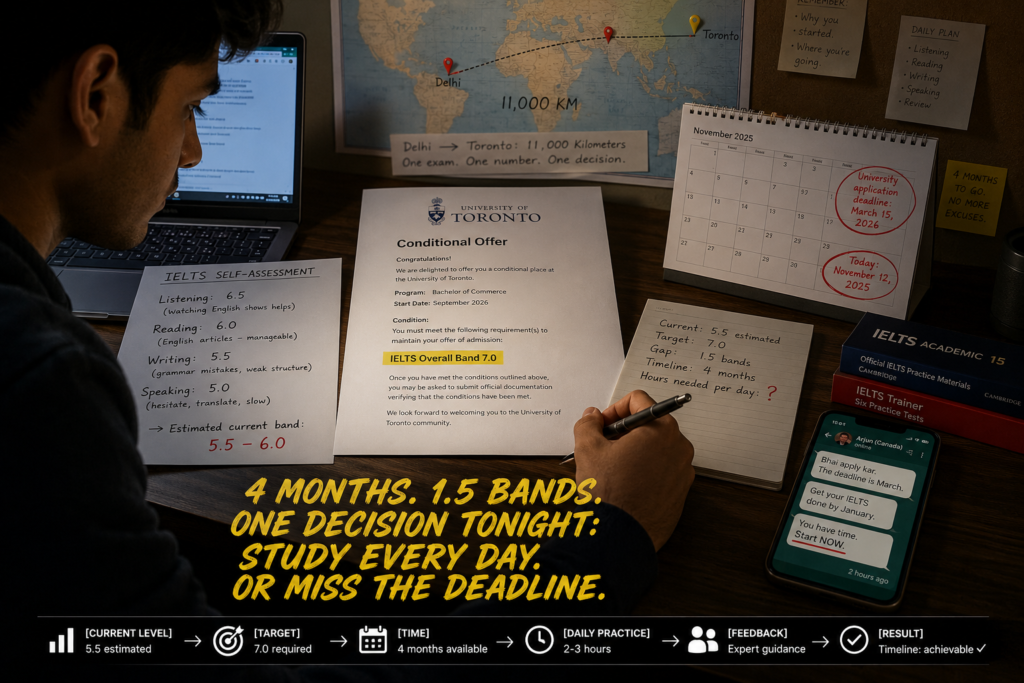
What Affects Your IELTS Preparation Time?
Every learner starts at a different level, so preparation time is never the same for everyone. Some students already have strong English skills, while others need more time to build their vocabulary, grammar, and confidence before taking the exam.
Several factors decide how quickly you improve. One of the most important decisions that affects your preparation approach is understanding IELTS Academic vs General Training — because which test you choose directly determines your study focus, target band requirements, and overall preparation timeline.
The biggest factors include:
- Your current English level.
- Your target IELTS band score.
- How many hours you study each day.
- The quality of your study materials.
- Regular speaking, reading, writing, and listening practice.
The more consistent your practice is, the faster you’ll see improvement.
How Long Does It Take to Prepare for IELTS?
The answer depends on your starting point and your target score. If your English is already strong, you may only need a few weeks of focused preparation. If you’re a beginner, you’ll need more time to build your skills before taking the exam.
Instead of asking only How Long Does It Take to Prepare for IELTS, ask yourself how much you can improve each week with consistent practice. Studying every day for one hour is often more effective than studying for long hours only on weekends.
A general estimate looks like this:
| Current Level | Target Band | Estimated Preparation Time |
| Beginner | 5.5–6.0 | 3–6 months |
| Intermediate | 6.5–7.0 | 2–4 months |
| Upper Intermediate | 7.5+ | 1–3 months |
| Advanced | 8.0+ | 4–8 weeks of focused practice |
These timelines are estimates and may vary depending on your study routine and consistency.
IELTS Preparation Time Based on Your Current English Level
Knowing your current level helps you create a realistic plan. Many students spend too much time studying topics they already know while ignoring the areas where they need improvement. A simple self-assessment can help you study more efficiently.
Here’s what you can expect based on your English level:
Beginner
If you’re new to English, your first goal should be building basic vocabulary, grammar, and communication skills before focusing on exam strategies. Following a complete IELTS preparation guide for beginners helps you understand the exam format, the four skills, and how to build a strong foundation before attempting practice tests.
Focus on:
- Learning everyday English.
- Reading simple articles.
- Practicing basic writing.
- Listening to easy English conversations.
- Speaking English every day.
This stage is ideal for IELTS preparation for beginners because it builds a strong foundation.
Intermediate
At this level, you already understand English but need to improve accuracy, vocabulary, and fluency. Your preparation should focus on improving all four IELTS sections while taking regular mock tests.
Work on:
- Expanding your vocabulary.
- Improving writing structure.
- Speaking confidently.
- Managing exam time.
- Practicing full-length IELTS tests.
Advanced
If you’re already comfortable with English, your goal is refining your skills rather than learning from the beginning. Focus on avoiding small mistakes and improving your overall band score.
Spend more time on:
- Advanced vocabulary.
- Writing Task 2.
- Speaking fluently without hesitation.
- Reading difficult passages.
- Improving time management.
No matter your current level, consistency is more important than studying for long hours. Following a structured IELTS preparation plan for students will help you make steady progress and prepare with confidence.
Study Plan for Band 5.5–6.0
If your target is Band 5.5 or 6.0, your goal should be building a strong foundation instead of trying to learn advanced English. Focus on improving your vocabulary, grammar, and confidence while becoming familiar with the IELTS exam format.
Consistency matters more than studying for long hours. Even one to two hours of focused practice every day can help you make steady progress.
A simple study plan includes:
- Practice English for 1–2 hours daily.
- Learn 10–15 new words every day.
- Read short English articles and news.
- Listen to English podcasts or videos.
- Write one Task 1 or Task 2 answer every week.
- Practice speaking with a partner or mentor.
- Take one mock test every two weeks.
This is one of the most practical IELTS preparation tips for beginners because it builds your skills gradually without making you feel overwhelmed.
Study Plan for Band 6.5–7.0
A Band 6.5 or 7.0 requires stronger communication skills and better accuracy. At this level, you should already understand English reasonably well, so your focus should shift toward improving fluency, vocabulary, and exam strategies.
You should also spend more time reviewing your mistakes than simply completing practice questions.
Your weekly plan can include:
- Practice all four IELTS modules daily.
- Read newspapers and opinion articles.
- Write two essays every week.
- Record your speaking answers.
- Review grammar mistakes regularly.
- Complete one full mock test every week.
- Track your progress after every test.
A structured study routine helps you improve faster than studying random topics every day.
Study Plan for Band 7.5+
Scoring Band 7.5 or higher requires more than good English. You need accuracy, confidence, and effective time management. Small grammar mistakes, weak vocabulary, or poor organization can reduce your overall score.
At this stage, quality practice is more important than quantity. Studying the IELTS speaking preparation tips that specifically help Indian learners speak confidently without memorized answers is one of the most effective ways to improve your speaking band at this level.
Focus on:
- Learning advanced vocabulary naturally.
- Improving essay structure.
- Practicing difficult reading passages.
- Speaking confidently without memorized answers.
- Reviewing examiner feedback whenever possible.
If you need expert guidance, joining the best IELTS Preparation classes for beginners can help you identify your weak areas and improve them through personalized feedback and regular mock tests.
Common Mistakes That Delay IELTS Preparation
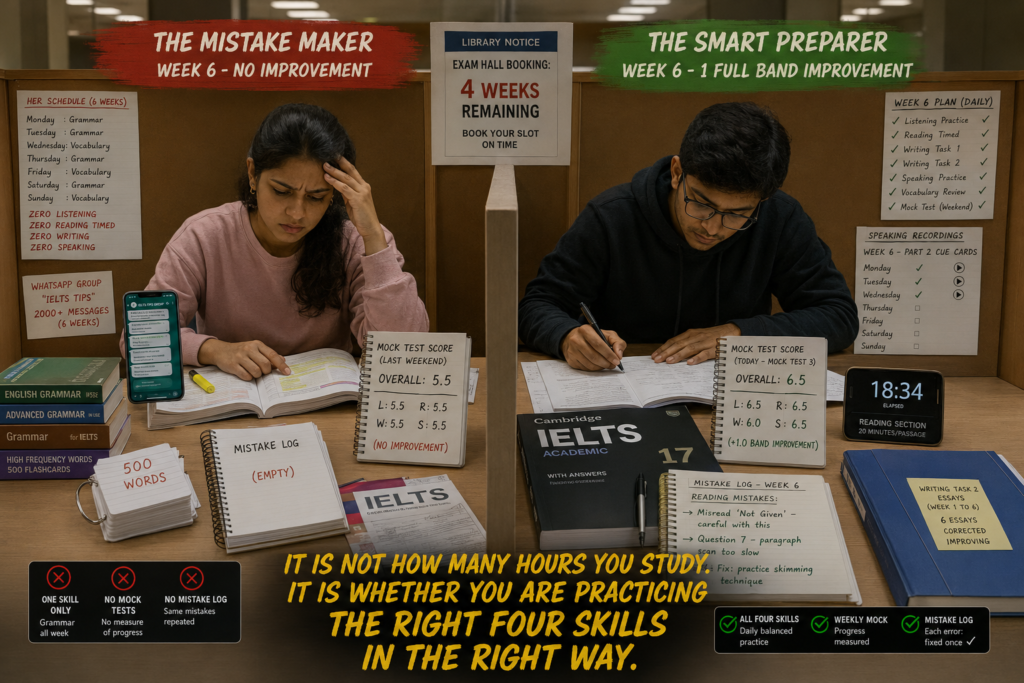
Many students study for months but don’t see much improvement because they repeat the same mistakes. The problem is often not a lack of effort but an ineffective study routine.
Avoiding these mistakes can save you time and make your preparation much more effective.
| Common Mistake | Better Approach |
| Studying without a plan | Follow a weekly study schedule |
| Ignoring one IELTS section | Practice all four skills equally |
| Memorizing answers | Learn how to express your own ideas |
| Taking very few mock tests | Practice regularly under exam conditions |
| Studying only before the exam | Practice consistently every week |
Changing these habits can significantly reduce your overall IELTS preparation time.
Tips to Study Faster and Smarter
Studying longer doesn’t always mean learning more. Smart preparation helps you improve faster while avoiding burnout. Small daily improvements are much more effective than trying to study everything in one day.
Here are a few simple tips to make your preparation more effective:
- Set a realistic weekly study goal.
- Practice English every day, even for 30 minutes.
- Focus on one weak skill at a time.
- Review your mistakes after every mock test.
- Read, listen, write, and speak regularly.
- Keep a notebook for new vocabulary.
- Track your progress every week.
These habits create an effective IELTS self-study roadmap and help you understand How to prepare for IELTS with confidence. They also make your IELTS preparation plan for students more organized, helping you stay motivated until your exam day.
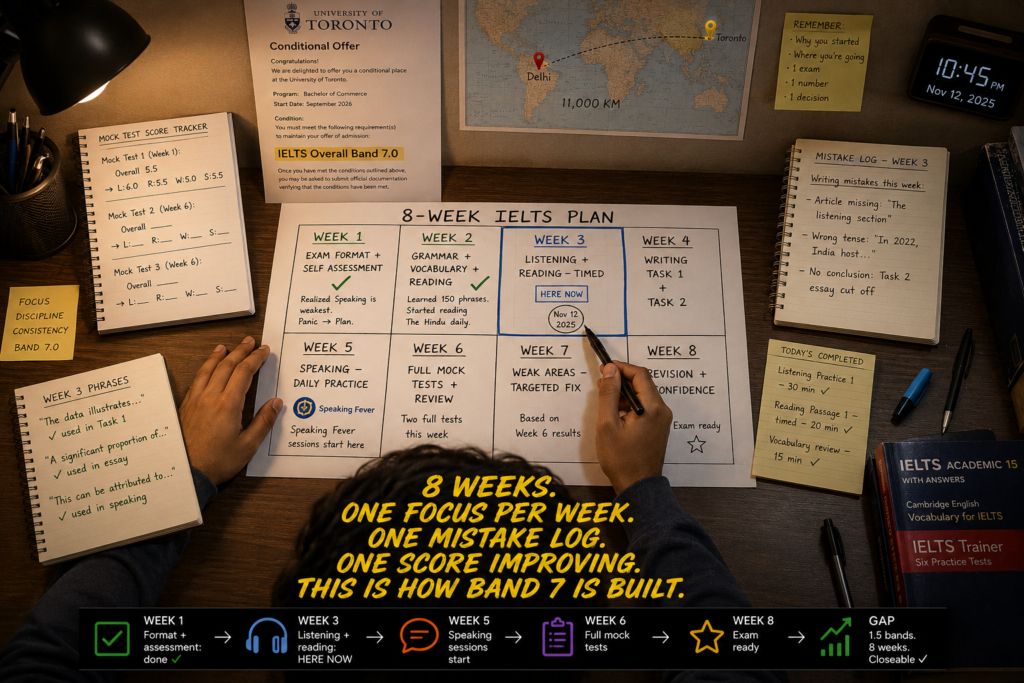
8-Week IELTS Study Roadmap
Preparing for IELTS becomes much easier when you have a clear plan. Instead of studying randomly, follow a weekly roadmap that helps you improve each skill step by step. Staying consistent with a simple routine will bring better results than studying only when you feel motivated.
Here’s an easy IELTS study plan for beginners that you can follow:
| Week | Focus Area |
| Week 1 | Understand the IELTS exam format and assess your current English level |
| Week 2 | Improve grammar, vocabulary, and daily reading habits |
| Week 3 | Practice Listening and Reading with timed exercises |
| Week 4 | Focus on Writing Task 1 and Task 2 |
| Week 5 | Practice Speaking with daily conversations and mock interviews |
| Week 6 | Take full-length mock tests and review mistakes |
| Week 7 | Improve weak areas and practice under exam conditions |
| Week 8 | Revise all four modules and build confidence before the test |
Following this roadmap helps you stay organized and makes your preparation less stressful.
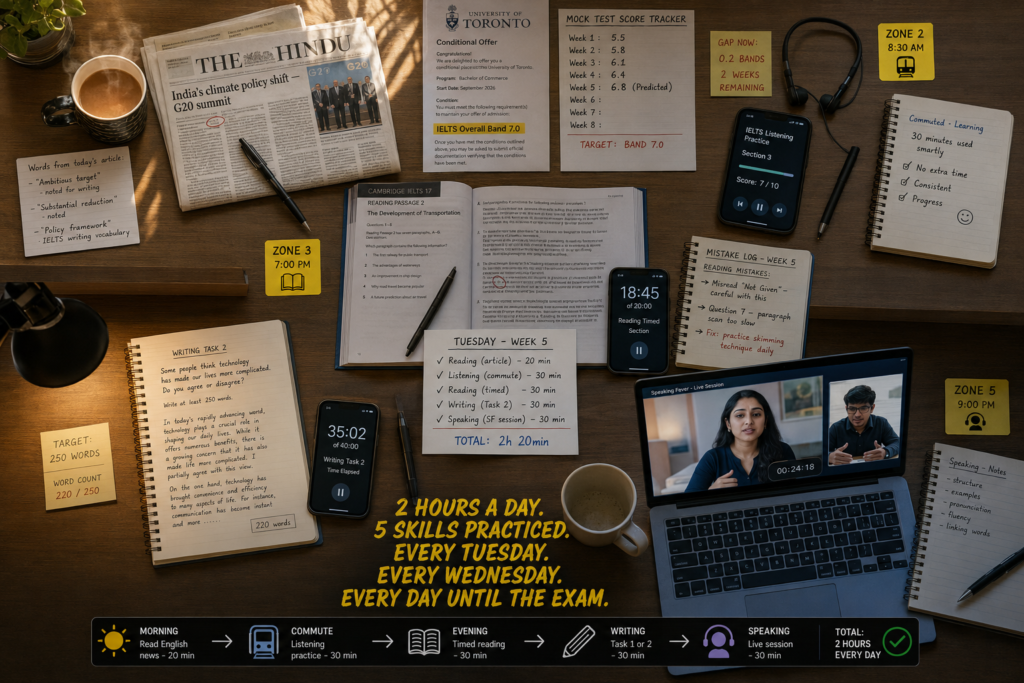
Daily IELTS Study Routine
You don’t need to study for eight or ten hours every day. A focused routine of two to three hours is enough if you practice consistently. The goal is to improve all four IELTS skills little by little every day.
A simple daily routine can look like this:
| Activity | Time |
| Read an English article or newspaper | 20 minutes |
| Practice Listening | 30 minutes |
| Practice Reading | 30 minutes |
| Practice Writing | 30 minutes |
| Practice Speaking | 30 minutes |
| Review vocabulary and mistakes | 10 minutes |
This routine helps you improve steadily without feeling overwhelmed.
Stay Consistent Throughout Your Preparation
Many students lose motivation after a few weeks because they expect quick results. Learning English and preparing for IELTS takes time, so don’t worry if your progress feels slow at first. Every day you practice brings you one step closer to your target band score.
Keep these simple habits in mind:
- Study at the same time every day.
- Set small weekly goals.
- Review your mistakes regularly.
- Practice all four IELTS modules.
- Take mock tests to measure your progress.
- Don’t compare your journey with others.
Remember, consistency always beats perfection.
Conclusion
Knowing How Long Does It Take to Prepare for IELTS helps you set realistic expectations and create a study plan that works for you. Whether you’re aiming for Band 6, Band 7, or even higher, regular practice and consistent effort are the biggest factors that determine your success.
Remember that there is no perfect timeline for everyone. Some students improve quickly, while others need more time, and that’s completely normal. Stay focused on your daily routine, keep learning from your mistakes, and trust the process because every study session brings you closer to your goal.
If you’re looking for expert guidance, personalized feedback, and a structured learning experience, Speaking Fever offers one-to-one IELTS coaching that helps beginners and advanced learners improve their English skills, prepare confidently for the exam, and achieve their target band score through practical learning and consistent support.
Reach us via
Book Your Slot with Our Counsellor:
Frequently Asked Questions
1. How Long Does It Take to Prepare for IELTS?
The time depends on your current English level and your target band score. Most beginners need 3 to 6 months of regular study, while students with a good foundation may prepare in 1 to 3 months with consistent practice.
2. How Many Months Should I Prepare for IELTS to Score Band 7?
If your English is at an intermediate level, you may need around 2 to 4 months of focused preparation to achieve Band 7. Following a structured study plan and taking regular mock tests can help you reach your target faster.
3. Can I Prepare for IELTS in One Month?
Yes, but it depends on your current English skills. If you already have a strong command of English, one month of intensive practice may be enough. Beginners usually need more time to improve all four IELTS skills.
4. What Is the Best IELTS Study Plan for Beginners?
A good IELTS study plan includes daily practice in Listening, Reading, Writing, and Speaking. Start with understanding the test format, build your vocabulary, practice grammar, and take mock tests regularly to measure your progress.
5. How Many Hours Should I Study for IELTS Every Day?
Most students can prepare effectively by studying 2 to 3 hours a day. Consistent daily practice is more effective than studying for long hours only on weekends.
6. Can I Prepare for IELTS Without Coaching?
Yes. Many students achieve their target score through self-study using official IELTS resources, mock tests, and a well-planned study schedule. However, expert guidance can help you identify mistakes faster and improve more efficiently.
7. What Is the Fastest Way to Improve My IELTS Score?
The fastest way is to practice all four IELTS modules every day, review your mistakes, expand your vocabulary, and take regular mock tests under real exam conditions. Staying consistent is the key to improving your score.
8. Which Is the Best IELTS Preparation Course for Beginners?
The best IELTS course should include live practice sessions, personalized feedback, and a structured study plan. Speaking Fever’s one-to-one IELTS coaching helps beginners improve their English skills, build confidence, and prepare effectively for their target band score through practical learning and expert guidance.