
Key Highlights
- Build a strong spoken English foundation.
- Practice English conversations every day.
- Improve interview vocabulary.
- Answer questions clearly and confidently.
- Develop positive body language.
- Attend mock interviews and group discussions.
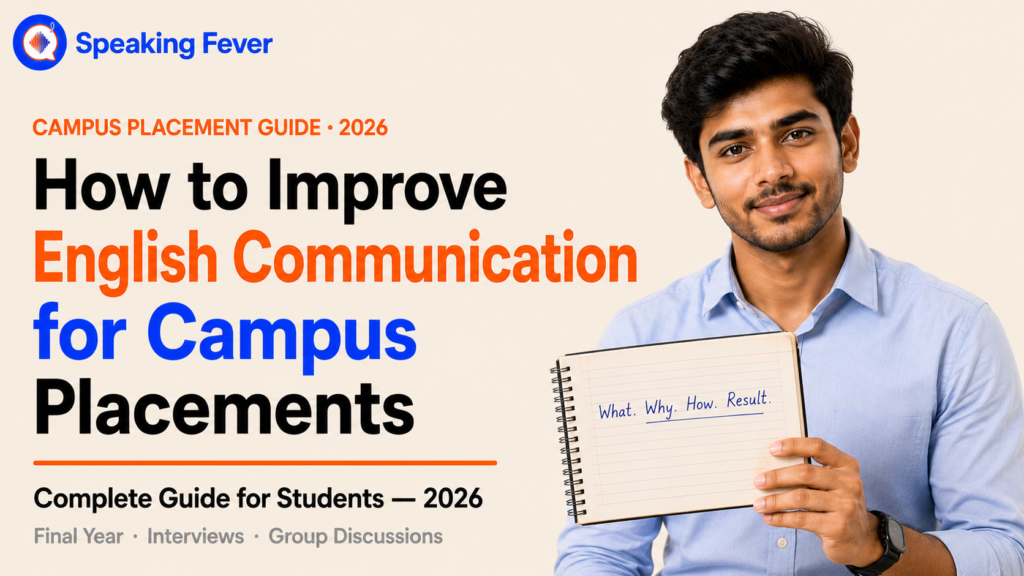
Getting ready for campus placements can feel exciting and stressful at the same time. One of the best ways to stand out is to improve English communication skills for campus placements because recruiters look for candidates who can express their ideas clearly and confidently. The good news is that you don’t need perfect English – you just need regular practice and the right approach.
Good communication can make a big difference during campus placements. According to the National Association of Colleges and Employers (NACE), communication is one of the core career readiness skills employers expect from graduates entering the workforce. If you’re looking for 1-on-1 English speaking classes for job interviews, combining expert guidance with daily speaking practice can help you communicate more confidently during placement interviews.
In this guide, you’ll learn simple and practical ways to improve your communication, speak confidently during interviews, and prepare yourself for campus placements. Whether you’re in your final year or just starting your preparation, these tips will help you perform better and leave a positive impression on recruiters.
What You’ll Learn
Good communication is more than speaking fluent English. It is about expressing your ideas clearly, answering questions confidently, and communicating professionally during interviews and group discussions.
In this guide, you’ll learn:
- How to improve English communication skills for campus placements.
- Ways to strengthen your English communication skills.
- Practical communication skills for placements.
- Tips for better English speaking for placements.
- A simple plan for effective campus placement preparation.
By the end of this guide, you’ll know exactly what to practice before your placement interviews.
Why English Communication Skills Matter for Campus Placements
Your technical knowledge may help you qualify for an interview, but your communication skills often decide whether you get selected. Recruiters want candidates who can explain their ideas, work with teams, and communicate professionally.
Strong communication also helps you feel more confident during interviews, group discussions, and presentations. When you speak clearly, recruiters can easily understand your knowledge and personality.
Good communication helps you:
- Answer interview questions confidently.
- Express your ideas clearly.
- Participate actively in group discussions.
- Build a positive first impression.
- Improve your overall interview communication skills.
Building strong spoken English for job interviews in India is what separates candidates who simply know the answers from those who can communicate them clearly and leave a lasting impression on recruiters.
Common Communication Mistakes Students Make
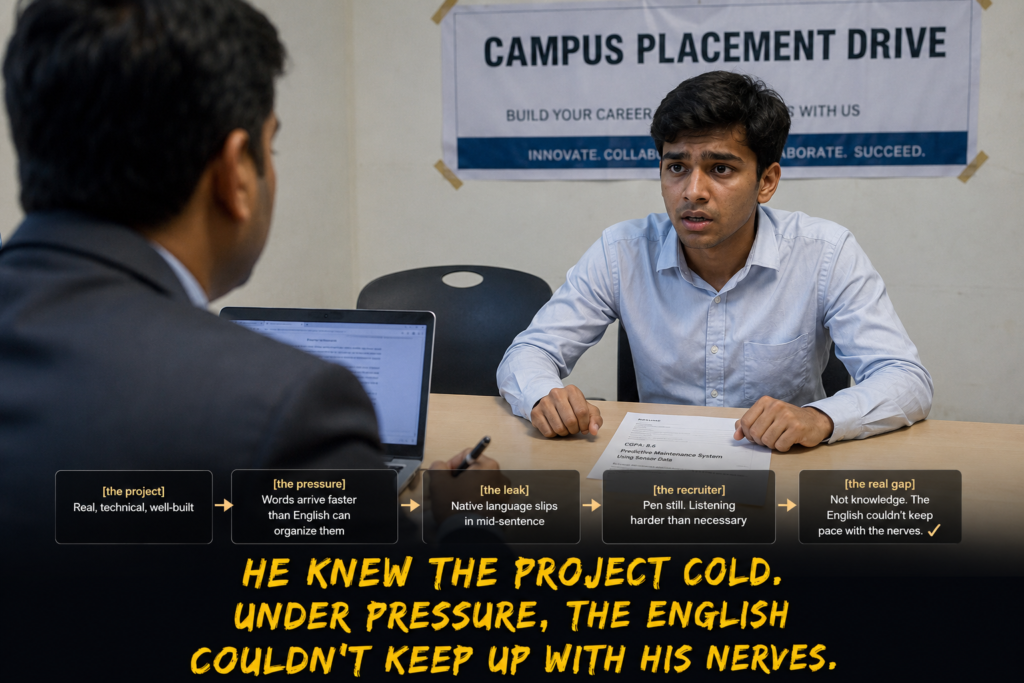
Many students know the correct answer but struggle to explain it during interviews. This usually happens because they don’t practice speaking regularly or become nervous under pressure.
Avoiding these common mistakes will make your communication more natural and professional during placement interviews.
Some common mistakes include:
- Speaking too fast.
- Giving very short answers.
- Translating from your native language while speaking.
- Using difficult words incorrectly.
- Avoiding eye contact.
- Speaking without confidence.
- Not practicing placement interview English before interviews.
Recognizing these mistakes is the first step toward improving your communication.
Step 1: Build a Strong Spoken English Foundation
Before you focus on interviews, you need to become comfortable speaking English every day. A strong foundation helps you answer questions naturally instead of memorizing responses.
You don’t need difficult vocabulary to speak well. Clear pronunciation, simple grammar, and regular speaking practice are much more important.
Start by:
- Speaking English for at least 15–20 minutes daily.
- Learning useful everyday vocabulary.
- Reading English articles aloud.
- Watching English interviews and presentations.
- Listening carefully to improve pronunciation.
Regular spoken English for students practice builds confidence and prepares you for real interview conversations.
Step 2: Practice Everyday Conversations
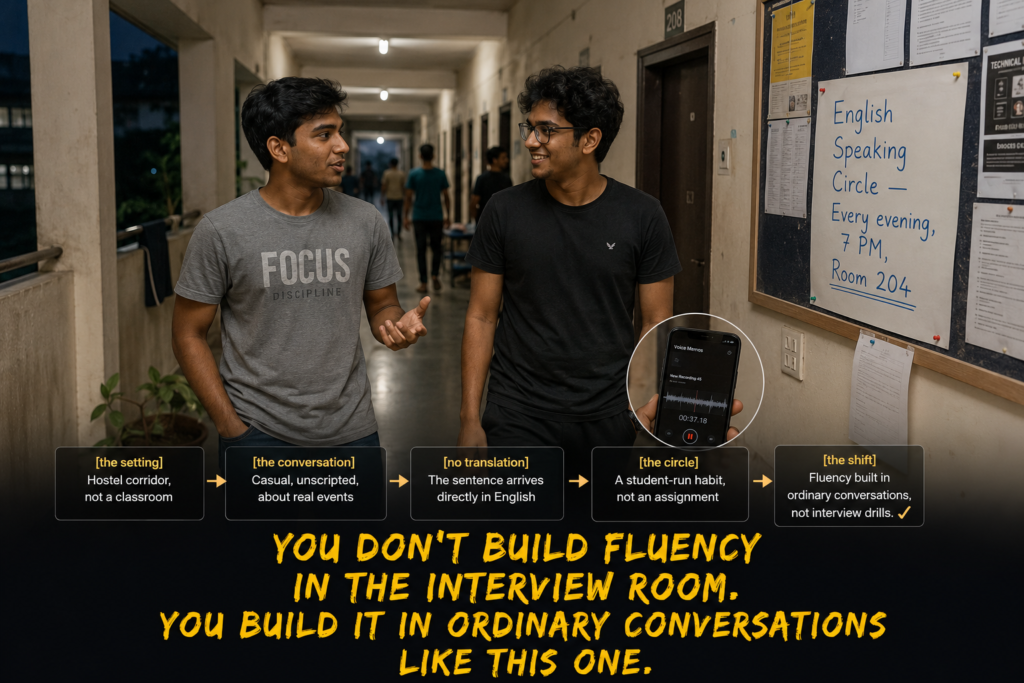
Many students only practice interview questions before placements. However, speaking English in everyday situations improves fluency much faster because it helps you think directly in English.
The more you speak, the more comfortable you become during interviews. Even short daily conversations can make a big difference over time.
Try these simple activities:
- Speak with friends in English every day.
- Describe your daily activities in English.
- Introduce yourself without reading from notes.
- Record yourself speaking and listen for improvements.
- Practice common interview questions regularly.
These habits improve English for campus interviews and help develop strong communication skills for engineering students as well as students from other academic backgrounds.
Step 3: Improve Your Vocabulary for Interviews
Many students think they need to use difficult words to impress recruiters. In reality, interviewers prefer candidates who speak clearly and use simple, correct English. A strong vocabulary helps you express your ideas naturally without searching for words.
Focus on learning words that are commonly used during interviews instead of memorizing long word lists.
Here are a few simple ways to improve your vocabulary:
- Learn 5–10 new words every day.
- Read English newspapers and blogs.
- Write down useful interview phrases.
- Use new words in daily conversations.
- Revise old words regularly.
A better vocabulary improves your English communication skills and helps you answer questions with confidence.
Studying the most useful English phrases for job interviews gives you ready-to-use expressions that help you answer questions naturally and professionally without searching for the right words under pressure.
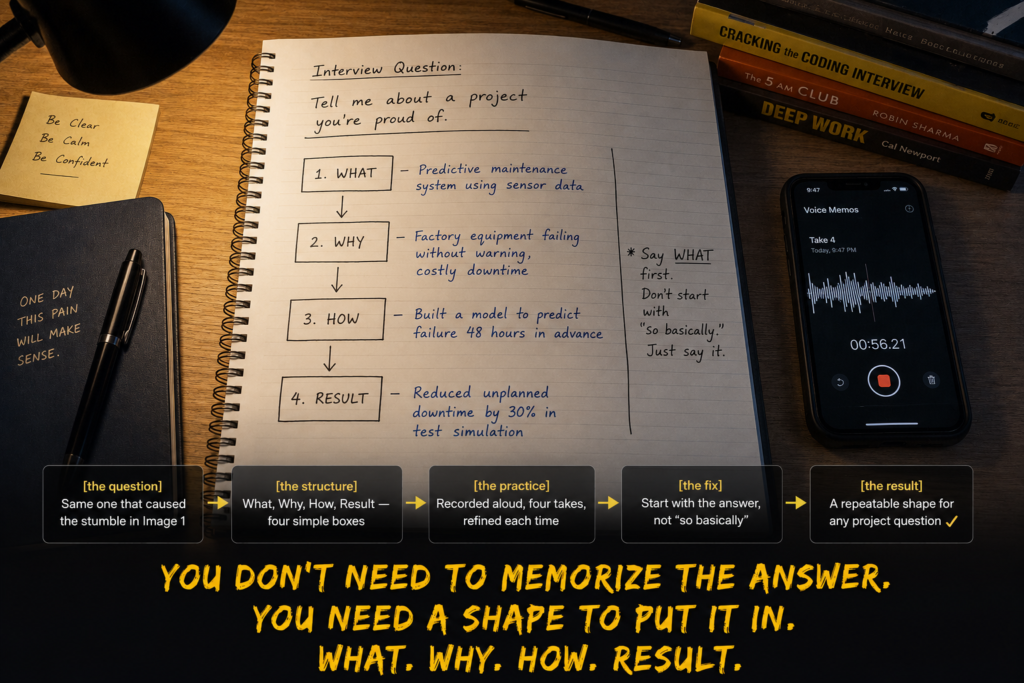
Step 4: Learn to Answer Interview Questions Clearly
Knowing the answer is not enough if you cannot explain it properly. Recruiters look for candidates who organize their thoughts and communicate them in a simple and confident way.
Before answering, take a moment to understand the question. Speak slowly, stay on the topic, and support your answer with a simple example whenever possible.
When answering interview questions:
- Listen carefully before speaking.
- Start with a direct answer.
- Explain your point in simple English.
- Give a real-life example if possible.
- End your answer confidently.
Practicing these techniques improves your placement interview English and strengthens your interview communication skills.
A dedicated effort to improve English speaking skills for interviews gives you a structured approach to answering questions clearly – so your ideas come across professionally even when you feel nervous.
Step 5: Improve Body Language and Confidence
Communication is not only about words. Your smile, eye contact, posture, and confidence also create a strong first impression during interviews.
Even if your English is not perfect, positive body language shows confidence and professionalism. Recruiters often notice how you present yourself as much as what you say.
Remember to:
- Maintain eye contact.
- Sit with good posture.
- Smile naturally.
- Avoid unnecessary hand movements.
- Speak at a comfortable pace.
- Stay calm even if you make a small mistake.
Confidence grows with regular English speaking for placements, so keep practicing every day.
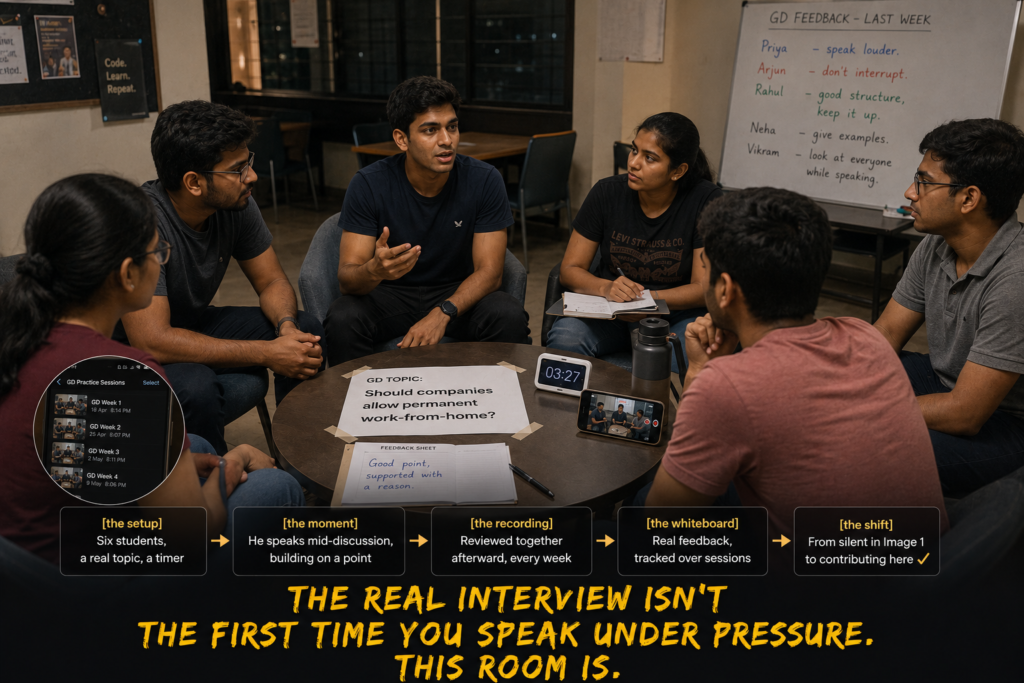
Step 6: Practice Group Discussions and Mock Interviews
Group discussions and mock interviews prepare you for real placement situations. They help you improve your speaking, listening, and confidence while receiving valuable feedback.
The more you practice in a realistic environment, the more comfortable you’ll feel on the actual interview day.
You can practice by:
- Joining mock interview sessions.
- Participating in group discussions with friends.
- Recording your interview answers.
- Asking mentors for feedback.
- Improving one mistake after every practice session.
These activities are an important part of placement preparation for final year students because they build confidence through practical experience.
Following the right English speaking tips for group discussions helps you learn how to express your opinions clearly, handle disagreements professionally, and contribute confidently in a group setting – all of which directly impact your placement performance.
Step 7: Develop a Daily English Practice Routine
Many students practice English only a few days before placements. This usually creates stress and reduces confidence. A daily routine helps you improve steadily and makes English a natural part of your life.
You don’t need to study for hours every day. Even 20–30 minutes of focused practice can make a noticeable difference over time.
Your daily routine can include:
- Reading English for 10 minutes.
- Listening to English podcasts or videos.
- Speaking English with a friend.
- Learning new vocabulary.
- Practicing one interview question daily.
Following a regular routine is one of the best ways to improve english speaking practice for placement interviews and prepare for placement success.
How Personalized English Coaching for Interviews Can Help
Self-practice is important, but sometimes you may not know which mistakes are holding you back. Expert guidance helps you improve faster by giving you personalized feedback and structured practice.
Enrolling in a dedicated spoken English course for job interviews gives you the opportunity to practice real interview conversations, improve fluency, and build confidence in a supportive environment with trainers who know exactly what recruiter
Trainers can help you strengthen your English for campus interviews, improve pronunciation, refine your answers, and develop better communication skills for placements.
Some key benefits include:
- One-on-one speaking practice.
- Personalized feedback after every session.
- Mock interviews with expert guidance.
- Better pronunciation and fluency.
- Improved confidence for interviews and group discussions.
- Faster progress through structured learning.
With consistent practice and the right guidance, you can communicate confidently and perform your best during campus placements.
20-Minute Daily English Practice Plan for Placements
Improving your English doesn’t require studying for hours every day. A simple and consistent routine can help you become more confident before your campus placements. The key is to practice speaking, listening, reading, and thinking in English every day.
This 20-minute plan is easy to follow and works well for students preparing for interviews.
| Activity | Time |
| Read an English article aloud | 5 minutes |
| Practice one interview question | 5 minutes |
| Learn and use new vocabulary | 5 minutes |
| Speak about your day in English | 5 minutes |
Following this routine every day will strengthen your English communication skills and improve your confidence during interviews.
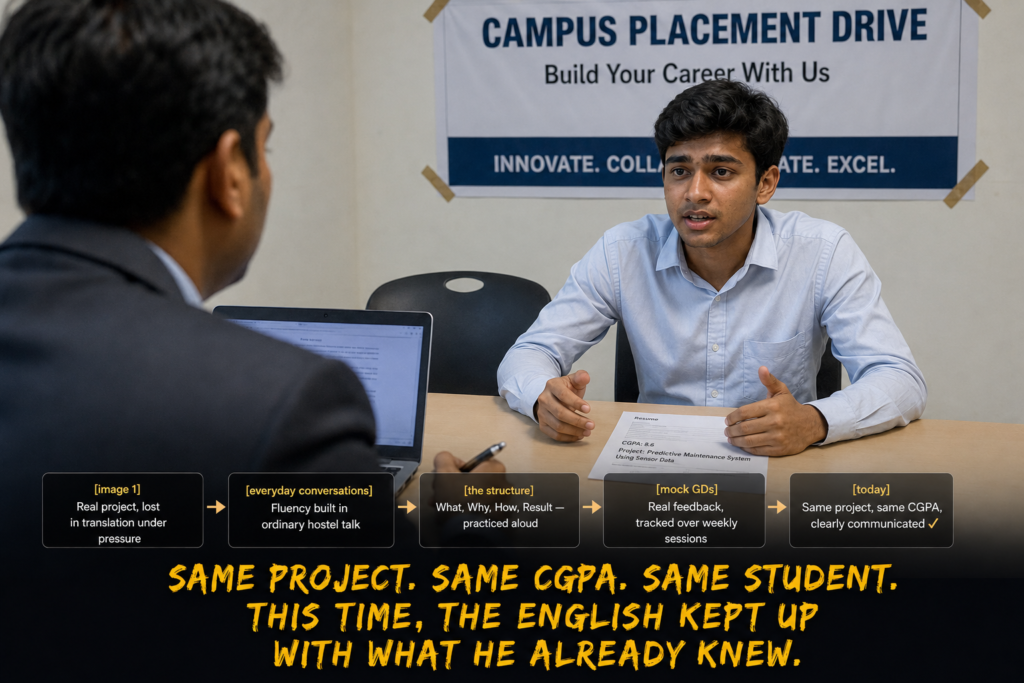
Signs You’re Ready for Campus Placements
Many students wonder if they are ready for placement interviews. The answer isn’t about speaking perfect English. It’s about communicating your ideas clearly, confidently, and professionally.
If you notice these signs, you’re moving in the right direction and becoming interview-ready.
You may be ready if you:
- Introduce yourself confidently without memorizing.
- Answer interview questions in complete sentences.
- Speak English without translating from your native language.
- Participate confidently in group discussions.
- Explain your projects clearly.
- Maintain eye contact while speaking.
- Feel comfortable talking with new people.
These are strong signs that your communication skills for placements are improving and that you’re prepared for campus interviews.
Final Tips Before Your Placement Interview
The last few days before your interview are the time to build confidence, not to panic. Avoid trying to learn everything at once. Instead, focus on practicing what you’ve already prepared.
Remember that recruiters are looking for confident communicators, not perfect English speakers. Stay positive, believe in yourself, and communicate naturally.
Before your interview:
- Practice your self-introduction.
- Revise common HR questions.
- Read English for a few minutes every day.
- Speak English with friends or mentors.
- Dress professionally.
- Reach the interview venue on time.
- Stay calm and smile.
These simple habits can make a big difference in your interview performance.
Conclusion
Learning how to improve English communication skills for campus placements is not about speaking perfect English. It is about communicating your ideas with confidence, practicing every day, and improving little by little. With the right habits and regular practice, you can become interview-ready and perform well during your placement season.
Remember that confidence grows through action. Keep improving your English speaking for placements, strengthen your interview communication skills, and continue practicing until speaking in English feels natural. Every conversation you have today brings you closer to your dream job.
If you want personalized support, Speaking Fever offers one-on-one English communication training designed for students preparing for campus placements and job interviews. With expert guidance, practical speaking sessions, and real interview practice, you can improve your confidence and communicate effectively during interviews.
Reach us via
Book Your Slot with Our Counsellor:
FAQs
1. How Can I Improve English Communication Skills for Campus Placements?
To improve English communication skills for campus placements, practice speaking English every day, learn common interview vocabulary, participate in mock interviews, and improve your listening skills. Regular practice helps you communicate confidently during placement interviews.
2. Why Are English Communication Skills Important for Campus Placements?
Strong English communication skills help you express your ideas clearly, answer interview questions confidently, and make a positive impression on recruiters. Good communication also improves your performance in group discussions and HR interviews.
3. How Can I Improve My Communication Skills for Placements?
The best way to improve communication skills for placements is by speaking English daily, practicing self-introductions, attending mock interviews, recording your answers, and asking for feedback. Consistency is more important than studying for long hours.
4. How Can I Improve My English Speaking for Placements?
To improve English speaking for placements, practice answering common interview questions, speak with friends in English, read aloud every day, and listen to English podcasts or interviews. These activities improve both fluency and confidence.
5. What Is the Best Way to Prepare for Campus Placement Interviews?
Successful campus placement preparation includes improving technical knowledge, practicing HR interview questions, developing communication skills, and attending mock interviews. A balanced preparation plan helps you perform confidently on interview day.
6. How Can I Improve My Interview Communication Skills?
You can improve your interview communication skills by speaking in complete sentences, maintaining eye contact, organizing your answers clearly, and practicing with mock interviews. Focus on speaking naturally instead of memorizing answers.
7. How Can Final Year Students Improve Their English Before Placements?
The best placement preparation for final year students includes daily reading, speaking practice, vocabulary building, and regular English speaking practice for placement interviews. Even 20–30 minutes of focused practice each day can make a noticeable difference before placement season.
8. Can English Coaching Help Me Prepare for Campus Interviews?
Yes. Professional coaching provides structured learning, personalized feedback, and real interview practice that helps students improve English for campus interviews and build confidence. If you’re looking for expert guidance, Speaking Fever offers one-on-one English speaking programs designed to help students communicate confidently and succeed in placement interviews.