
7 Powerful Tips to Improve Spoken English from Basic to Advanced


Quick Summary
- Speak English every day to build confidence and fluency.
- Think in English instead of translating from your native language.
- Practice real conversations to improve communication skills.
- Improve your pronunciation through regular listening and speaking practice.
- Get regular feedback to identify mistakes and improve faster.
Table of Contents
Many learners want to speak English confidently but often do not know where to begin. Moving from Basic to Advanced Spoken English may seem difficult at first, but with the right habits, anyone can improve step by step.
Whether you are a student, job seeker, homemaker, or working professional, speaking practice is the key to success. If you are searching for an Advanced English Speaking Course, choosing a program that focuses on real 1-on-1 conversations can help you improve faster.
According to a guide by Top Universities, having conversations in English, building vocabulary, and practicing regularly are some of the most effective ways to improve speaking skills and fluency. That is why daily communication practice matters more than simply memorizing rules.

Why Basic to Advanced Spoken English Feels Difficult
Many learners spend years studying grammar but still hesitate while speaking. This happens because speaking is a skill that improves through practice, not just reading.
- Stop waiting for perfect English.
- Accept small mistakes.
- Focus on communication first.
- Practice every day.
- Build confidence step by step.
To move from Basic to Advanced Spoken English, you need to use English actively in daily life. Small actions repeated consistently create big results.
Tip 1: Speak English Every Single Day
The fastest way to improve spoken English is to speak daily. You do not need long study sessions. Even a few minutes of speaking practice can help.
Action Steps
- Talk about your daily routine in English.
- Describe what you are doing.
- Practice self-introductions.
- Record your voice daily.
- Speak in front of a mirror.
- Read simple sentences aloud.
Daily speaking trains your brain to think and respond faster. Building a strong habit of daily English speaking practice is the single most important foundation you can lay for moving from basic to advanced spoken English.

Tip 2: Stop Translating and Start Thinking in English
Many learners first think in their native language and then translate into English. This habit slows down communication and creates hesitation.
Action Steps
- Think simple thoughts in English.
- Name objects around you in English.
- Use English during self-talk.
- Learn complete phrases.
- Avoid word-by-word translation.
- Practice quick responses.
If you want to improve English from beginner to advanced, you must gradually train yourself to think directly in English.
Tip 3: Listen More Than You Speak
Good speakers are usually good listeners. Listening to English helps you understand pronunciation, sentence flow, and natural communication patterns.
Action Steps
- Listen to English podcasts daily.
- Watch interviews on YouTube.
- Follow English news channels.
- Listen to English conversations.
- Repeat useful sentences aloud.
- Copy the speaker’s tone and rhythm.
Regular listening practice supports both advanced English speaking skills and better confidence during conversations.

Tip 4: Learn Useful Phrases Instead of Single Words
Many learners memorize hundreds of words but still struggle to speak fluently. The reason is simple. Conversations are built with phrases, not isolated vocabulary.
Learning phrases is one of the most effective advanced English fluency tips because it helps you speak naturally and quickly.
Action Steps
- Learn common greeting phrases.
- Practice workplace expressions.
- Memorize everyday conversation patterns.
- Use complete sentences regularly.
- Keep a phrase notebook.
- Review phrases every day.
Helpful Examples
Instead of learning:
- Meeting
- Call
- Discussion
Learn:
- Let’s schedule a meeting.
- Can we discuss this later?
- I will call you tomorrow.
This approach helps develop stronger professional spoken English and prepares you for real conversations.
Tip 5: Practice Real Conversations Regularly
Reading and listening are helpful, but real improvement happens when you actually speak with other people. Real conversations teach you how to respond naturally and confidently.
If you are just starting your English journey, a spoken English course for beginners with 1-on-1 coaching can provide the personalized support, speaking practice, and feedback needed to build confidence faster.
Action Steps
- Speak with friends in English.
- Join online speaking groups.
- Practice question-and-answer sessions.
- Participate in discussion activities.
- Talk about daily topics.
- Challenge yourself to speak without hesitation.
Why It Works
When you practice real conversations, you:
- Build confidence faster.
- Learn natural sentence flow.
- Reduce fear of mistakes.
- Improve speaking speed.
- Become a better communicator.
Structured English conversation practice online gives you access to real speaking interactions from anywhere, making it one of the most practical ways to build this habit consistently.
Tip 6: Improve Your Pronunciation Step by Step
Many learners think they need a foreign accent to sound fluent. That is not true. Clear pronunciation is much more important than having a perfect accent.
Action Steps
- Speak slowly and clearly.
- Listen and repeat English audio.
- Record your voice regularly.
- Practice difficult words daily.
- Focus on word stress.
- Compare your pronunciation with native speakers.
Simple Pronunciation Practice
Choose five words every day and:
- Listen to them.
- Repeat them ten times.
- Use them in sentences.
- Record yourself speaking them.
Being aware of the common English speaking mistakes Indians make with pronunciation and sentence delivery helps you focus your practice on the areas that actually hold most learners back from sounding clear and confident.
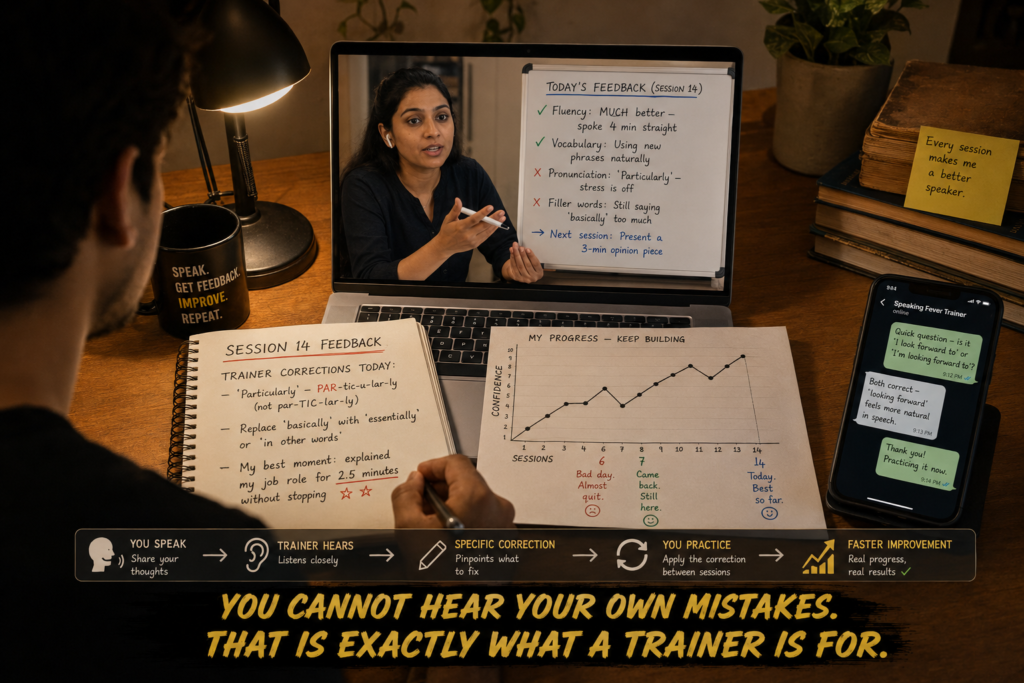
Tip 7: Get Feedback From Trainers or Speaking Partners
One of the fastest ways to improve is to get feedback from someone who can guide you. Many learners repeat the same mistakes because nobody corrects them.
Feedback helps you identify weak areas and develop stronger professional spoken English skills.
Action Steps
- Practice with a speaking partner.
- Join live speaking sessions.
- Ask for pronunciation feedback.
- Learn from your mistakes.
- Track your weekly progress.
- Focus on one improvement area at a time.
Benefits of Feedback
- Faster improvement.
- Better sentence structure.
- Clearer pronunciation.
- Higher confidence.
- Stronger communication skills.
This is why many learners choose structured beginner to advanced English speaking programs that provide regular guidance and correction.
Understanding why spoken English classes for beginners work explains exactly why guided feedback from a structured program produces faster results than self-study alone – because a trainer catches the mistakes you cannot hear yourself.

Daily Practice for beginner to Advanced Spoken English
Learning English does not require hours of study every day. Small daily habits can create powerful long-term results.
If your goal is Basic to Advanced Spoken English, consistency is more important than perfection.
Daily Practice Checklist
- Speak English for 10-15 minutes.
- Listen to English content daily.
- Learn 3-5 new phrases.
- Read a short English article.
- Record your voice.
- Practice one conversation.
Following these habits consistently can help you improve English from beginner to advanced much faster.
Conclusion
Improving your English does not happen overnight, but it is absolutely possible when you stay consistent. The journey from Basic to Advanced Spoken English starts with small daily actions and regular speaking practice.
The goal is not perfect English. The goal is confident communication. Keep practicing, keep speaking, and keep learning from your mistakes.
If you are looking for extra support, Speaking Fever offers personalized 1-on-1 spoken English course designed to help learners build confidence, improve fluency, and develop stronger communication skills through real conversations.
Reach us via
Book Your Slot with Our Counsellor:
Frequently Asked Questions (FAQs)
What Is the Best Way to Improve Spoken English from Basic to Advanced?
The most effective way is to combine daily speaking practice, active listening, vocabulary building, and real conversations. Consistency matters more than studying for long hours occasionally.
Can I Improve My Spoken English Without Joining Offline Classes?
Yes. Many learners improve through online learning, live speaking sessions, English podcasts, videos, and daily communication practice. Regular speaking practice is more important than whether you learn online or offline.
Which online Course Is Best for Beginner to Advanced English Speaking?
Speaking Fever is a popular choice for learners who want to move from basic to advanced English speaking. Its live 1-on-1 coaching, personalized guidance, and real conversation practice help learners improve confidence and fluency faster.
How Long Does It Take to Move from Basic to Advanced Spoken English?
The timeline depends on your current level and practice consistency. Many learners notice better confidence within 2-3 months of regular speaking practice.
What Are the Best Daily Habits to Improve Spoken English Basics to Advance?
Speaking every day, listening to English content, learning useful phrases, reading simple English materials, and practicing conversations are some of the most effective habits.
How Can I Improve My Professional English Communication Skills?
Practice workplace conversations, presentations, meetings, and business vocabulary regularly. Real communication exercises help develop stronger professional English communication skills.
What Is the Difference Between Basic and Advanced English Speaking Skills?
Basic speaking focuses on everyday communication, while advanced English speaking skills involve fluent conversations, professional discussions, presentations, and expressing ideas clearly in different situations.
Are Online Speaking Classes Effective for Beginners?
Yes. Online programs that include live interaction and speaking practice can help beginners build confidence, improve pronunciation, and develop communication skills faster
How Can Speaking Fever Help You Move from Basic to Advanced Spoken English?
Speaking Fever focuses on live 1-on-1 speaking practice, confidence building, pronunciation improvement, and real-life communication exercises. This helps learners progress from beginner to advanced English speaking more effectively.