
Key Takeaways
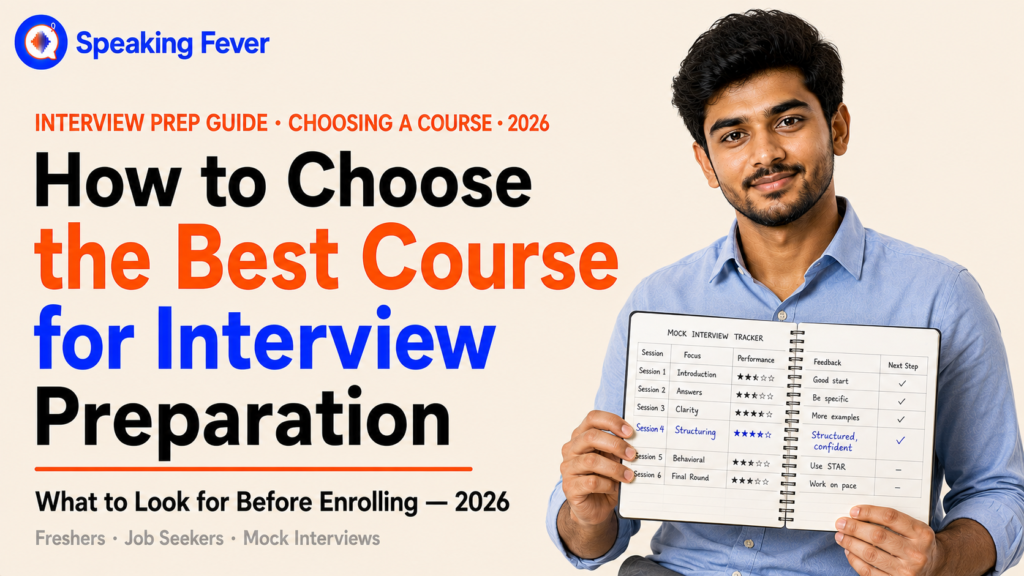
Choosing the best spoken English course for interview preparation isn’t about finding the most popular institute. It’s about selecting a program that helps you practice speaking, improve confidence, and prepare for real interview situations.
Remember these points:
- Choose live, interactive classes over recorded lessons.
- Look for regular mock interviews.
- Prioritize personalized feedback.
- Select a course that matches your English level.
- Compare features, not just fees.
- Practice speaking every day.
- Stay consistent and trust the learning process.
Choosing the best spoken English course for interview preparation is about more than improving your grammar. Employers want candidates who can communicate clearly, answer questions confidently, and express their ideas naturally. Whether you’re a fresher, a college student, or a working professional, the right Interview Preparation Course can help you build the speaking skills needed to perform well during interviews.
According to the British Council’s guide on preparing for a job interview, practicing common interview questions, improving communication skills, and speaking confidently are some of the most effective ways to perform better in interviews. Regular practice and constructive feedback can also help reduce nervousness and improve your overall performance.
In this guide, you’ll learn how to compare different courses, what features really matter, and how to choose a program that helps you become a confident English speaker before your next interview.
What You’ll Learn
Choosing the right course can save you months of frustration. Instead of joining the first course you find, it’s important to know what actually improves interview performance.
In this guide, you’ll learn:
- What makes a good interview English course.
- How to compare different spoken English programs.
- Features that help improve speaking confidence.
- Mistakes to avoid before enrolling.
- How to choose a course that matches your career goals.
Why Spoken English Matters in Job Interviews
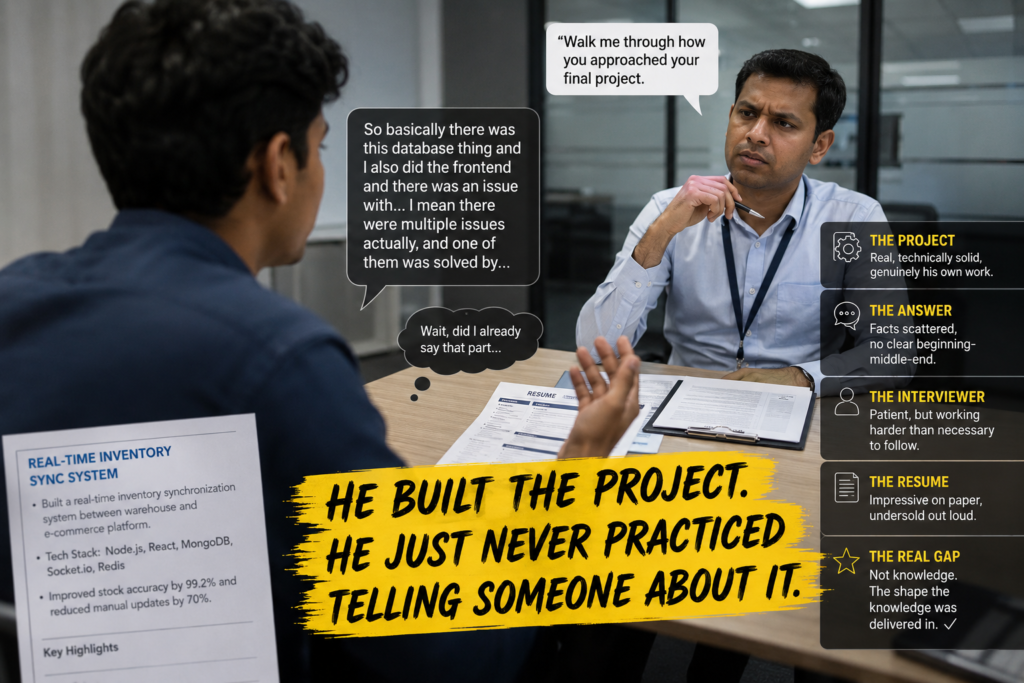
Your technical knowledge may help you get shortlisted, but your communication skills often determine whether you get selected.
Taking time to learn spoken English for job interviews gives you structured speaking practice that helps you introduce yourself confidently, explain your skills clearly, and build a positive first impression from the very first question.
Even if your answers are correct, poor communication can make you appear less confident. That’s why many students and job seekers focus on improving their English fluency for job interviews before attending interviews.
Strong spoken English helps you:
- Introduce yourself confidently.
- Explain your skills clearly.
- Answer HR interview questions naturally.
- Build a positive first impression.
- Communicate professionally.
Remember, interviewers are usually looking for clear communication, not perfect English.
What Makes the Best Spoken English Course for Interview Preparation?
Not every spoken English course for interviews is designed for job seekers. Some programs focus mainly on grammar, while others emphasize conversation practice without preparing you for actual interview situations.
A good course should help you improve your spoken English while also preparing you for real interview conversations. It should combine communication practice with activities that build confidence and improve professional speaking skills.
Before enrolling, check whether the course includes:
- Live speaking practice.
- Mock interview sessions.
- Personalized feedback.
- Pronunciation improvement.
- Vocabulary for professional conversations.
- Interview-focused communication activities.
The more practical the learning experience, the more confident you’ll feel during a real interview.
1. Look for Live Speaking Practice
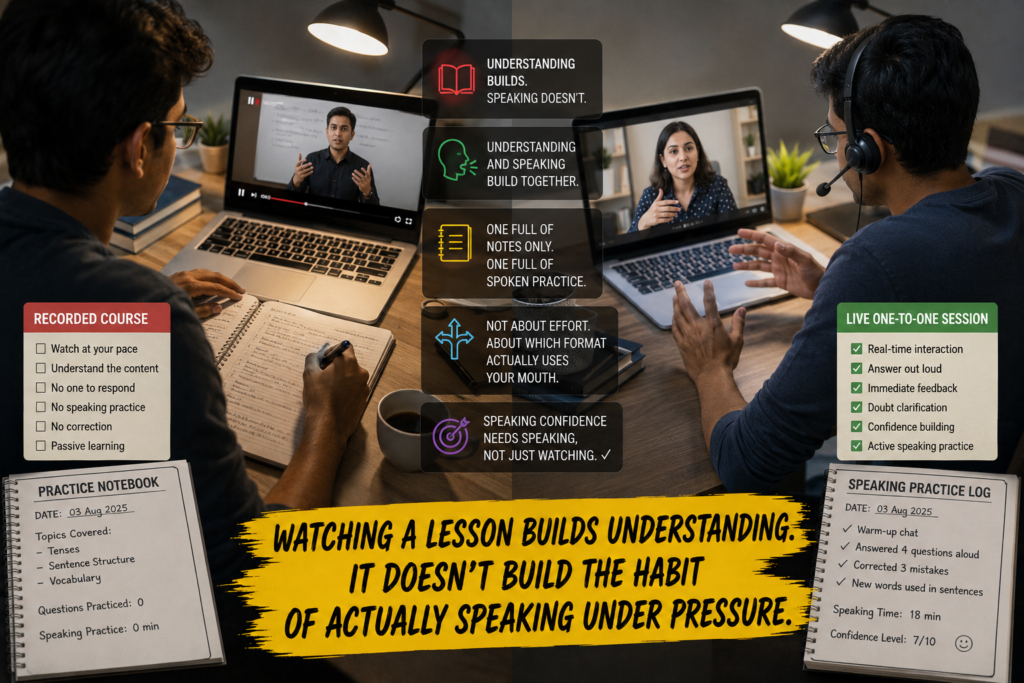
The biggest mistake many learners make is choosing a course that relies only on recorded videos. Watching lessons may improve your understanding, but speaking confidence develops only when you actually speak.
A good English speaking course for a job interview should provide regular opportunities to speak with trainers, answer questions, and participate in conversations. This helps you become comfortable expressing your ideas instead of simply memorizing answers.
Why live practice matters
- You learn to think while speaking.
- You become comfortable answering unexpected questions.
- Trainers can correct mistakes immediately.
- Your confidence grows with every session.
- You practice communicating under real conditions.
The more you speak during training, the more naturally you’ll respond during interviews.
2. Choose a Course That Includes Mock Interviews
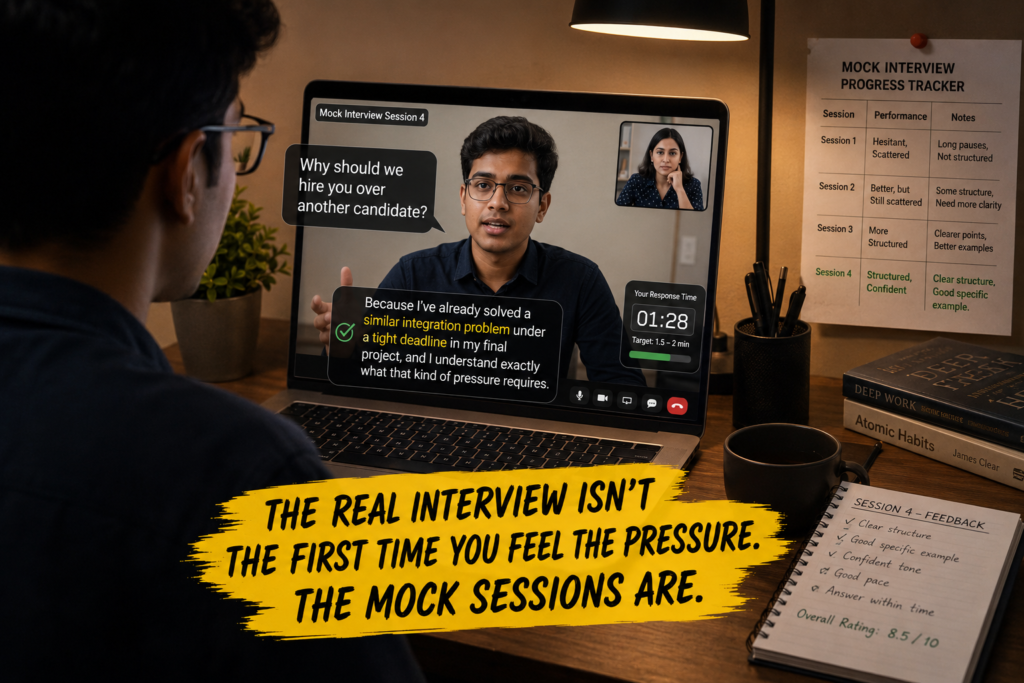
Reading interview questions is helpful, but practicing them in a realistic environment is far more effective. Mock interviews help you experience what an actual interview feels like before the real day arrives.
During a mock interview, trainers observe not only your answers but also your pronunciation, confidence, body language, and communication style.
Knowing the top English phrases for job interviews before your mock sessions gives you ready-to-use expressions that help you respond naturally without freezing mid-answer.
A good mock interview should include:
- HR interview questions.
- Self-introduction practice.
- Common workplace scenarios.
- Follow-up questions.
- Personalized improvement tips.
These practice sessions help reduce nervousness and prepare you for different types of interview situations.
3. Check Whether You Receive Personalized Feedback
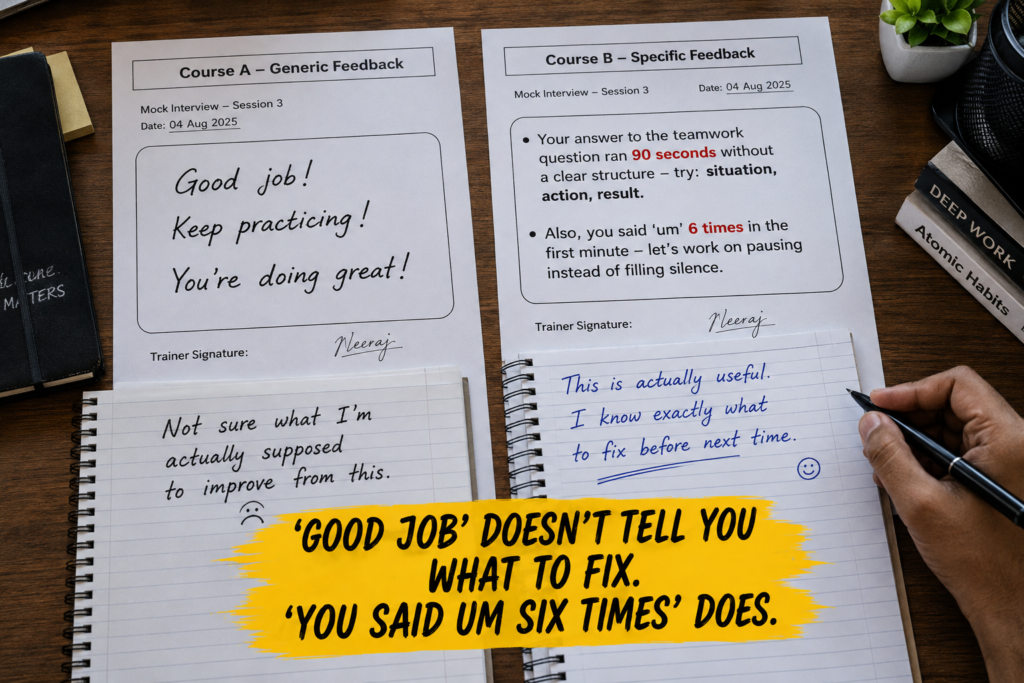
Many learners attend classes for weeks without knowing what they’re doing wrong. Without feedback, it’s difficult to improve because the same mistakes keep repeating.
The best English speaking classes for interviews provide individual feedback after speaking activities. This helps you understand exactly where you need to improve.
A trainer should help you with:
- Pronunciation.
- Grammar during conversations.
- Vocabulary choices.
- Speaking confidence.
- Sentence structure.
- Overall communication style.
Small corrections made consistently can lead to significant improvement over time.
4. Make Sure the Course Focuses on Real Interview Communication
Knowing English grammar is useful, but interviews require much more than correct sentences. You need to explain your thoughts clearly, answer unexpected questions, and communicate professionally. That’s why an English communication course for interviews should focus on practical speaking rather than theory alone.
The best courses create situations similar to real interviews so that you become comfortable speaking under pressure. Instead of memorizing answers, you’ll learn how to think, organize your ideas, and respond naturally.
A course should help you practice:
- Self-introduction.
- HR interview questions.
- Professional conversations.
- Workplace communication.
- Business English expressions.
- Confidence while answering follow-up questions.
The closer your practice is to a real interview, the better prepared you’ll be.
5. Look for Small Batches or One-to-One Learning
One of the biggest problems with large classroom sessions is limited speaking time. When one trainer teaches many students, you may only get a few minutes to participate.
Smaller batches or 1-on-1 spoken English classes that raise confidence give you more speaking time, individual attention, and lessons matched to your learning speed -which allows you to improve much faster than in large group sessions.
Benefits of personalized learning
- More speaking time.
- Individual attention from the trainer.
- Faster pronunciation improvement.
- Lessons matched to your learning speed.
- Better confidence during conversations.
If you prefer focused learning and regular feedback, smaller classes are often a better investment than large batches.
6. Check Whether the Course Matches Your English Level
Every learner starts from a different point. Some people need help with basic conversations, while others already speak English and only want to improve interview performance.
Joining a course that is too easy may slow your progress, while choosing one that’s too advanced can become frustrating. The best interview preparation English course should assess your current level before creating a learning plan.
For example:
Beginners should focus on:
- Basic spoken English.
- Everyday vocabulary.
- Sentence formation.
- Pronunciation.
- Confidence building.
Intermediate learners should improve:
- Professional vocabulary.
- Workplace communication.
- Interview fluency.
- Business English.
- Answering HR questions naturally.
Advanced learners can practice:
- Leadership communication.
- Presentation skills.
- Difficult interview questions.
- Executive-level conversations.
- Professional speaking confidence.
Learning at the right level helps you improve steadily without feeling overwhelmed.
7. Compare Course Features Before You Enroll
Many learners compare only course fees, but the cheapest option isn’t always the best. Instead, compare the overall learning experience.
Before making your decision, ask a few important questions.
| Question | Why It Matters |
| Are the classes live? | Live interaction builds speaking confidence. |
| Is there regular speaking practice? | Fluency develops through conversation. |
| Will I receive personalized feedback? | Feedback helps you improve faster. |
| Are mock interviews included? | They prepare you for real interview situations. |
| Is the schedule flexible? | Makes learning easier alongside work or college. |
| Can I attend a demo class? | Helps you understand the teaching style before enrolling. |
Taking a little extra time to compare these features can help you choose a course that genuinely supports your learning goals instead of simply offering attractive marketing promises.
One-to-One vs Group Classes for Interview Preparation
Both learning methods have their advantages, but they create different learning experiences.
Group classes allow you to interact with other learners and observe different speaking styles. However, because many students share the same class time, your opportunity to practice speaking may be limited.
One-to-one classes focus entirely on your progress. You receive more speaking time, immediate corrections, and lessons designed around your interview goals.
| Feature | One-to-One | Group Classes |
| Speaking Time | High | Limited |
| Personal Feedback | ✔ Every class | Limited |
| Mock Interview Practice | Personalized | Shared |
| Flexible Learning Speed | ✔ Yes | Fixed |
| Trainer Attention | Full | Shared |
There’s no single learning method that’s right for everyone. If you’re also preparing specifically for interviews, exploring our guide on improving English speaking skills for interviews can help you understand the speaking skills employers expect and how to practice them effectively.
Common Mistakes to Avoid When Choosing an Interview English Course
Many learners join the first course they find online without checking whether it actually meets their needs. As a result, they spend time and money but see very little improvement in their speaking confidence.
Choosing the right course is just as important as practicing regularly. A few simple checks before enrolling can help you avoid disappointment and find a program that supports your career goals.
1. Choosing a Course That Focuses Only on Grammar
Grammar is important, but interviews are conversations, not written exams. If a course spends most of its time teaching grammar rules and very little time on speaking, you may still struggle during a real interview.
Look for a course that balances grammar with:
- Speaking practice.
- Interview communication.
- Vocabulary building.
- Professional English.
2. Ignoring Speaking Practice
Some courses provide excellent study materials but very little opportunity to speak. Reading and watching videos can improve your understanding, but fluency develops only when you communicate regularly.
Choose a program that encourages you to:
- Answer interview questions aloud.
- Participate in discussions.
- Practice mock interviews.
- Speak during every class.
3. Joining Without a Demo Class
A course may look impressive on its website, but the learning experience could be very different. Attending a demo class allows you to understand the trainer’s teaching style, class interaction, and speaking opportunities before making a commitment.
During the demo, ask yourself:
- Is the trainer encouraging?
- Do students get enough speaking time?
- Are mistakes corrected politely?
- Does the class feel interactive?
A short demo can help you make a much better decision.
4. Looking Only at the Course Fee
Choosing the cheapest option isn’t always the smartest decision. A course that provides personalized feedback, mock interviews, and regular speaking practice may offer much better value than a lower-priced course with limited interaction.
Instead of asking, “Which course is the cheapest?”, ask:
- Will this course improve my interview confidence?
- Will I get enough speaking practice?
- Will I receive regular feedback?
These questions are far more important than the course fee alone.
How to Get the Best Results from Your Interview English Course
Joining the right course is only the beginning. Your improvement depends on how consistently you practice what you learn.
Think of every class as an opportunity to build confidence. The more you use English outside your lessons, the faster you’ll become comfortable speaking during interviews.
Here are a few habits that can make a big difference.
Practice Speaking Every Day
Even 15–20 minutes of daily speaking can improve your fluency over time.
Try to:
- Introduce yourself without reading notes.
- Answer common HR interview questions.
- Talk about your projects or work experience.
- Record your answers and listen to them.
Build Your Professional Vocabulary
Learning common workplace words helps you answer interview questions more naturally.
Focus on vocabulary related to:
- Teamwork.
- Leadership.
- Problem-solving.
- Time management.
- Communication.
- Career goals.
Learning words in context makes them easier to remember and use.
Learn from Every Mock Interview
Every practice interview teaches you something valuable. Instead of worrying about mistakes, treat them as opportunities to improve.
After each session, ask yourself:
- Did I answer clearly?
- Did I hesitate too much?
- Which words were difficult?
- How can I improve next time?
Small improvements after every mock interview lead to big results over time.
Signs You’ve Chosen the Right Course
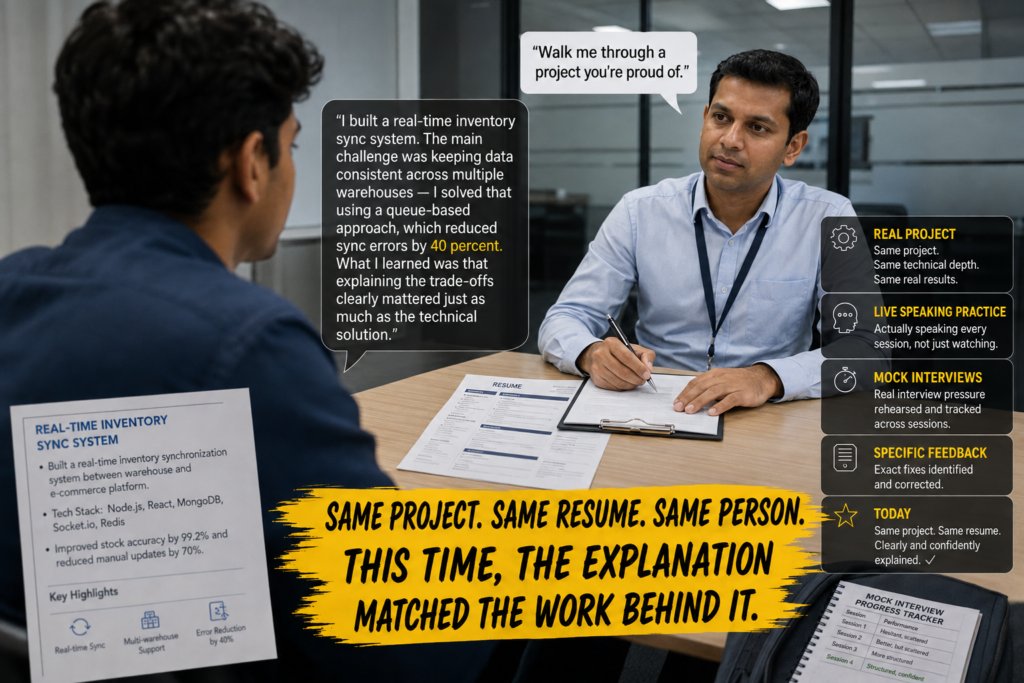
A good course should make you feel more confident after every few classes. Progress doesn’t happen overnight, but you’ll gradually notice positive changes in the way you speak.
Here are some signs you’re moving in the right direction:
- You answer questions more confidently.
- You speak with fewer pauses.
- You don’t translate every sentence.
- Your pronunciation becomes clearer.
- You use professional vocabulary naturally.
- You feel less nervous during mock interviews.
- You can introduce yourself comfortably.
These small improvements show that your communication skills are developing steadily.
Conclusion
Finding the best spoken English course for interview preparation can make a real difference in how confidently you perform during interviews. The right course won’t just teach grammar—it will help you improve your communication skills, build interview confidence, and prepare you for real conversations with recruiters.
Remember that success doesn’t come from memorizing perfect answers. It comes from speaking regularly, learning from feedback, and practicing in realistic interview situations. The more you communicate, the more natural your English will become.
If you’re looking for personalized guidance, Speaking Fever offers one-to-one live training designed to improve spoken English, interview communication, and confidence through practical speaking sessions and mock interviews. With consistent practice and the right support, you’ll be better prepared to face your next interview with confidence.
Start practicing today. Every interview is an opportunity to learn, improve, and move one step closer to your career goals.
Reach us via
Book Your Slot with Our Counsellor:
Frequently Asked Questions (FAQs)
1. How Do I Choose the Best Spoken English Course for Interview Preparation?
Choose a course that includes live speaking practice, mock interviews, personalized feedback, and experienced trainers. It should also match your current English level and help you build confidence through real interview conversations
2. Can a Spoken English Course Help Me Perform Better in Job Interviews?
Yes. A good course helps you improve communication skills, pronunciation, vocabulary, and interview confidence. Regular speaking practice also makes it easier to answer questions clearly and naturally during interviews.
3. What Should an Interview English Course Include?
A quality course should offer live classes, mock interview sessions, speaking practice, pronunciation correction, and personalized feedback. These features help you prepare for real interview situations instead of only learning grammar.
4. Is an Online Spoken English Course Effective for Interview Preparation?
Yes. Live online classes allow you to practice speaking from anywhere while receiving feedback from experienced trainers. With regular practice and consistency, online learning can be just as effective as classroom training.
5. How Long Does It Take to Improve English for Interviews?
The time depends on your current English level and how often you practice. Many learners notice better fluency and confidence within a few months of consistent speaking practice and regular feedback.
6. Are Mock Interviews Important for Interview Preparation?
Absolutely. Mock interviews help you experience real interview situations, improve your responses, and identify areas that need improvement. They also reduce nervousness before the actual interview.
7. Should Freshers Join a Spoken English Course Before Attending Interviews?
Yes. Freshers often have the technical knowledge but lack confidence while speaking. A spoken English course helps improve communication skills, build confidence, and prepare for common HR interview questions.
8. How Can I Improve My English Speaking Skills for Job Interviews?
Practice speaking every day, answer common interview questions aloud, expand your professional vocabulary, and participate in mock interviews. If you need structured guidance, a personalized program like Speaking Fever can help you improve your spoken English and interview confidence through regular one-to-one practice.